
Modern-day New York City is world-renowned for its towering skyscrapers. Yet, a unique architectural feature of the city remains its historic townhouses, often called brownstones, many of which date back to the 19th century. They continue to grace New York’s streets, revealing secrets of the past and showcasing the evolution of architectural styles in the city. Brownstones were built with varying designs but from the same distinctive material. Their warm, reddish-brown exteriors and iconic stoops are unmistakable. Let’s delve deeper into their architectural characteristics on new-york-future.
New York City Brownstones: A History of Development
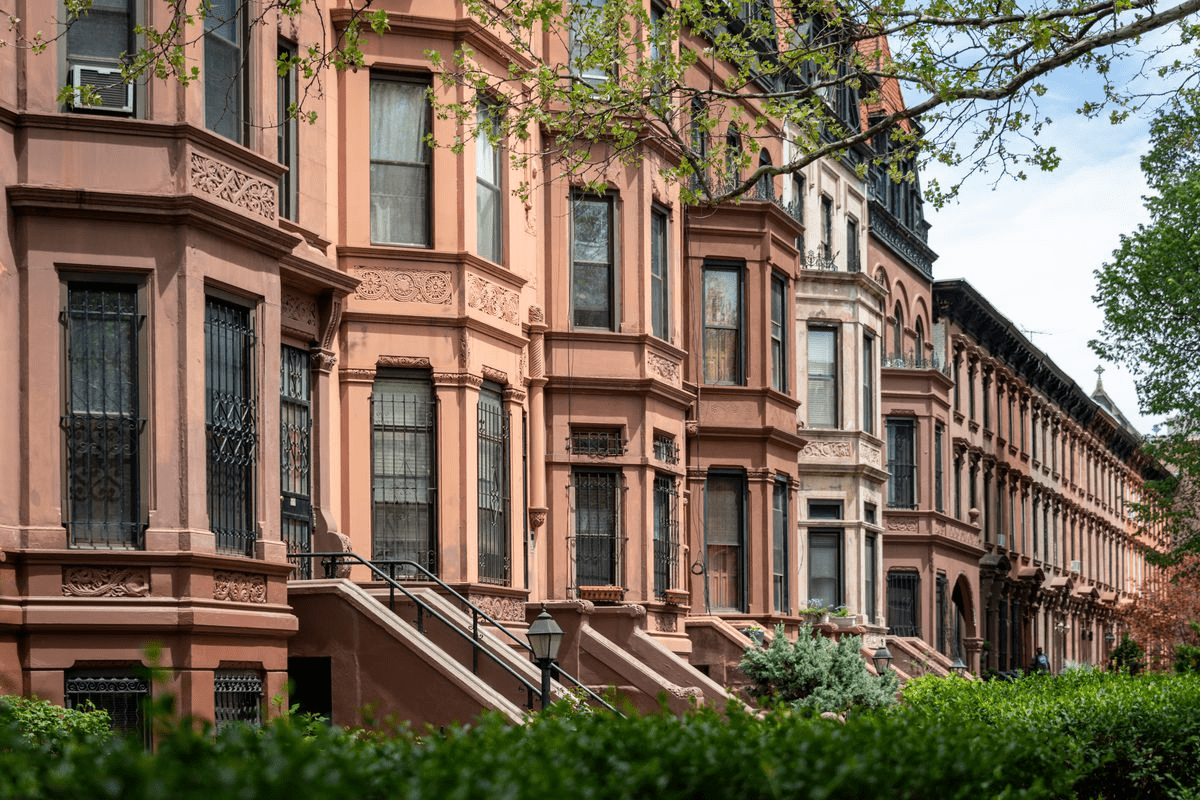
Brownstones refer to residential buildings constructed throughout the 19th and early 20th centuries in major U.S. cities, including New York. They were built from a reddish-brown sandstone, which gave rise to their common name. These homes quickly became synonymous with urban living. They featured multiple stories, elaborate stoops, and intricate detailing. Their emergence in New York signaled the growing prosperity of the city’s population.
New Yorkers adopted the idea for this type of development from Great Britain, where “terraced houses” were popular at the time. These homes were economically advantageous for developers and appealing to those looking to own their own property. This was because the designs often incorporated individual buyer preferences, which was not yet common practice.
That’s why brownstones in New York often exhibited vastly different designs—from the ornate Italianate style to elegant Romanesque Revival homes. This diversity formed a unique architectural lineage that is easily recognizable in the city’s landscape today.
The most famous neighborhood featuring this type of architecture is currently Brooklyn Heights. This suburb was one of the first areas to be actively settled in the 1820s. It’s located near Manhattan and offers convenient connections to other parts of the city. Park Slope in Brooklyn is another prime example of a whole neighborhood built with reddish-brown sandstone. Harlem also boasts rows of exquisite brownstone homes. Thus, this 19th-century architecture remains a vital part of the modern city and continues to attract tourists.
Architectural Features of Brownstones: Exterior Design
Brownstone architecture blends elegance with functionality, significantly influencing New York’s architectural landscape. Over time, these structures have become iconic, combining style and the history of the city’s residential development in their exterior design and interior elements.
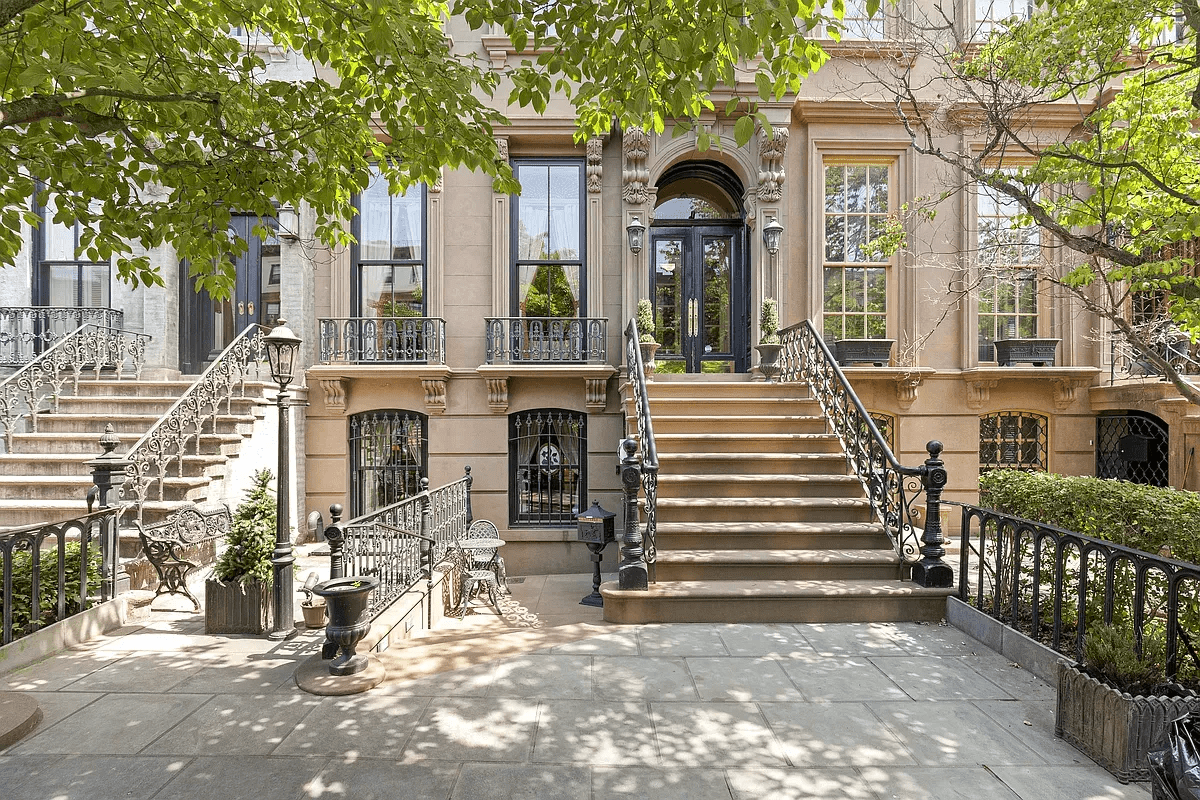
The exterior design of brownstones is particularly distinctive due to their facade materials and ornamentation. All of them are clad in reddish-brown sandstone. This stone was actively quarried throughout the 19th century in Connecticut, New Jersey, and Pennsylvania. The rock is a Triassic-Jurassic sedimentary type containing iron compounds that give it its characteristic color. Initially, this material was used to construct entire buildings, and later it was employed to clad the facades of brick houses.
Brownstones were initially built predominantly in the Italianate and Greek Revival styles. Subsequently, they were influenced by Neo-Gothic and Queen Anne architectural trends. A crucial exterior element became their high stoops—long flights of stairs leading to exquisitely carved wooden doors with arched windows on either side.
As for ornamentation and decorative details, brownstones typically featured restrained and elegant designs:
- Wrought-iron railings were installed along the stoops.
- Decorative cornices highlighted the rooflines.
- Bay windows provided additional space and were supported by Corinthian or Doric columns.
Thanks to the similarity of decorative elements and the consistent material, brownstones presented a remarkably harmonious exterior appearance.
Brownstone Interior Layout and Design
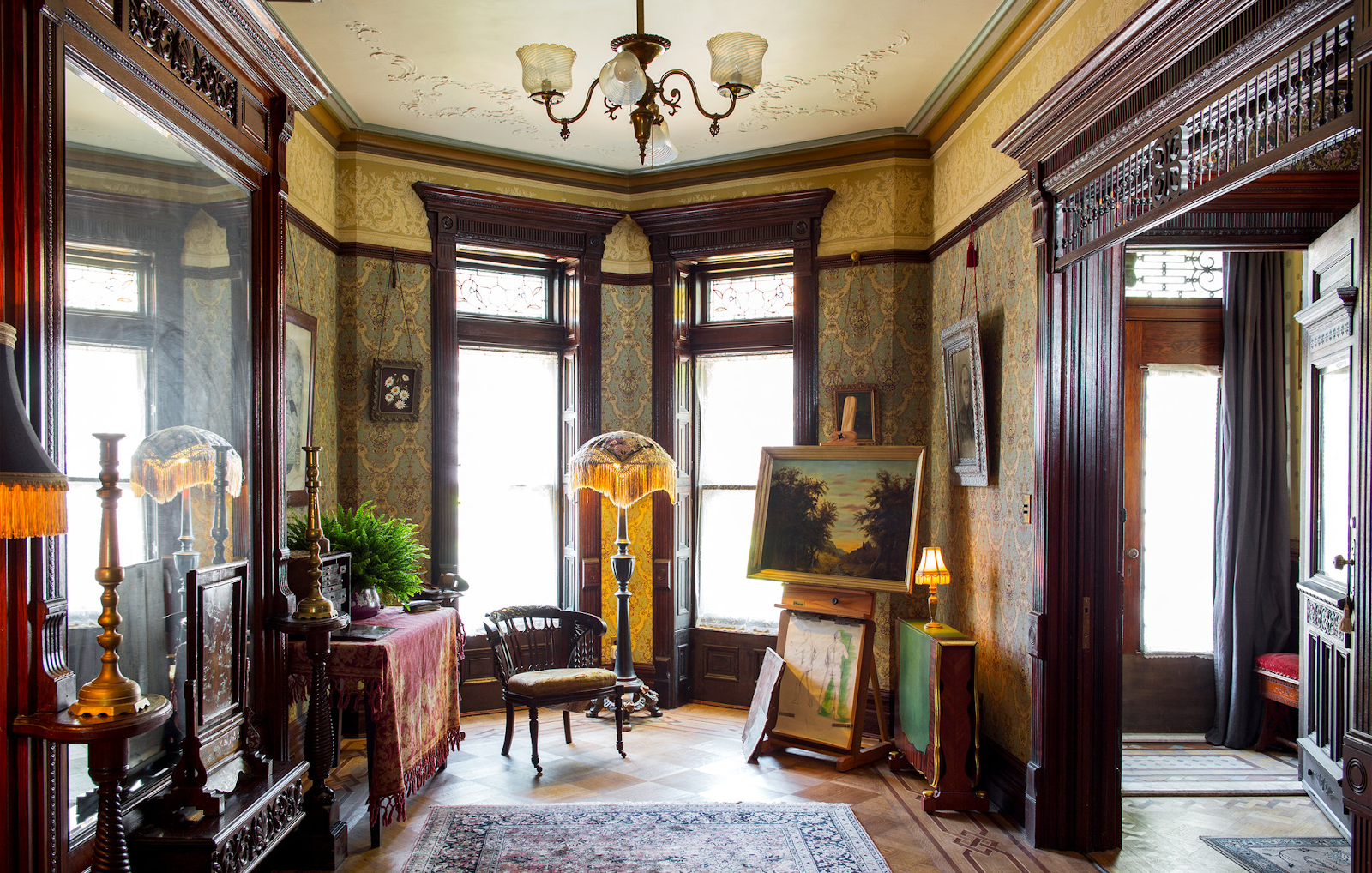
Brownstones typically had three to five floors. The highest ceilings were found in the living rooms, where they could reach 12-14 feet. Layouts varied and were flexible, but generally, kitchens were often located in the basements, living rooms on the first floor, and bedrooms, libraries, and other rooms on the upper floors.
Fireplaces were installed in the homes for heating and were often adorned with marble. Windows were large to allow in as much sunlight as possible. They featured sliding sashes that could be closed as needed.
Popular decorative additions to brownstone interiors included spiral staircases, ornate wooden details, moldings, and parquet flooring. Ceilings were embellished with plaster medallions and crystal chandeliers. Naturally, homeowners decorated their houses to their own taste, but there was often a preference for showcasing wealth and luxury.
Overall, brownstones were situated on relatively small plots, but they offered their owners ample space due to their then-impressive height. It was common practice for multiple families to reside in these homes, making these buildings precursors to the modern apartment buildings that began to appear in New York City in the late 19th century.

