
Once the primary hub for New York’s maritime trade in the 19th century, this area now blends open-air museum spaces, meticulously restored historic buildings, and piers with modern recreational zones featuring shops, restaurants, and entertainment. It is home to many of Lower Manhattan’s oldest structures and the city’s largest concentration of reconstructed early 19th-century commercial buildings. Read on new-york-future.com for more about its history and transformation.
The Birth of the Port: How It All Began
The history of this location dates back to 1625, when the Dutch West India Company decided to establish its first outpost here. Almost immediately, it began to draw new settlers, and with them—trade, activity, and ambition. One of the first streets to spring to life was the future Pearl Street. It earned its name for a reason: the shoreline was strewn with shimmering oyster shells that beckoned merchants as much as the convenient bay.
Thanks to the natural shelter from strong winds and the icy pressures of the Hudson River, this pier quickly became a favorite stop for ships. As the city grew, the waterfront line advanced inland: first to Water Street, then to Front Street, and by the start of the 19th century, all the way to South Street. What was once a narrow shoreline transformed into an extensive port system.
In the 18th century, rice and indigo arrived from Charleston, along with ships carrying English goods. The district was becoming the gateway between the Old and New Worlds. However, when British troops occupied the port during the War of Independence in 1776, all these trade flows stopped for a long eight years. Many merchants abandoned the city, and numerous businesses went bankrupt.
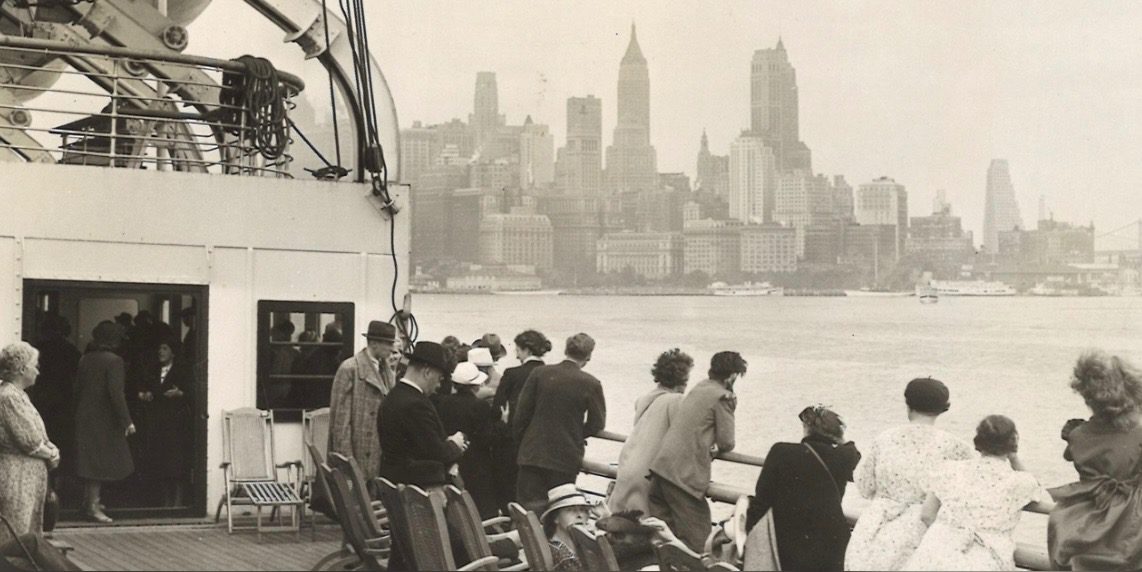
But the port had a powerful ability to rebound. It swiftly regained its strength after 1783. It was from here, on February 22, 1784, that the ship Empress of China set sail—the first American vessel to pioneer a route to Guangzhou. Returning the following year, it brought tea, porcelain, and other Eastern goods, launching a new era in relations between the young United States and China.
Thus began the story of the port, which transformed from a small colonial outpost into the heart of American maritime trade.
The Golden Age of the South Street Port
In the early 19th century, New York entered its true maritime boom. On January 5, 1818, the 424-ton James Monroe sailed from Liverpool—the first ship of the regular transatlantic Black Ball Line. From that moment, a stable artery connected the Old and New Worlds, spurring the creation of dozens of competing companies, including the Red Star Line. Transatlantic travel became the business that elevated New York to the status of a major global trade center.
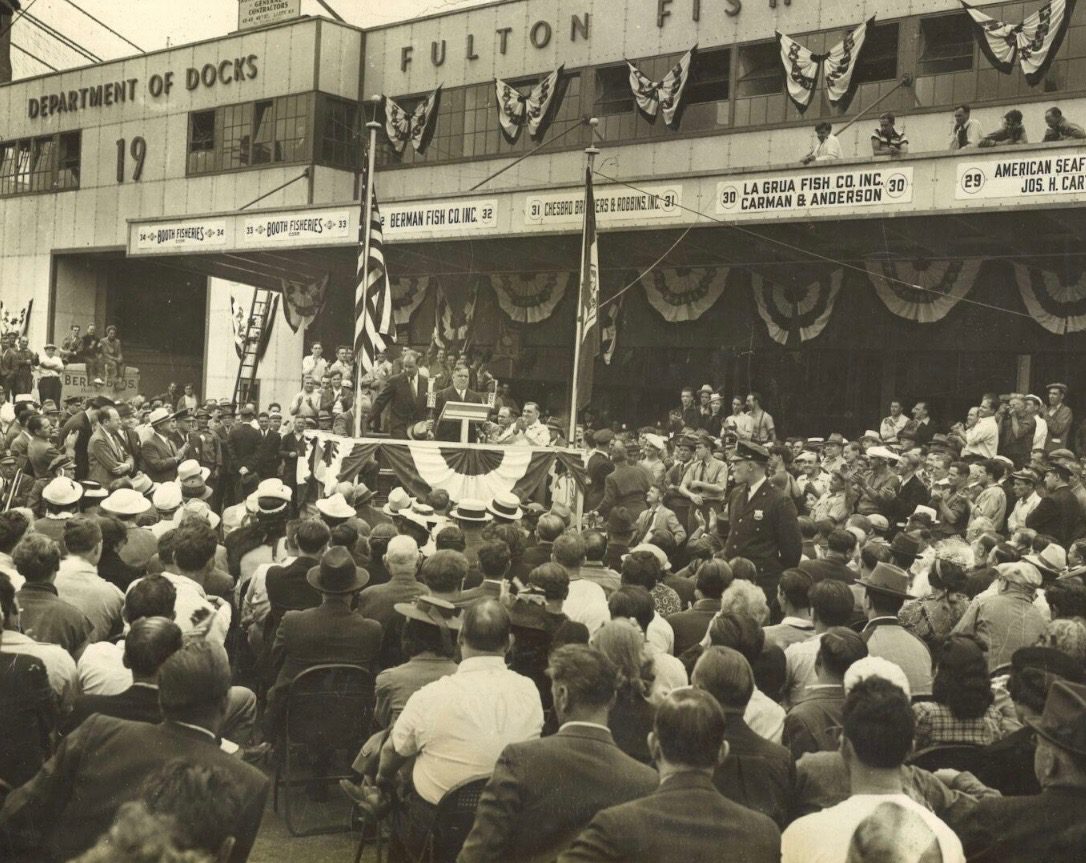
The port revitalized and expanded, and in 1822, the Fulton Fish Market opened nearby—the loud and highly profitable centerpiece of coastal trade. It was here, amidst the ice, stalls, and boisterous vendors, that the Tin Building appeared in 1907—one of the few structures to survive all the tests of time.
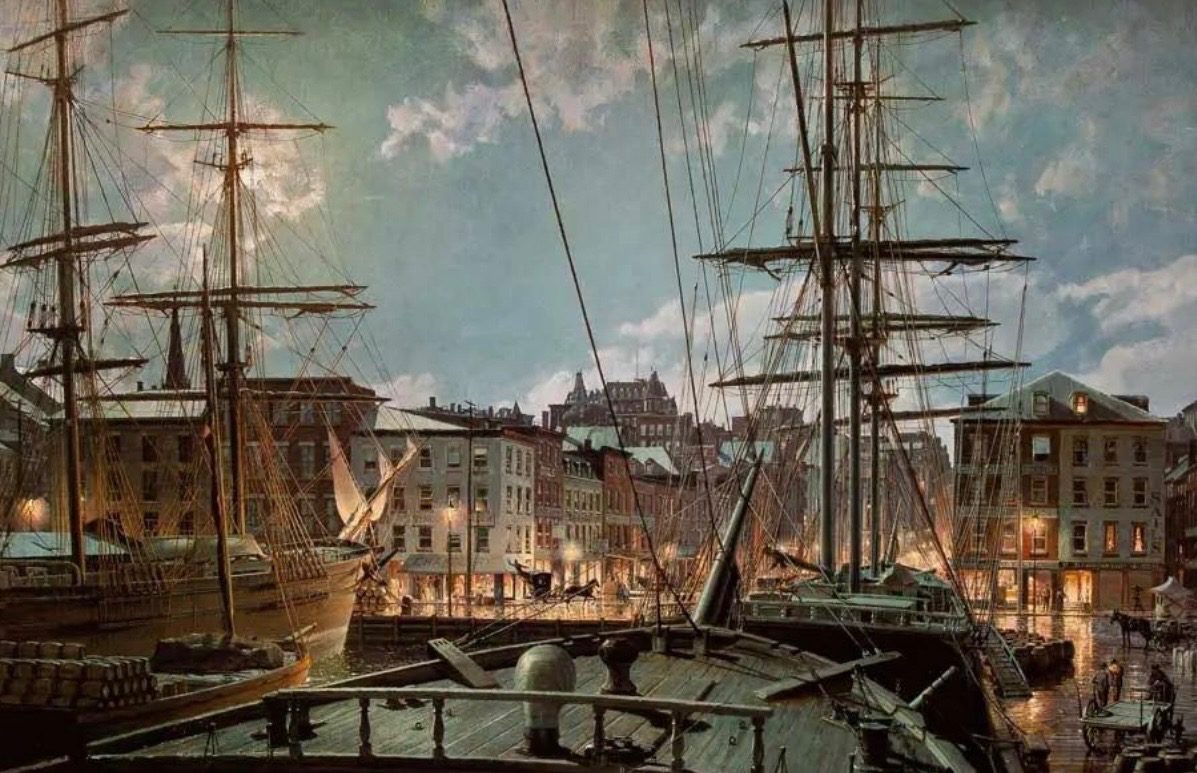
A true economic explosion occurred after the opening of the Erie Canal in 1825. The man-made waterway connected New York with the western territories of the U.S., opening unprecedented opportunities for transporting goods. However, the city’s growth created new challenges—the port had to be extended and deepened to accommodate increasingly larger ships.
Nevertheless, the port’s history was not always smooth sailing. The Great Fire of 1835 destroyed over a dozen blocks, turning the once-crowded docks into ashes. Yet, within a few years, the district recovered its strength, and by the 1850s, it shone with all the grandeur of a maritime capital, its piers jammed with ships from California, London, and Liverpool.
However, time marched on. By the second half of the 19th century, the port was gradually exhausting its resources. New, deep-draft ships required the space and depth of water that was lacking here. By the 1930s, most piers had fallen into disrepair, and ships had relocated to the West Side and Hoboken. The Fulton Market was rebuilt and moved, and the legendary docks in the 1960s stood mostly empty.
Thus ended the era when South Street was America’s gateway to the world.
The Fight for Survival
South Street became a forgotten corner of old port New York—a place where the silence and emptiness were a stark reminder of the city’s former maritime glory. But in the mid-20th century, a couple, Peter and Norma Stanford, decided that this story shouldn’t end in ruins. They launched the “Friends of South Street” movement and managed to ignite the idea that eventually grew into the creation of the Seaport Museum.
The journey was challenging: from endless negotiations with officials to fighting for every old building. But in 1967, the museum opened its doors—with the first ships in its fleet and the ambition to restore the district’s maritime soul. Within a few years, it included exhibitions, piers, and six vessels, among them the legendary lightship Ambrose.
South Street came back to life. Maritime festivals returned, music played, and galleries and workshops opened. The district became a new artistic and tourist spot, attracting hundreds of thousands of people annually. It seemed like the golden age was returning. In the 1970s, there was even a proposal for the ambitious Manhattan Landing project—an almost fantastic blend of museums, hotels, and its own shipyard. An economic crisis halted the dream, but the idea of South Street’s revival had already taken root.
In the late 1970s, the city approved a large-scale reconstruction of the district. Shops, offices, hotels, and a renovated Fulton Market began to appear. The historic Schermerhorn Row buildings were restored, and a new mall, Pier 17, rose, instantly becoming a tourist hotspot.
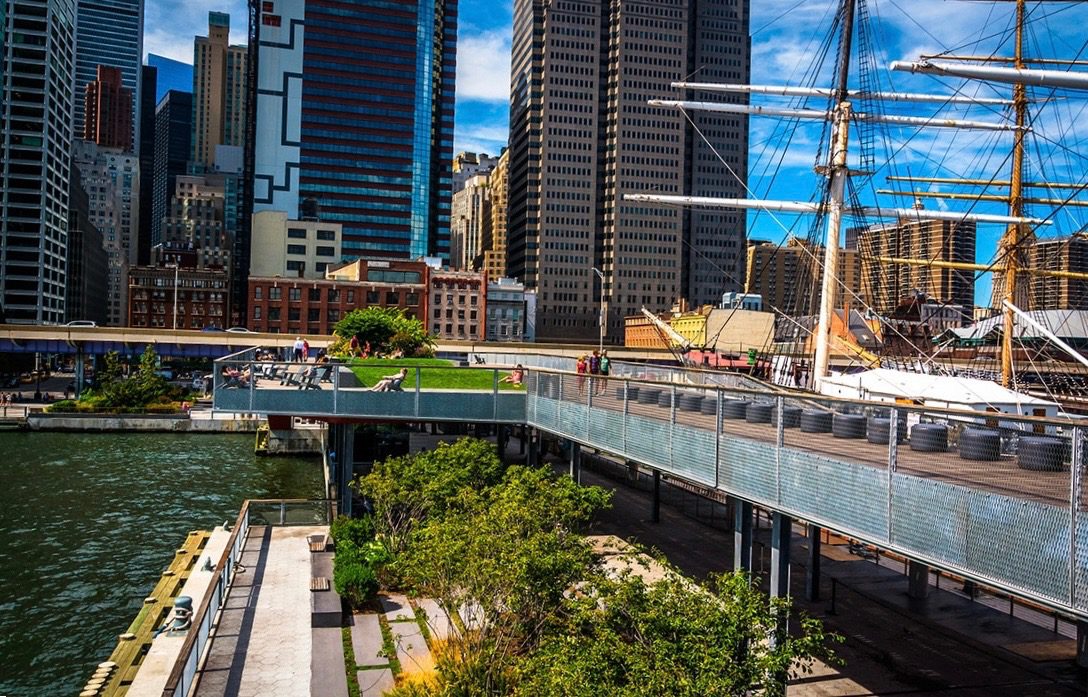
Throughout the 1980s, South Street transformed into one of New York’s most popular destinations. But in the 1990s, a true crisis hit. The Fulton Market emptied, local shops disappeared, giving way to large chain stores. The museum lost resources, and the Tin Building suffered a fire. By the end of the decade, South Street looked like it had returned to its decline.
The next attempt to revive life at South Street occurred in the early 2000s. After ownership transferred from the Rouse Company to GGP, the goal was renewed to make the Seaport a premium retail and residential district, including plans for high-rise buildings. Most projects met community resistance and were not realized. Seaport assets eventually passed to the Howard Hughes Corporation.
In the 2010s, the district endured several setbacks: a temporary museum closure, Hurricane Sandy, and the bankruptcy of some businesses. Plans for the reconstruction of Pier 17 and surrounding historic buildings received city support, but high towers and massive skyscrapers were blocked due to community opposition. At the same time, new tourist and dining spots emerged: the Tin Building food hall, and a cinema in the Fulton Market.
The renewal continued into the 2020s. A food hall by Jean-Georges opened, historic warehouses were restored for the museum, and asset management was structured through the Seaport Entertainment Group. Ultimately, South Street emerged from the crisis—not as a museum reserve or just a shopping mall, but as a unique blend of the sea, history, city views, restaurants, creative spaces, and the old buildings that were successfully preserved.
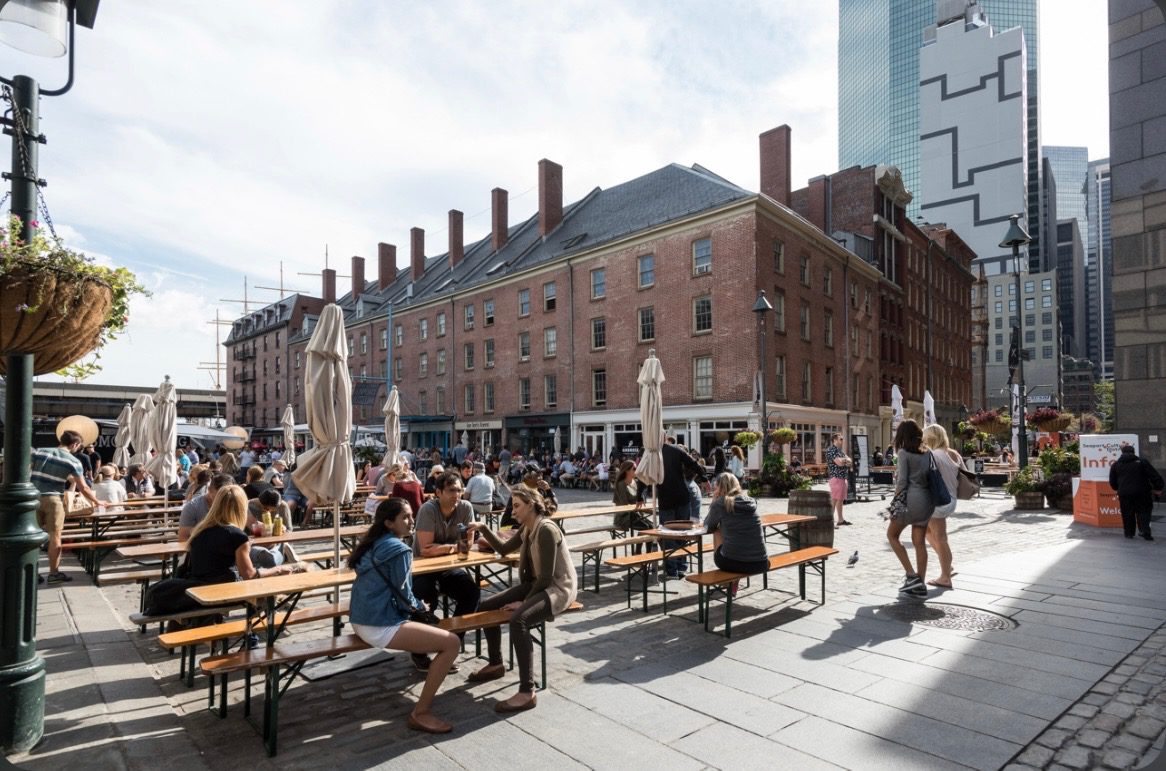
Thus, the district that was once a forgotten waterfront has become a place that is now unthinkable to remove from the map of New York City.
The South Street Seaport Museum
As of 2025, the complex includes the Schermerhorn Row buildings, Fulton Market, the A.A. Thomson & Co.warehouse, and Pier 16, occupying over 30,000 square feet (2800 m²) of exhibition and educational space. It houses galleries, a maritime library, a working 19th-century letterpress printing shop (Bowne & Co.), an archaeology museum, a craft center, a marine conservation laboratory, and a private fleet of historic ships.
The museum tells the story of New York as a great port city: from the Dutch colonists and indigenous Lenape people to the immigrants and millionaires who shaped the metropolis.
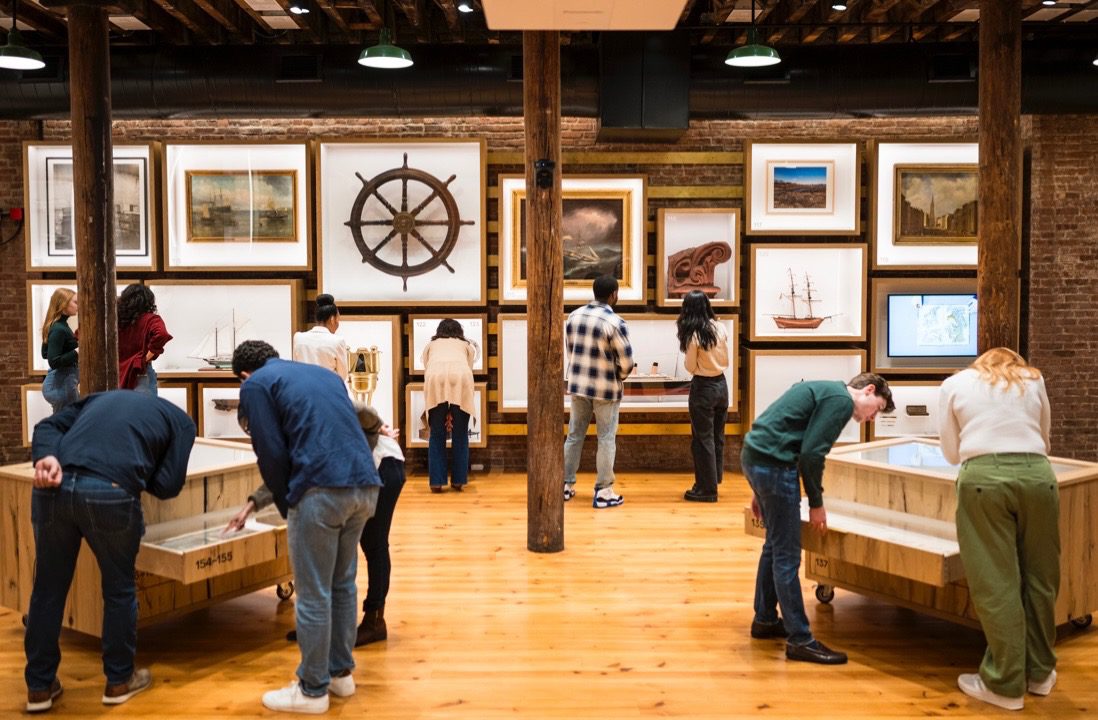
Key exhibitions include:
- Maritime City.
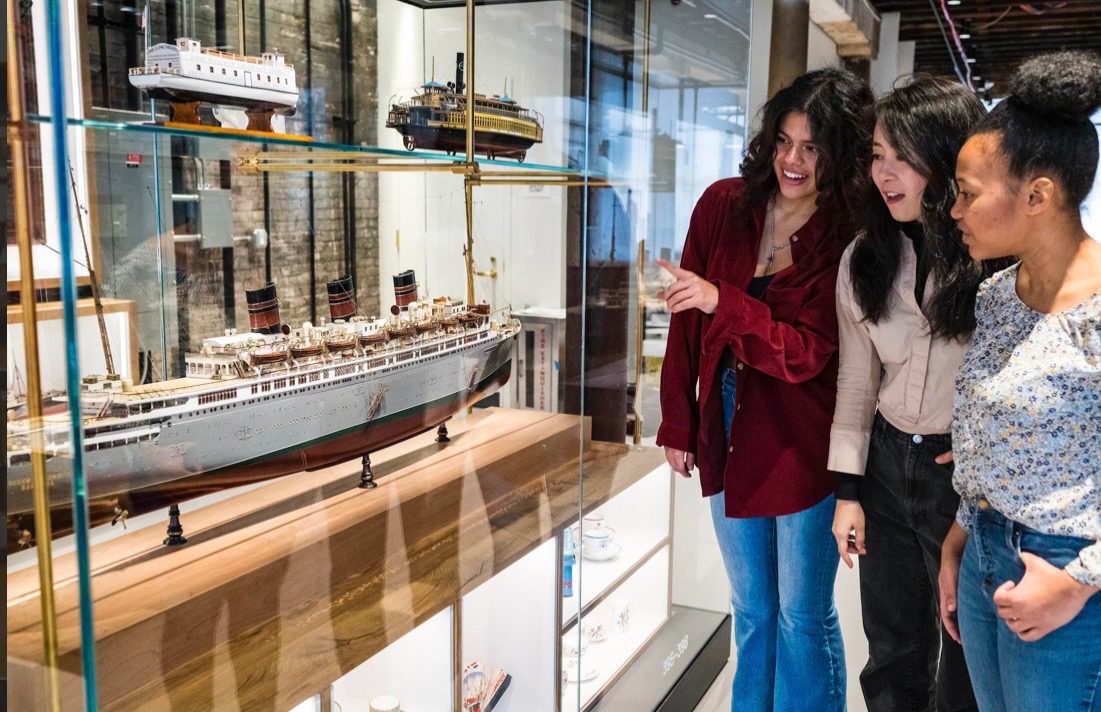
A three-story permanent exhibition featuring 540 artifacts. Archives, archaeological, and historical objects, including an RMS Queen Mary model, rare SS Normandie items, and works by contemporary marine artists. It also includes interactive educational elements: stereoscopes, touchscreens, historical tools, and printing materials. Exhibits rotate three times a year to showcase new artifacts and archival materials.
- Millions: Migrants and Millionaires Aboard the Great Liners, 1900–1914.
This exhibition highlights the dichotomy between First and Third Class passengers on transatlantic liners. Exhibits include reproductions of programs, menus, luggage, ceramics, and video and photo materials from the museum’s archives. The exhibit tells the stories of the nearly 13 million immigrants and wealthy passengers who traveled across the Atlantic.
- South Street & Rise of New York.
An overview of New York’s development as the largest U.S. port until the 20th century. The exhibition includes Schermerhorn Row, historic warehouses, offices, and the museum’s fleet: Wavertree (1885), Ambrose (1908), schooners, and tugboats. Historic printing shops (Bowne & Co.) and lighthouses are also featured.
Museum visits are possible Wednesday through Sunday, from 11:00 AM to 5:00 PM. Admission tickets include access to exhibitions, ships, and interactive programs.

