
On New York City’s famous Billionaires’ Row stands a building that defies the laws of physics and traditional ideas of urban architecture. Its width-to-height ratio is a staggering 1:24. This supertall residential skyscraper soars to 1,428 feet (435 meters) and fits 84 stories, all while maintaining a facade width roughly equal to a standard bowling lane—just about 60 feet (18 meters). In this article on new-york-future.com, we’ll explore fascinating facts about Steinway Tower: from the rich history of the original concert hall to its unique architectural design, ultra-luxury real estate, and the engineering secrets behind the skinniest skyscraper on the planet.
A Skyscraper with a Musical Soul
Steinway Tower is more than just another modern construction of glass and concrete. Its foundation and lower floors are inextricably linked to New York’s historical heritage: Steinway Hall. The original building was designed in 1925 by the renowned architectural firm Warren and Wetmore. For decades, it served as a concert hall and the flagship showroom for the legendary piano manufacturer, Steinway & Sons.
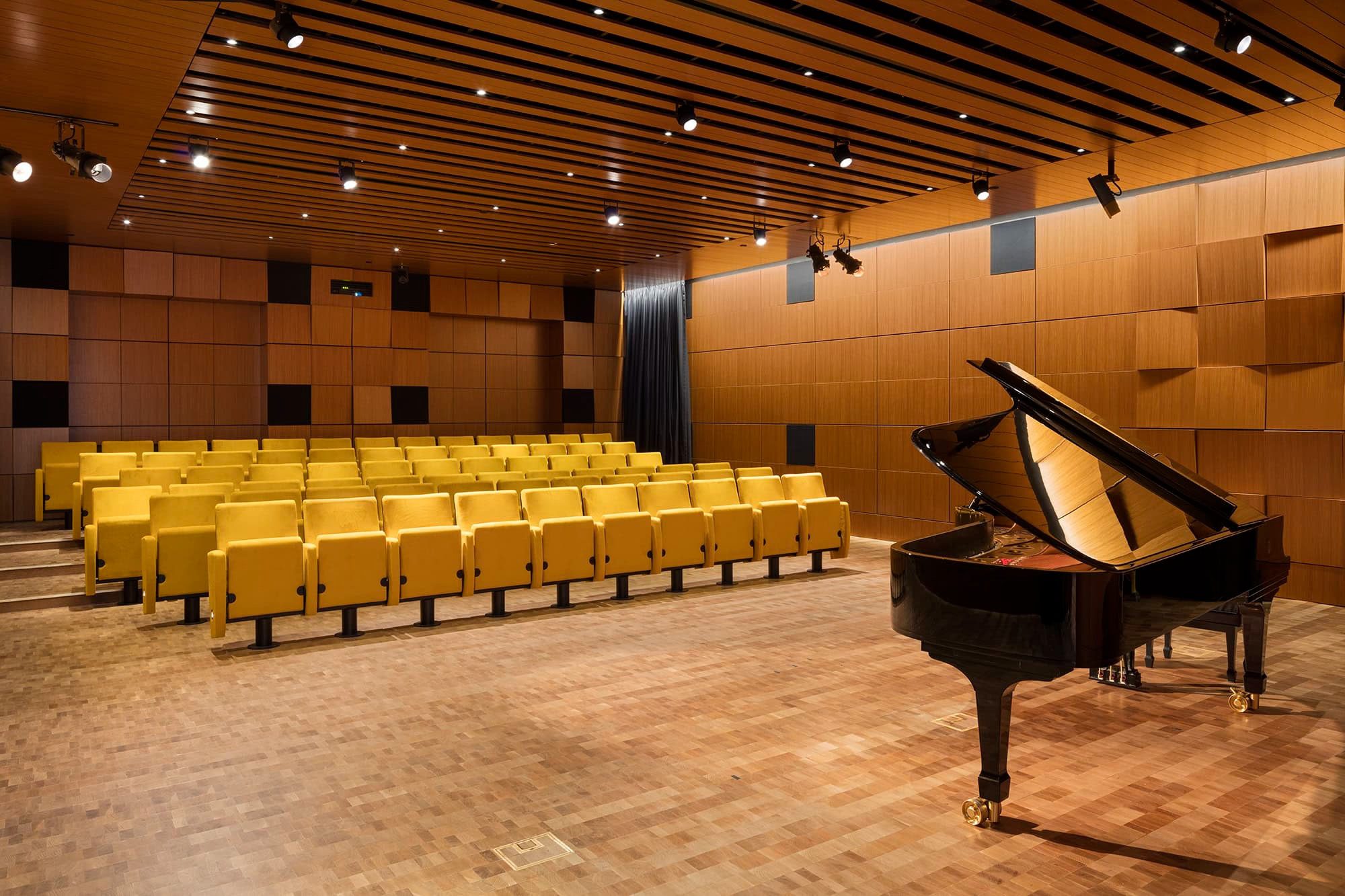
The facade of this neoclassical building features a sculptural group by Italian-American artist Leo Lentelli, depicting the Muse of Music placing a laurel wreath on Apollo’s head. The building is also adorned with a frieze showcasing portraits of great classical composers: Brahms, Bach, Haydn, Mozart, Schubert, Chopin, Liszt, and Grieg.
Modern developers seamlessly integrated this historic landmark into the new project. During an extensive restoration, experts from John Canning & Co. revived the authentic interior details.
“The decorative arts arise from architecture and should properly accompany it,” noted architect Owen Jones.
The project, designed by SHoP Architects in collaboration with the engineering firm WSP and developers JDS Development Group and Property Markets Group (PMG), is a true triumph of modern engineering. Steinway Tower currently ranks as the third-tallest skyscraper in New York, the fourth-tallest in the U.S., and among the top 30 tallest buildings in the world.
Dancing with the Wind: The Engineering of Steinway Tower
The main challenge for the WSP engineers, led by Director of Building Structures Silvian Marcus, was ensuring absolute stability for such an extremely slender structure. According to Marcus, the design phase required balancing four critical criteria: stiffness, natural damping, overall weight, and the ability to “confuse” the wind.
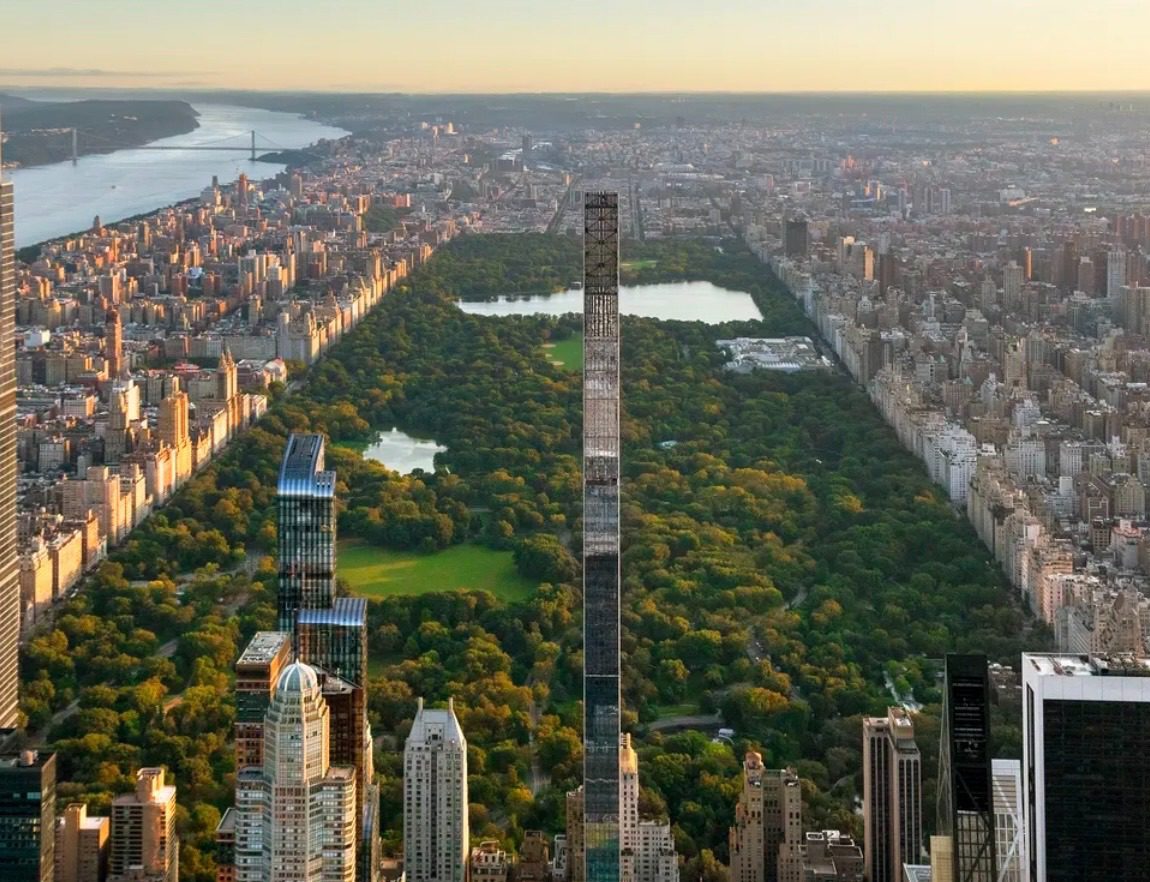
To achieve this, the team deployed a series of revolutionary engineering solutions:
- Ultra-Strong Foundation.
The building rests on a massive concrete pad, ranging from 5 to 13 feet (1.5 to 4 meters) thick, securely anchored into Manhattan’s solid bedrock. This bedrock can withstand a colossal load of up to 60 tons per square foot.
- Shear Walls.
Two massive reinforced concrete walls, up to three feet (one meter) thick, are located on the east and west facades. This design allowed the north and south facades to remain open for columns and panoramic windows overlooking Central Park. The concrete used to build these walls on the lower floors boasts a phenomenal strength of 14,000 psi.
- Tuned Mass Damper (TMD).
A massive 800-ton damper is installed near the top of the skyscraper. A system of hydraulic pistons converts the kinetic energy of the building’s sway into heat. It doesn’t stop the movement entirely, but slows it down to a level that is comfortable for the residents’ vestibular systems. Despite this, during a severe storm, the upper floors can still sway by several feet.
The Shimmering Tower
Unlike many modern skyscrapers that rely exclusively on sleek glass facades, SHoP Architects decided to pay homage to the classic New York architecture of the 1920s.
The east and west facades are clad in 43,000 individual terracotta panels. They come in 23 unique shapes, and thanks to their wave-like arrangement, they create a stunning moiré effect. Under the sunlight, the facade appears to shimmer and smoothly shift its appearance depending on the viewing angle. These panels were custom-extruded, dried, glazed, and kiln-fired by NBK Terra Cotta before being shipped to New York.
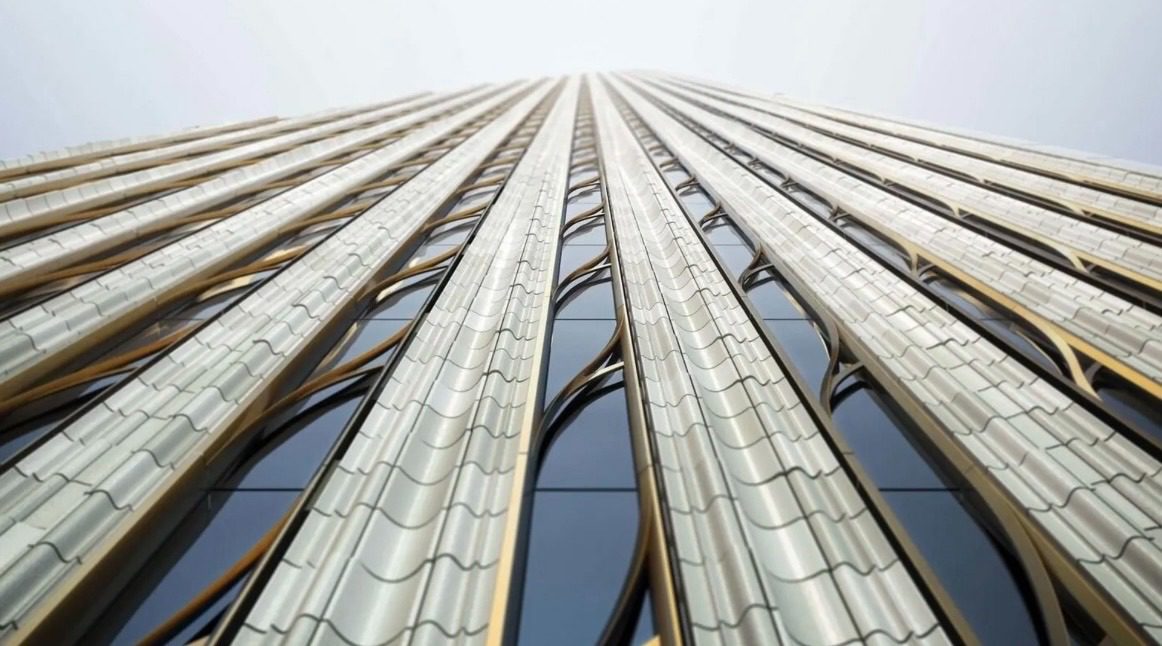
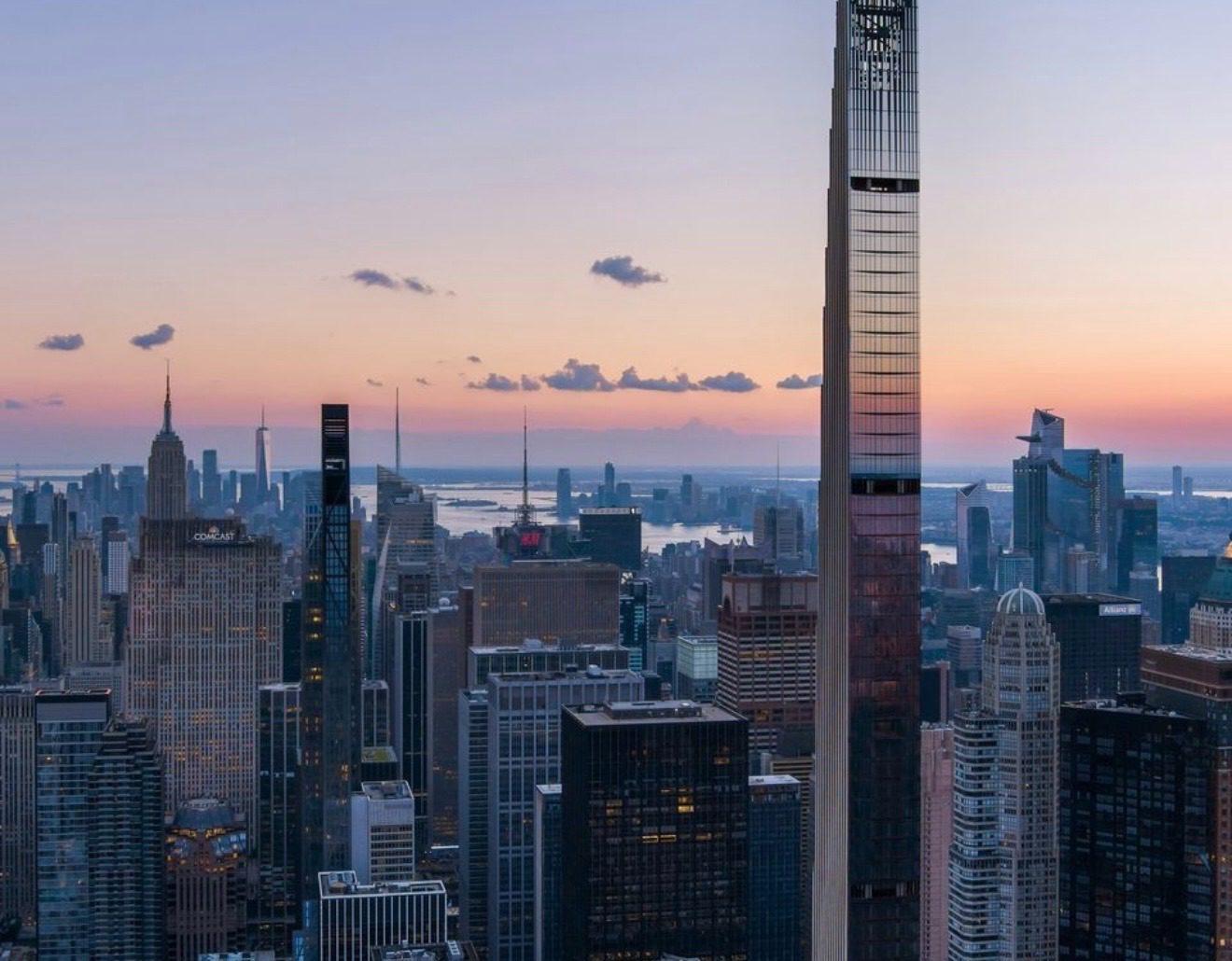
The south facade gracefully tapers upward in a step-like fashion, giving it the visual likeness of a feather quill. The building is topped with a 300-foot (91-meter) steel crown that not only completes the silhouette but also conceals heavy mechanical equipment, including the building maintenance unit.
Architectural critic Carter Horsley noted that the crown resembles a delicate tiara, highlighting the building’s somewhat feminine character. Meanwhile, Paul Goldberger, writing for Vanity Fair, called it perhaps the most elegant building erected on Billionaires’ Row, describing it as a modern reimagining of the classic stepped towers of old New York.
“No tower will be the last, the biggest, or the tallest for long, but this one might just be the best,” summarized Justin Davidson of New York Magazine.
The interiors, designed by Studio Sofield under the direction of William Sofield, are strikingly monumental and heavily nod to glamorous Art Deco. The skyscraper offers unparalleled privacy. Across its 84 floors, there are only 60 residences in total (15 in the historic Steinway Hall base and 45 in the tower itself). Most of the tower’s apartments occupy a full floor, starting from the 20th level, guaranteeing owners exclusive views of Central Park.
Residents have access to a closed ecosystem of ultra-luxury amenities. These include an 82-foot (25-meter) indoor swimming pool, a private barbershop, a state-of-the-art fitness center, a padel tennis court, and the restored historic concert hall. The bathrooms are lavishly outfitted with Italian marble, while the kitchens feature rare woods and bronze hardware.

The Flip Side: Hurricanes, Ice, and Legal Battles
Despite its architectural grandeur and engineering records, the construction and early years of the world’s skinniest skyscraper were marred by a series of serious incidents and scandals.
The technical challenges proved to be just as extreme as the building itself. On October 29, 2020, during Hurricane Zeta, a construction crane on the building’s roof spun out of control. The massive steel headache ball at the end of the cable began swinging freely in the gale-force winds, acting like a giant wrecking ball. It repeatedly slammed into the upper floors, shattering windows and damaging the expensive terracotta panels. Debris rained down onto 57th Street, forcing police to shut down several city blocks.
Another incident occurred in February 2022, when large chunks of ice—forming on the sculpted cornices nearly 1,400 feet (426 meters) up—began plummeting to the ground. Falling from that height, ice reaches terminal velocity and turns into a lethal projectile. A passing motorist was injured, and the city was once again forced to close off an entire avenue to traffic.
On top of that, during the early construction phase in 2015, local residents heavily protested the tower. They feared that it, along with the other supertalls on Billionaires’ Row, would cast exceptionally long shadows over Central Park.
Beyond the weather-related fiascos, the project was plagued by fierce financial and legal battles. The developers faced lawsuits from investors, notably the AmBase Corporation, which tried to block a foreclosure and regain control of the project. The legal mess reached its peak when, by October 2025, JDS chief Michael Stern was sued by his own law firm over $2.7 million in unpaid legal fees—bills racked up over years of defending him in court regarding this very project.
Steinway Tower is a striking, uncompromising, and controversial symbol of the modern supertall era—a place where extreme wealth meets extreme engineering. Despite the technical hurdles, dangerous incidents, and financial crises, the building has permanently altered the Manhattan skyline, proving once again that the boundaries of what’s possible in architecture are constantly being pushed forward.

