
When cruise ships and commercial vessels sail into New York Harbor, the first majestic symbol of America that greets them is the Verrazzano-Narrows Bridge. This colossal double-deck suspension structure connects Staten Island and Brooklyn across the Narrows. The bridge isn’t just a critical transportation artery carrying Interstate 278; it’s a true cultural phenomenon of the metropolis. In this article on new-york-future.com, we’ll dive into the outsized ambitions of city planners, the battle against the elements, human tragedies, and even a comical spelling error that took half a century to fix.
From Idea to Reality: How the Giant Was Built
The idea of connecting Brooklyn and Staten Island was floating around long before ground was ever broken. In the 1920s, plans for a tunnel under the strait were considered, followed by a proposal for a “Liberty Bridge.” However, the driving force behind the Verrazzano-Narrows was Robert Moses—New York City’s powerful and uncompromising master builder. He concluded that a bridge would be significantly cheaper for the city than a tunnel. In 1947, he officially requested permission from the U.S. War Department to build the crossing.
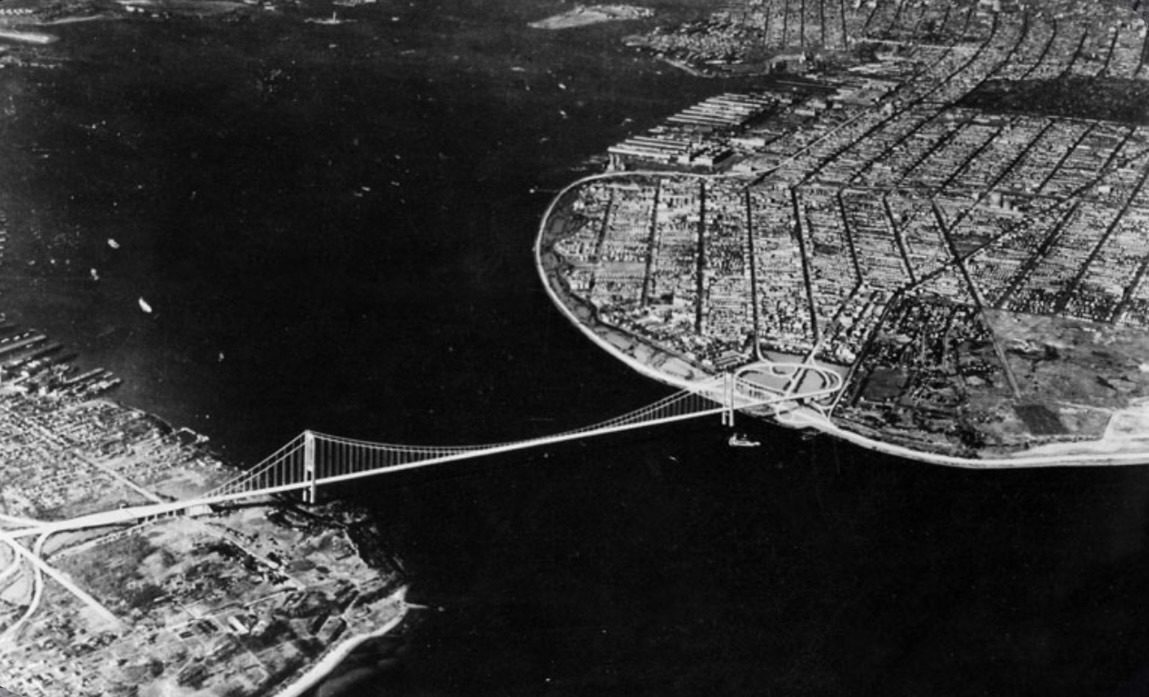
The design was entrusted to the prominent Swiss-American engineer Othmar Ammann. For Ammann, aesthetics were just as crucial as functionality.
“In bridge design, the aesthetic impact is just as important as the technical details. To build an ugly bridge is a crime!” the engineer noted toward the end of his life.
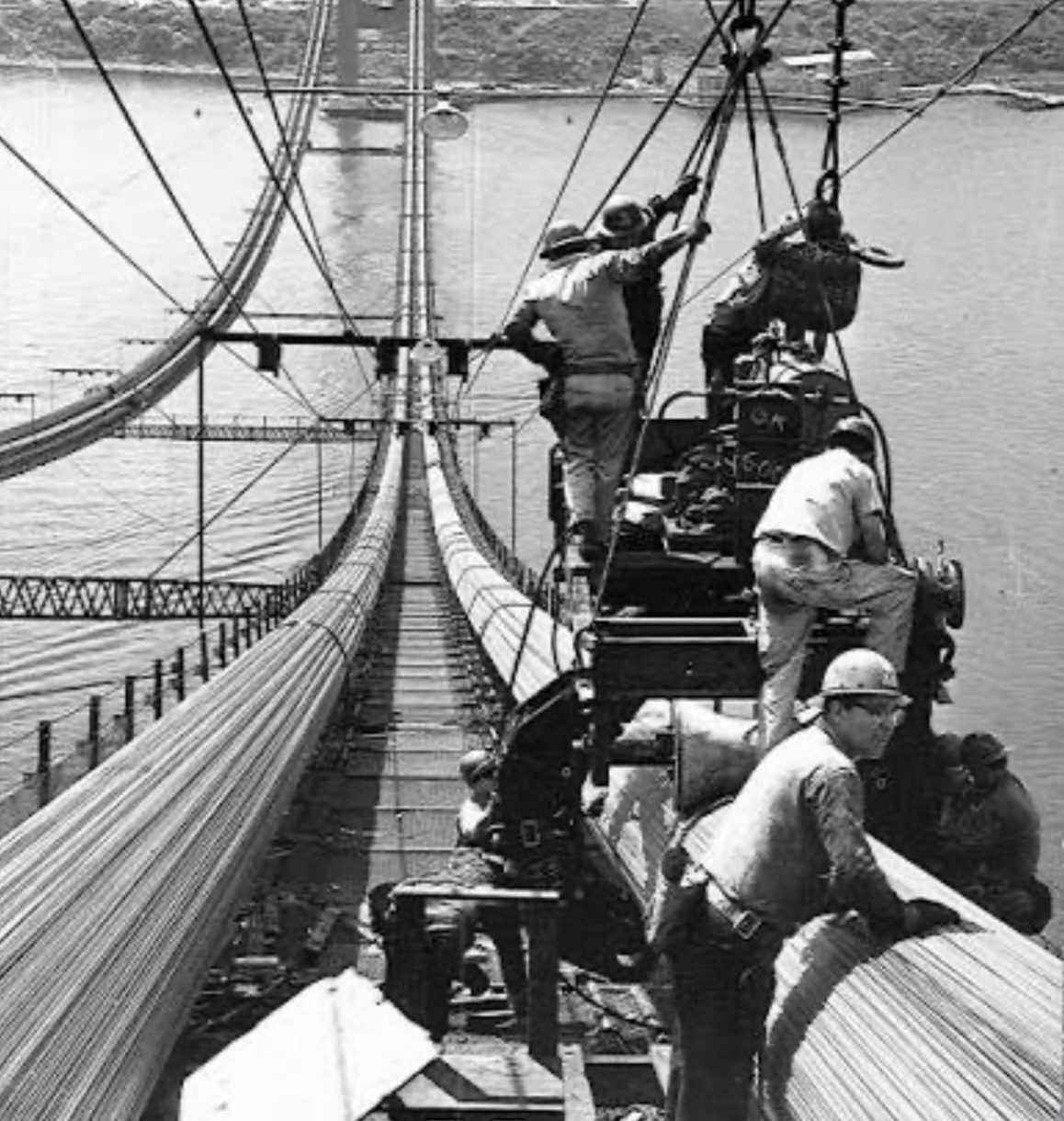
Official construction kicked off on August 13, 1959, and took five years to complete. Raising this behemoth required an unprecedented amount of effort and resources:
- The total cost of the project was $320 million, which translates to over $2.5 billion in today’s dollars.
- Over the course of five years, an average of 1,200 workers were on-site daily, with a total of 12,000 professionals involved in the project.
- Tragically, three workers died during construction.
- The August 1963 death of 19-year-old Gerard McKee, who slipped and fell while working without a safety harness, sparked a five-day strike.
- As a result of the protest, workers successfully demanded the installation of safety nets. These nets later saved the lives of three other ironworkers.
The upper deck officially opened to great fanfare on November 21, 1964. The lower deck followed on June 28, 1969—well ahead of schedule due to rapidly increasing traffic demands.
Engineering Records and the Battle with Physics
From its opening in 1964 until 1981, the Verrazzano-Narrows held the title of the world’s longest suspension bridge, eventually losing the crown to the Humber Bridge in the UK. Today, it still boasts the longest main span in the Americas.
The technical specs of the structure are truly mind-boggling:
- The main span between the towers stretches 4,260 feet, with side spans of 1,215 feet each.
- Each of the two massive towers reaches a height of 693 feet and is held together by roughly 1 million bolts and 3 million rivets.
- The bridge is supported by four main suspension cables, each 36 inches in diameter.
- Every single cable is spun from 26,108 individual steel wires, totaling an astonishing 142,500 miles in length.
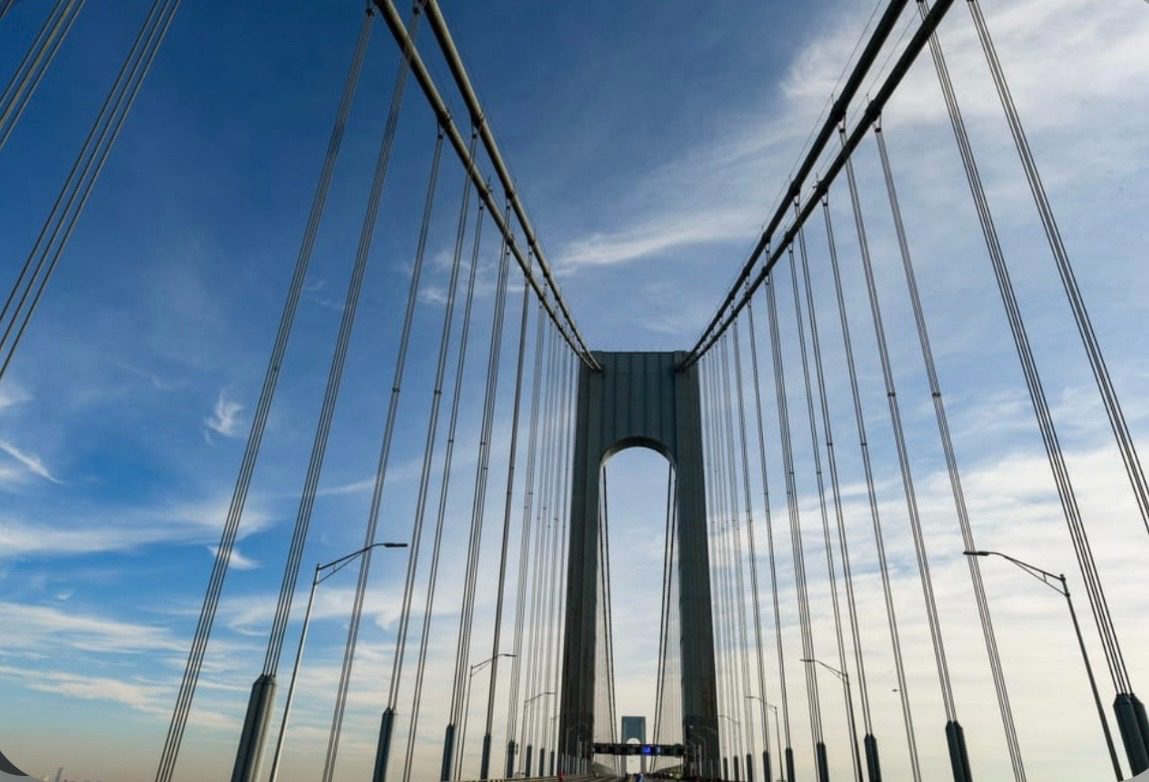
The scale of the project was so massive that Othmar Ammann and his team had to account for the curvature of the Earth during the design phase. The towers are not perfectly parallel: they are 1 5/8 inches further apart at their peaks than at their bases.
Pouring the massive concrete anchorages presented another unique engineering challenge. In the sweltering heat of a New York summer, the curing process (hydration) would have caused the concrete to overheat and crack. The engineers came up with a brilliantly unconventional solution: they replaced the mixing water with flaked ice. As the ice melted, it absorbed the heat from within, keeping the mixture at a safe 60–72 °F.
Furthermore, the bridge is highly flexible and reacts dramatically to temperature swings. In the summer heat, thermal expansion causes the steel cables to stretch, dropping the roadway 12 feet lower than it sits in the winter. Even so, the bridge maintains a navigational clearance of 228 feet, allowing large ocean vessels to pass safely underneath.
A Decades-Long Typo: The Story of the Verrazzano Name
The structure was named after Giovanni da Verrazzano, the Italian explorer who, in 1524, became the first European to enter New York Harbor and the Hudson River. However, there’s a catch to this story that irritated the Italian-American community for decades.
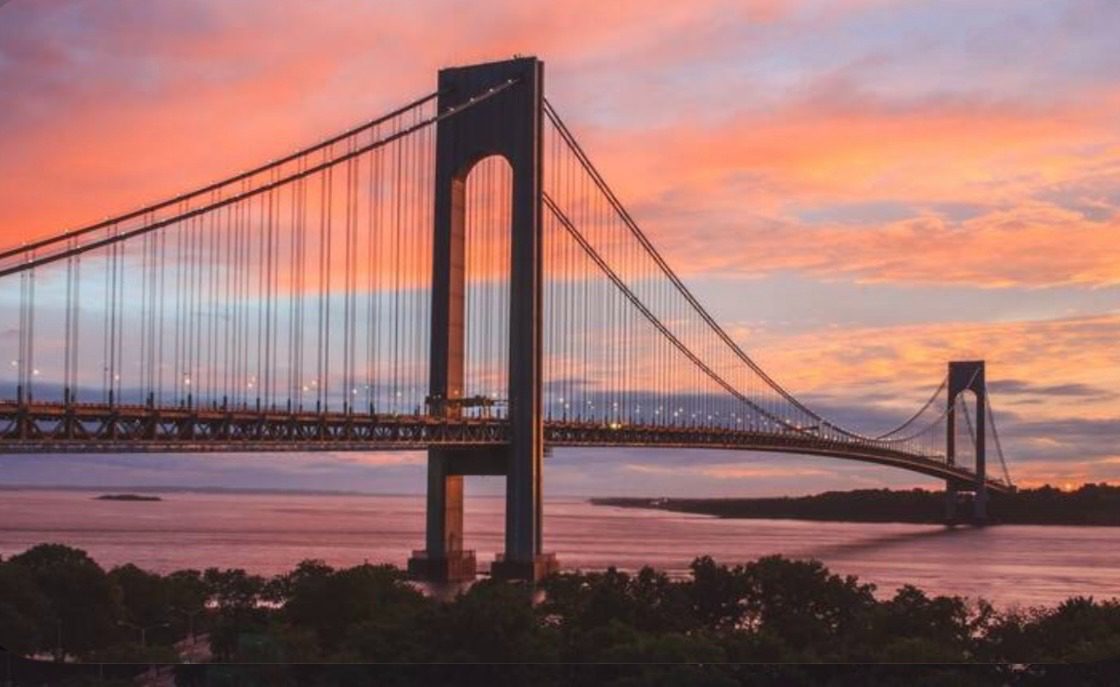
When the first construction contracts were signed in 1959, and when Governor Nelson Rockefeller signed the naming law in 1960, a glaring typo slipped through: the explorer’s name was spelled with only one “Z” — Verrazano.
The Metropolitan Transportation Authority (MTA) ignored calls to fix the error for years, arguing that replacing all the road signs, brochures, and maps would cost millions of dollars. The needle finally moved in 2016 when Robert Nash, a 21-year-old college student from Brooklyn, launched an online petition demanding historical accuracy. The initiative went viral and quickly gained political backing.
In June 2018, the New York State Senate and Assembly passed a bill to correct the spelling. On October 1, 2018, Governor Andrew Cuomo signed it into law, officially changing the name to the Verrazzano-Narrows Bridge. To avoid wasting taxpayer money, a sensible compromise was reached: the old signs weren’t ripped down immediately; instead, they are being gradually replaced with the double-“Z” versions through routine maintenance and natural wear and tear.
Sports, Cinema, and Safety: The Modern History of the Verrazzano-Narrows Bridge
Beyond carrying thousands of daily commuters, the bridge plays a massive role in the city’s cultural and athletic life.
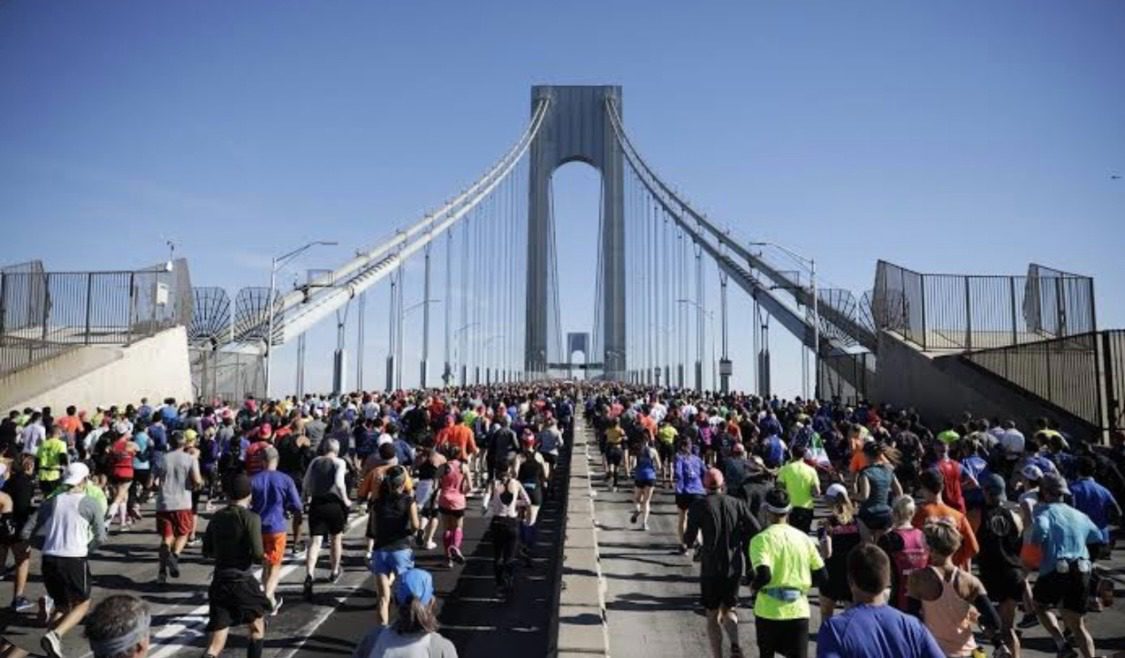
Since 1976, it has served as the legendary starting line for the New York City Marathon. Roughly 50,000 runners cross the bridge every year, completely taking over both decks. To pull this off, the bridge is shut down to vehicular traffic from the early morning until 3:00 PM. The run across the span is famous for its breathtaking views of New York Harbor, though runners have to battle brutal headwinds and a punishing incline.
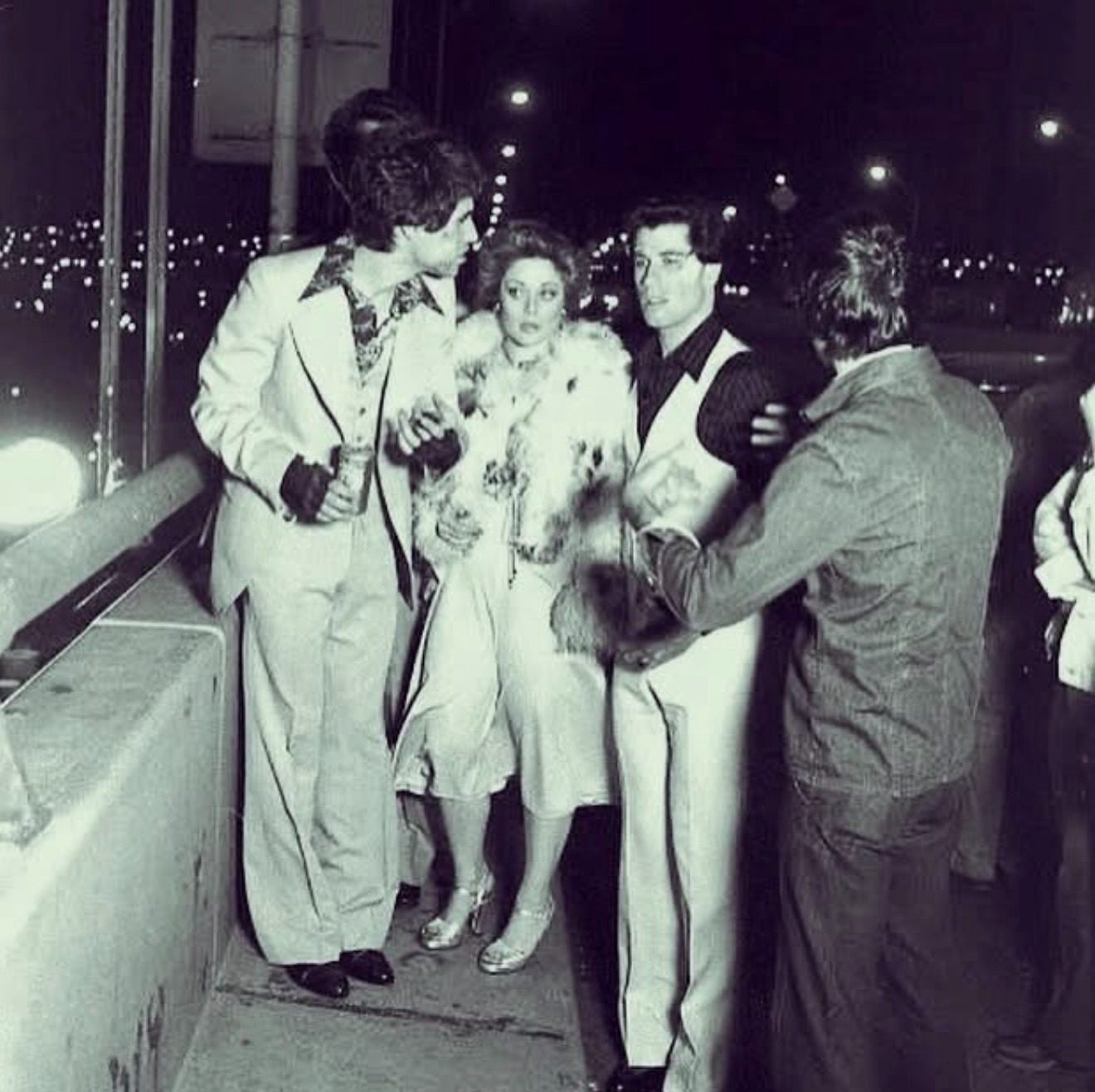
On the first Sunday in May, the bridge also hosts the Five Boro Bike Tour, temporarily turning the lower deck over to 32,000 cyclists. Off the pavement, the bridge has made its mark in Hollywood. Its most famous on-screen appearance was in the 1977 cult classic Saturday Night Fever, starring John Travolta.
The Verrazzano-Narrows is constantly being upgraded to meet modern demands and keep it in working order. In 2011, a massive $1.5 billion overhaul began. The first phase, which wrapped up in 2017 and cost $235 million, involved tearing out the heavy concrete upper deck and replacing it with a lighter, stronger orthotropic steel deck.
City officials have also placed a major focus on safety. Originally, the bridge was designed without pedestrian or bike paths—partly to cut costs and partly to deter suicide attempts. However, the lack of walkways didn’t stop the tragedies. Following a spike in incidents, and under mounting pressure from the public and politicians, the MTA launched a project to install protective fencing. The $32.8 million contract involved installing 5.3 miles of high-strength stainless steel netting along both decks, engineered to withstand hurricane-force winds and the corrosive maritime climate.
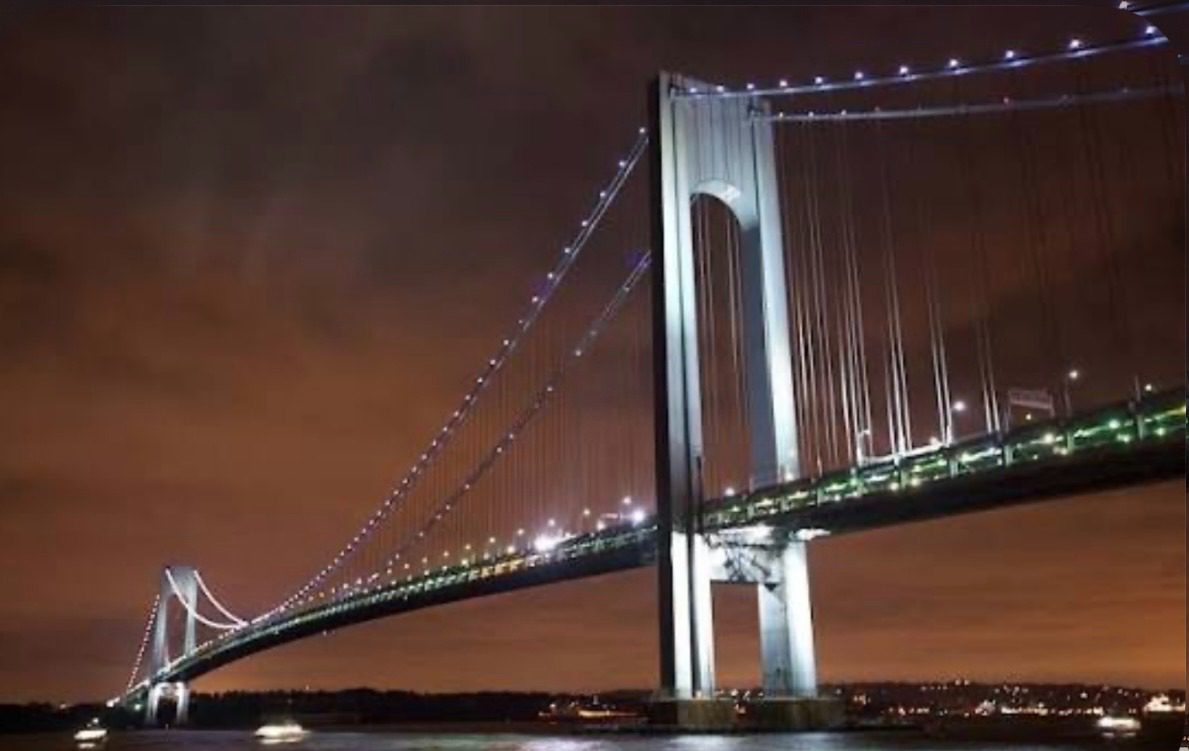
The Verrazzano-Narrows Bridge remains an undeniable triumph of 20th-century engineering. It has weathered naming controversies and billion-dollar rebuilds, all while faithfully connecting the boroughs of New York day in and day out. From a staggering piece of steel architecture that bends to the geometry of the planet to its status as the most famous starting line in marathon history, the Verrazzano-Narrows rightfully holds its place as one of the most important bridges in the world.

