
It is another iconic New York City thoroughfare that has journeyed from Native American trails and Dutch estates to the punk revolution of the ’70s and the modern era of a glass-and-steel Manhattan. In this new-york-future.com feature, we explore why this neighborhood became the ultimate symbol of contrasts, a place where the line between luxury and absolute poverty has always been razor-thin.
The First Settlements in Manhattan
New York is a city in a constant state of reinvention, but no part of it has shape-shifted as radically or dramatically as the Bowery. Spanning Lower Manhattan, this major artery has spent the last three centuries oscillating between a “highway to heaven” for the aristocracy and “the antechamber of hell” for thousands of the destitute. Today, the Bowery is undergoing yet another metamorphosis, transforming into a sanitized hub of high fashion and premium real estate. Yet, behind every new glass facade, the ghosts of the past still linger.
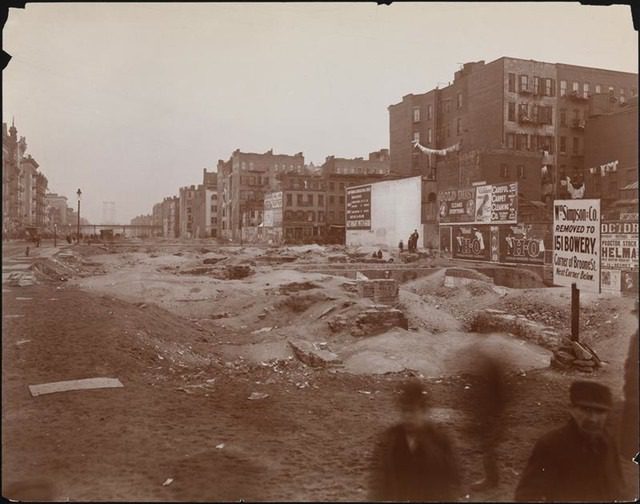
The story of the Bowery began long before the first Europeans arrived. The street was forged over an ancient Native American trail, serving as a vital artery of the island. It connected the Lenape settlements in the south to the hunting grounds in the north.
The word bouwerij (Dutch for “farm”) gave the area its name. In the 17th century, the landscape was dominated by sprawling agricultural estates owned by the colony’s most powerful families. The most famous belonged to Peter Stuyvesant, the formidable director-general who built his family chapel here. Even today, a visit to St. Mark’s Church in-the-Bowery offers a tangible link to this colonial past—Stuyvesant is buried in a vault directly beneath the building. Back then, the Bowery was an idyllic country road flanked by orchards and pastures, offering the city’s elite a quiet escape from the chaos of the port town.
The Golden Age
By the mid-19th century, the Bowery had morphed into a grand boulevard, fiercely competing with Broadway for dominance. It was an era when the street became the epicenter of both financial muscle and vibrant cultural life. Monumental buildings began to rise, such as the Bowery Savings Bank, built in the Classical Revival style to project the stability and immense wealth of the young nation.
In 1826, the Bowery Theatre opened its doors, setting the stage for a truly American artistic identity. Unlike the more conservative Broadway, which catered to European standards, the Bowery Theatre was a haven for the working class and new immigrants. They staged Shakespeare, but heavily adapted it to resonate with the common folk. The audience didn’t just sit and watch; they were active participants. They openly voiced their approval or outrage mid-scene, threw objects onto the stage, and aggressively demanded encores of their favorite moments.
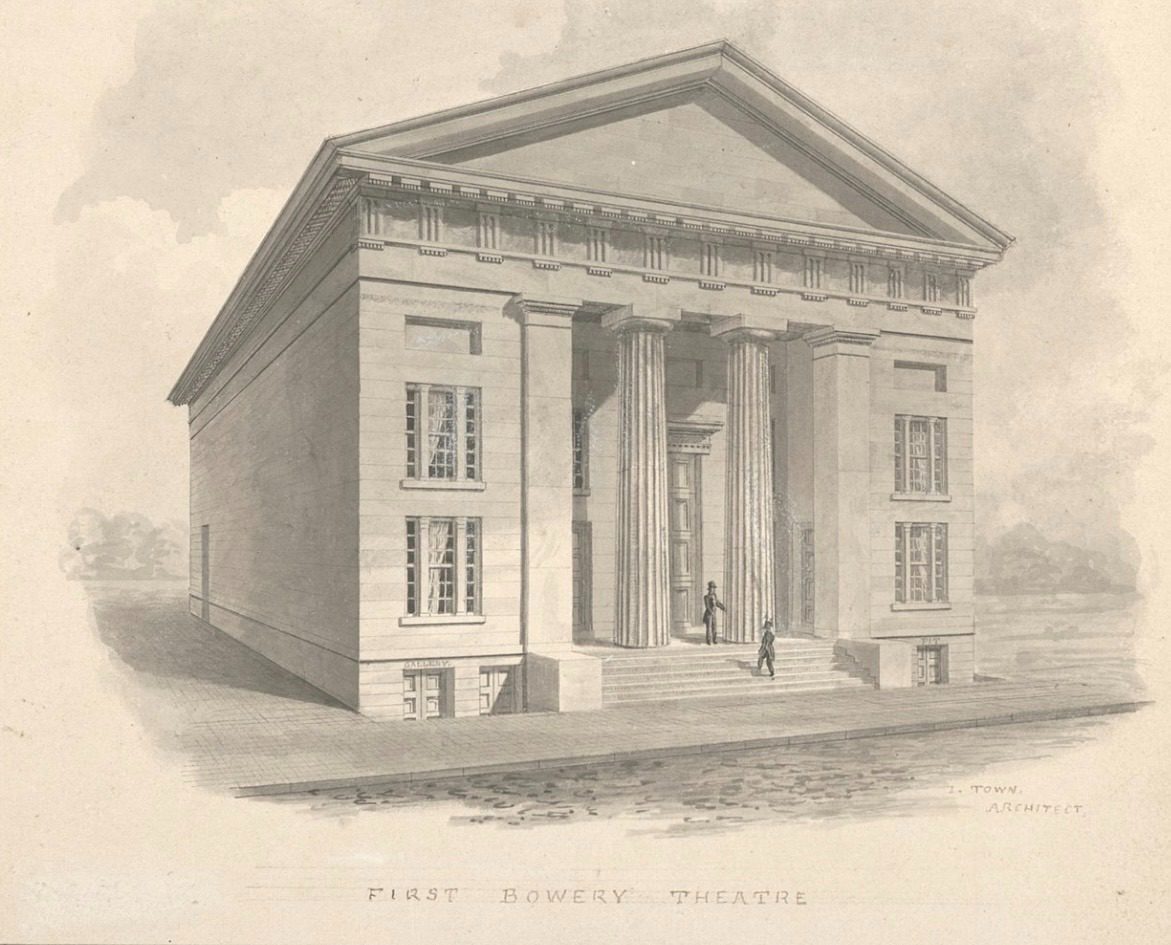
This was the era when the Bowery rightfully earned the title of the “People’s Broadway”—loud, energetic, and unapologetically raw.
A Descent into the Abyss
The decline of the Bowery wasn’t an accident; it was the direct fallout of fatal urban planning decisions. The tipping point was the construction of the Third Avenue Elevated railway (the “El”) in 1878. The colossal iron structure effectively cast the street into perpetual shadow. The relentless roar of trains, choking smoke, and soot made it utterly unlivable for the upper class. Wealthy residents fled en masse to Fifth Avenue and the Upper East Side.
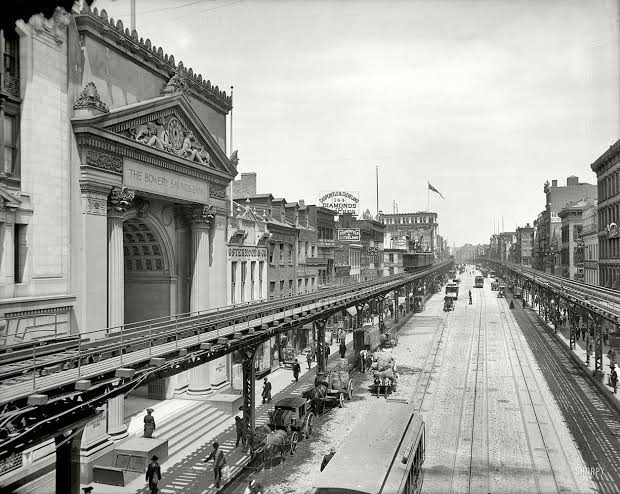
The abandoned mansions decayed at a breakneck pace. Former palaces were chopped up into cheap flophouses where dozens of people were crammed into a single room. The term “Skid Row” became the Bowery’s official moniker for a century. The street was overrun with pawnshops and dive bars serving rotgut liquor. The neighborhood became the turf of the Bowery Boys—youth street gangs with their own twisted code of honor, flashy fashion, and unique slang. They were part-time thugs and part-time volunteer firefighters, enforcing a chaotic social order right in the eye of the storm. For decades, the Bowery was synonymous exclusively with homelessness and social catastrophe.
As Stephen Crane wrote about the street in his 1893 novella, Maggie: A Girl of the Streets:
“It was a place where the darkness seemed thicker, and the air was heavy with the smell of cheap whiskey and lost hopes.”
The ’70s Cultural Revolution
When New York City teetered on the brink of bankruptcy in the 1970s, the derelict Bowery became the perfect incubator for a creative explosion. Dirt-cheap rent and a glaring lack of police presence drew in artists, musicians, and poets who didn’t fit into the mainstream.
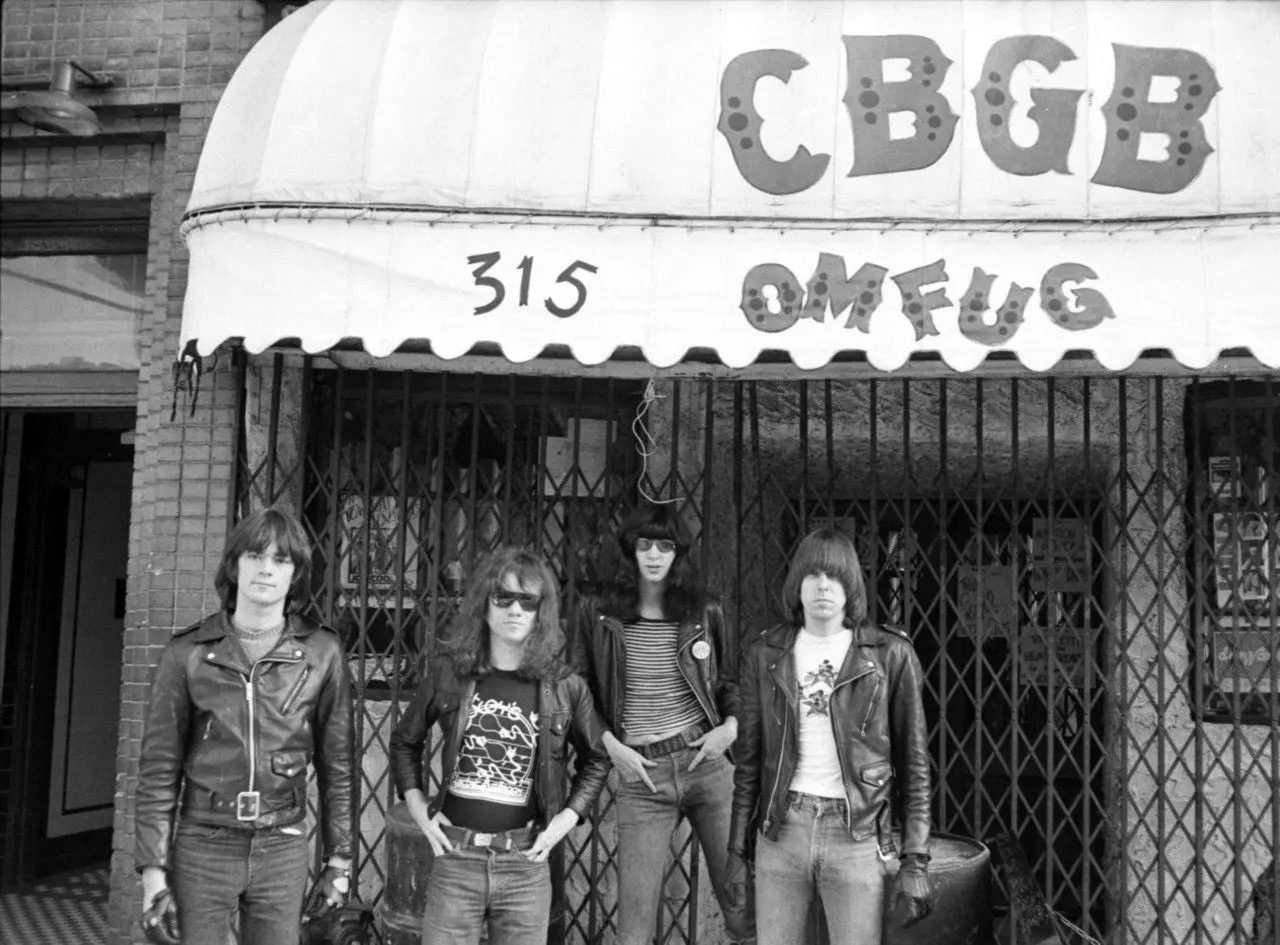
The ultimate symbol of this era was CBGB, a gritty club located at 315 Bowery.
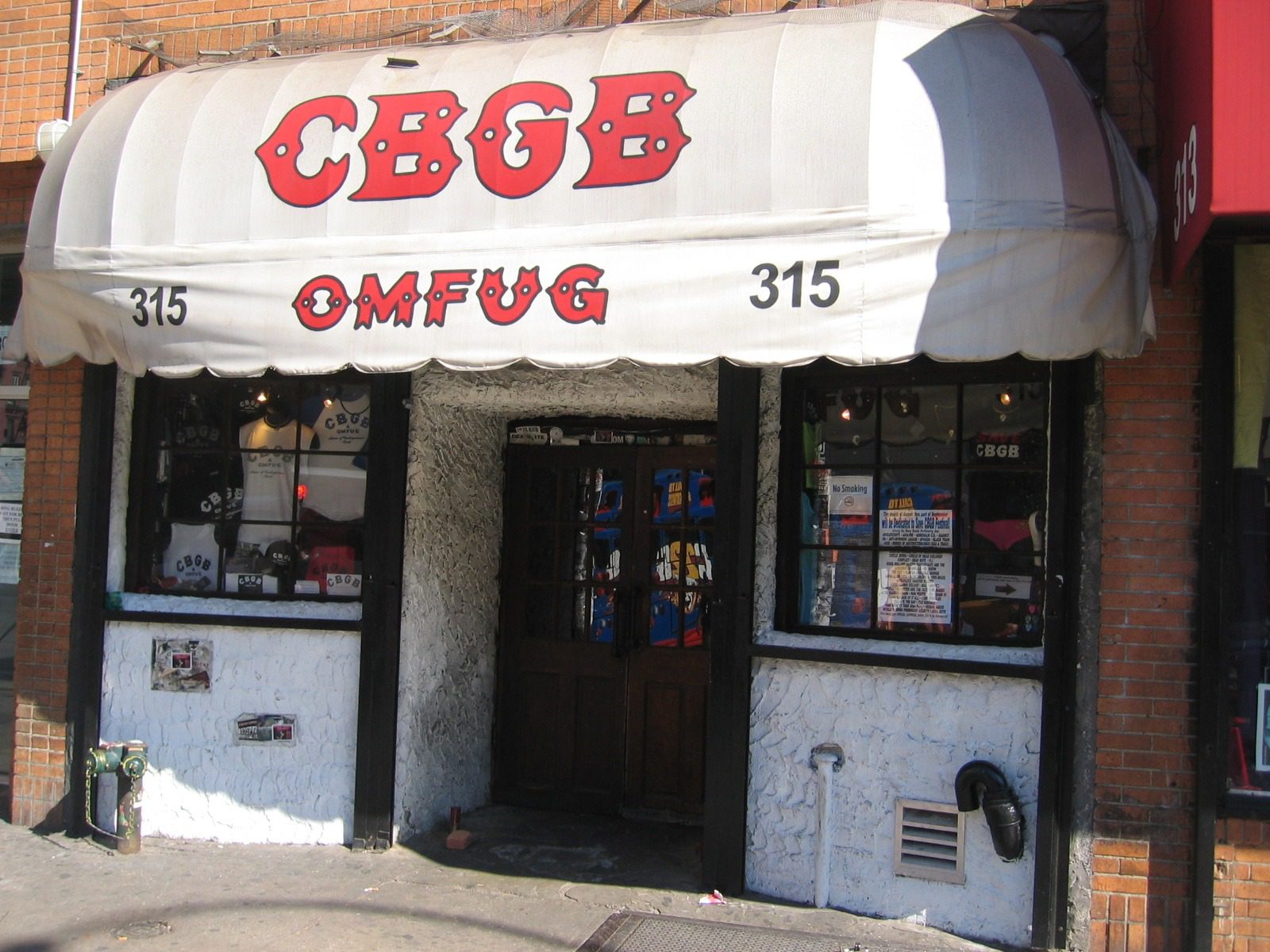
Founder Hilly Kristal originally intended to host country, bluegrass, and blues, but the stage was quickly hijacked by a new wave of radical musicians. This was where The Ramones weaponized their lightning-fast, three-minute anthems, and where Patti Smith fused high poetry with the raw, visceral energy of the streets. The club became the undisputed cradle of American punk rock and new wave, altering global music culture forever.
“The Bowery in the ’70s was like a war zone where they used guitar riffs instead of bullets. It was dirty, dangerous, and absolutely brilliant,” recalled Legs McNeil, co-founder of Punk magazine.
While musicians commanded the stages, artists claimed the lofts. William S. Burroughs, the legendary Beat Generation author, lived in a former YMCA building at 222 Bowery. His windowless apartment, affectionately dubbed “The Bunker,” became a pilgrimage site for the countercultural intelligentsia. Visionaries like Mark Rothko and Jean-Michel Basquiat found an edgy honesty within the Bowery’s grim brick walls—a raw tension that the sterile galleries of Midtown simply couldn’t offer.
Architectural Deconstructivism and Social Contrasts
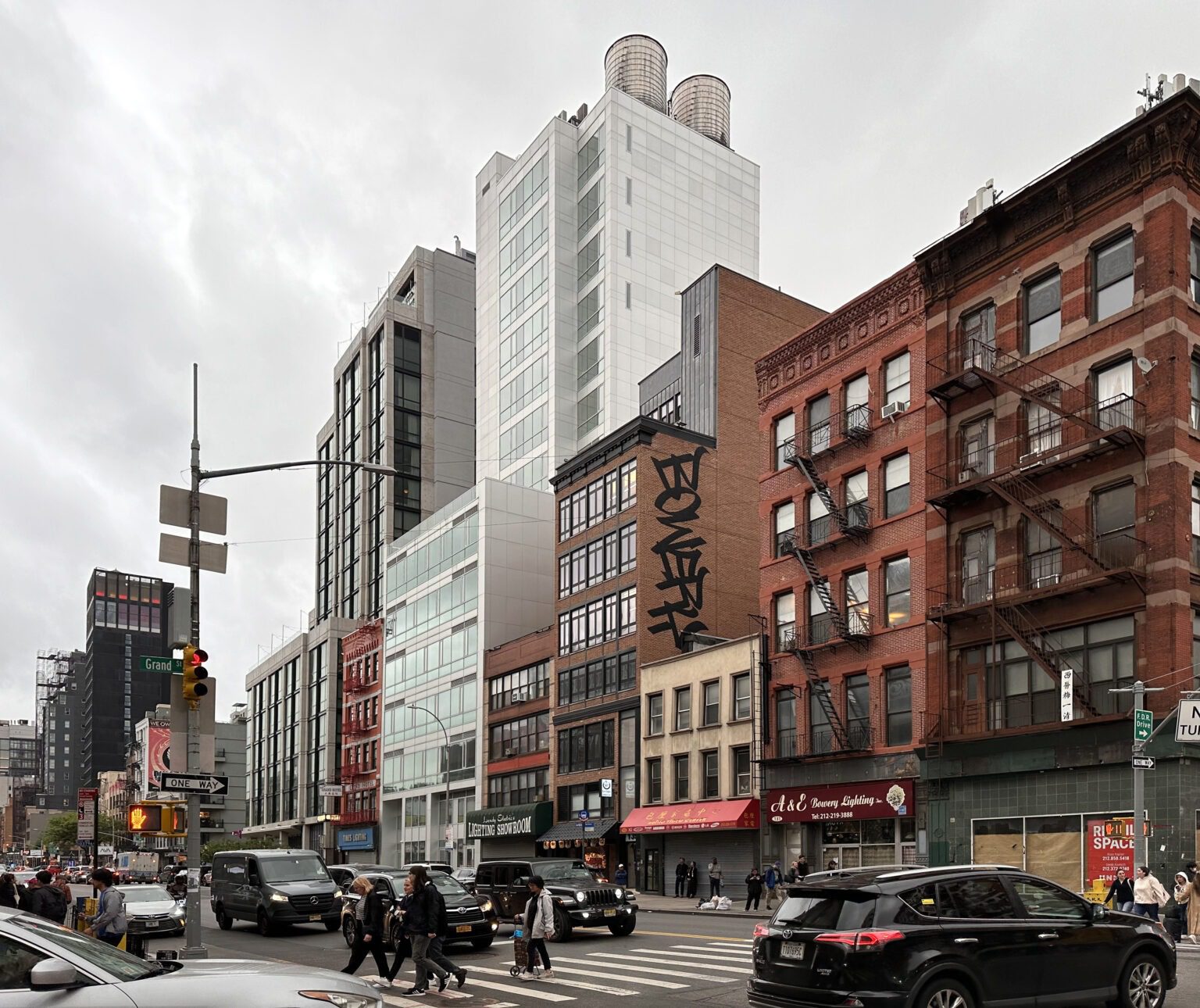
The face of the Bowery today is a bizarre mashup of 20th-century rusted steel and dazzling modern glass. The most radical move in the neighborhood’s recent history was the arrival of the New Museum of Contemporary Art in 2007. Japanese architects Kazuyo Sejima and Ryue Nishizawa designed a structure that looks like a precarious stack of shifted, white aluminum boxes.
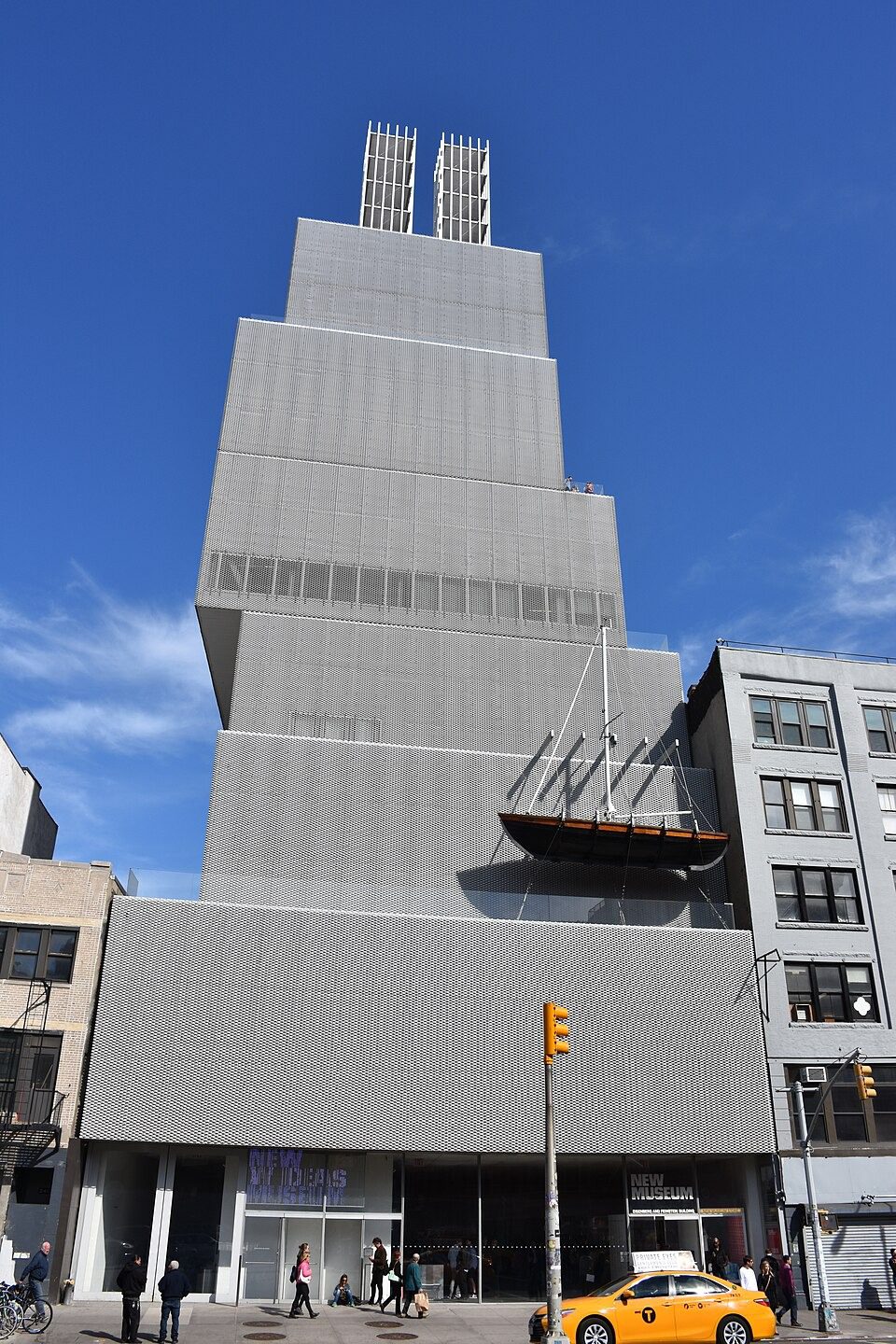
This building is more than just a museum; it’s an architectural manifesto. It marked the district’s definitive pivot from “the place where everything dies” to “the place where the future is born.” Right next door rose the luxurious Bowery Hotel. Despite being a new build, it masterfully masquerades as a historic relic, draped in antique furniture, dark wood, and classic textiles. It was a bold attempt to preserve the gritty romance of old New York in an era of relentless globalization.
Throughout the 20th century, one of the Bowery’s unique quirks was its hyper-specialization. The area was world-renowned as a premier hub for restaurant supply and lighting fixtures. Entire blocks were packed floor-to-ceiling with massive commercial stoves, industrial refrigerators, and thousands of shimmering chandeliers.
Now, those multi-generational mom-and-pop shops are being aggressively pushed out by massive capital. They are being replaced by concepts like Ainslie—a sprawling restaurant and bar housed in a former industrial warehouse. It is the textbook definition of industrial chic: exposed brickwork, soaring ceilings, and visible ductwork that now serve as a backdrop for expensive dinners.
Gentrification on the Bowery is agonizing and deeply controversial. Rents have skyrocketed by thousands of percent over the last 20 years, turning former artist squats into millionaire penthouses. This has created a surreal social landscape. A person dressed in haute couture can step out of a luxury high-rise straight onto a sidewalk where tents still stand outside The Bowery Mission, an organization that has been feeding hundreds of people in need every single day for over 140 years.
A Cultural Footprint in Eternity and Modern Media
The Bowery is permanently coded into the DNA of global culture as the ultimate symbol of struggle, downfall, and resurrection. Its mythos has inspired generations of creators:
- Music:
From Bob Dylan’s somber ballads to the aggressive anthems of The Clash and the romantic nostalgia of Lana Del Rey, the street’s name serves as shorthand for the authentic, unvarnished pulse of the city.
- Film:
The Bowery has provided the backdrop for countless movies, ranging from 1920s silent comedies to the brutal crime dramas of Martin Scorsese. It always plays the role of the place where human beings are stripped of their pretenses and forced to confront their true selves.
- Literature:
Writers like Stephen Crane and Jack Kerouac chronicled this avenue as a liminal space where the boundary between absolute genius and total madness fades away.
The story of the Bowery is the story of the human spirit itself, cemented in brick and asphalt. It has survived devastating fires, epidemics, crime waves, and economic collapses. While today the street looks cleaner, safer, and astronomically more expensive than at any other point in its history, its core defining trait remains intact: its ferocious resilience.
The Bowery teaches us that a city is not just a collection of buildings, but a complex, living organism capable of endless regeneration. It serves as a reminder that even in the beating heart of a modern metropolis, the memory of the past can never be completely erased. It will always bleed through the fresh layers of paint and the polished glass.

