
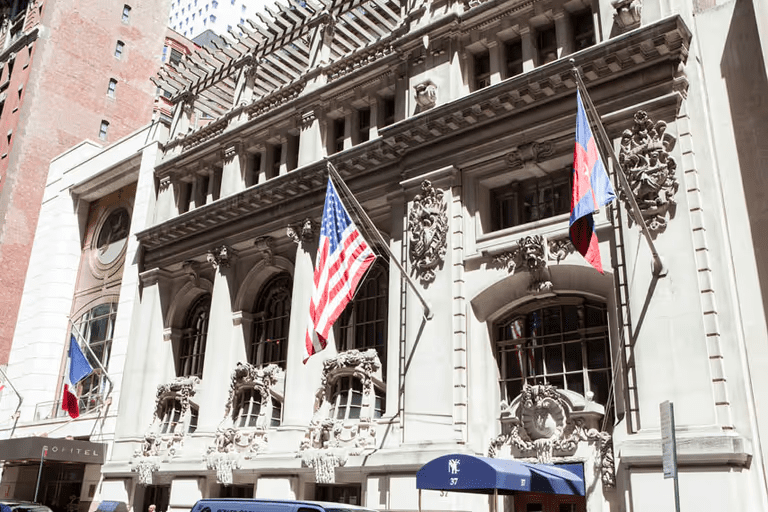
The New York Yacht Club boasts a magnificent seven-story Beaux-Arts building, a true architectural gem. Designed by Whitney Warren of the renowned firm Warren and Wetmore, this luxurious structure officially opened its doors in 1901. Since then, it has served as the hub for yachting enthusiasts, regularly bringing together those who share a passion for the open seas. The building itself has undergone several renovations and enhancements over the years, maintaining its grandeur. It stands as a cherished New York City landmark, proudly listed on the National Register of Historic Places. Let’s delve deeper into its fascinating construction history and unique architectural features on new-york-future.
A Rich History: The New York Yacht Club’s Journey
Founded in 1844, the New York Yacht Club moved five times before settling into its iconic present-day home. The club’s very first clubhouse was established in 1845 in New Jersey, conveniently close to a regatta site.
As the club expanded and welcomed more members, they acquired a new space on Staten Island in the mid-19th century. In 1871, the club leased premises in Manhattan, only to relocate to Stapleton six years later. From 1884 onwards, the organization operated from 67 Madison Avenue.
Like many special interest clubs of its era, the New York Yacht Club initially occupied various repurposed residential buildings. However, by the 1890s, the idea of constructing a dedicated building gained traction. This decision was largely driven by the club’s growing membership, which had exceeded 1,000 by 1894. The Madison Avenue location simply couldn’t accommodate everyone during events or elections, often leaving members standing throughout general meetings, which was quite inconvenient.
Competition, Design, and Construction
In 1897, the yacht club’s board formed a five-person committee to select a site and raise funds for the new building. This phase sparked some debate, as not all members fully supported the idea. Some even proposed locating the new building outside the city. Ultimately, financier J.P. Morgan stepped in with a generous offer: he would personally purchase a 75-by-100-foot lot on 44th Street in Midtown Manhattan. In return, the yacht club would need to increase its annual membership dues to $50. The board agreed, and the plot was soon acquired.
The next crucial step was an architectural competition, launched in 1898. Seven architects participated, each given a month to develop their designs. The submissions varied widely, ranging from understated and traditional to elaborate and luxurious. The final decision rested with Morgan, who ultimately chose Whitney Warren’s design from Warren and Wetmore, largely due to its skillful incorporation of French details. The firm Marc Eidlitz & Son was brought on as the contractor, and construction began in 1899.
By September 1900, the new building was nearing completion. Club members rallied, raising an additional $113,000 to expedite the final stages of construction. Towards the end of the year, the yacht club began gradually relocating documents and books to its new home. The last meeting at the Madison Avenue club took place on January 15, 1901, with the organization boasting 1,495 members at the time. Within days, they too began moving their belongings to the 44th Street building, even as construction work was still ongoing.
The final cost of the building itself came in at $350,000. Including land acquisition and architectural design fees, the total expenses amounted to $500,000. Members of the yacht club gathered for an unofficial opening on January 29, 1901, and just two days later, the new building hosted its first official ladies’ night.
Architectural Splendor of the New York Yacht Club
Architect Whitney Warren designed the building in the Beaux-Arts style, and it is now characterized as “modern French Renaissance.” This club building was the first project in New York City undertaken by Warren and Wetmore, who later went on to design Grand Central Terminal and the Helmsley Building. Warren intended for the yacht club building to stand out and clearly convey its purpose, which is why he masterfully adorned it with maritime motifs.
The new building spans seven stories, topped with a mansard roof. Its brick facade is elegantly trimmed with fine-grained limestone. Brick was chosen as the primary material for its cost-effectiveness. The lower floors are vertically divided into four bays, which are asymmetrical. Warren deliberately created this design to maximize the size of the model room on the second floor. Furthermore, the asymmetrical facade and sculptural details make the building appear visually larger than it actually is.
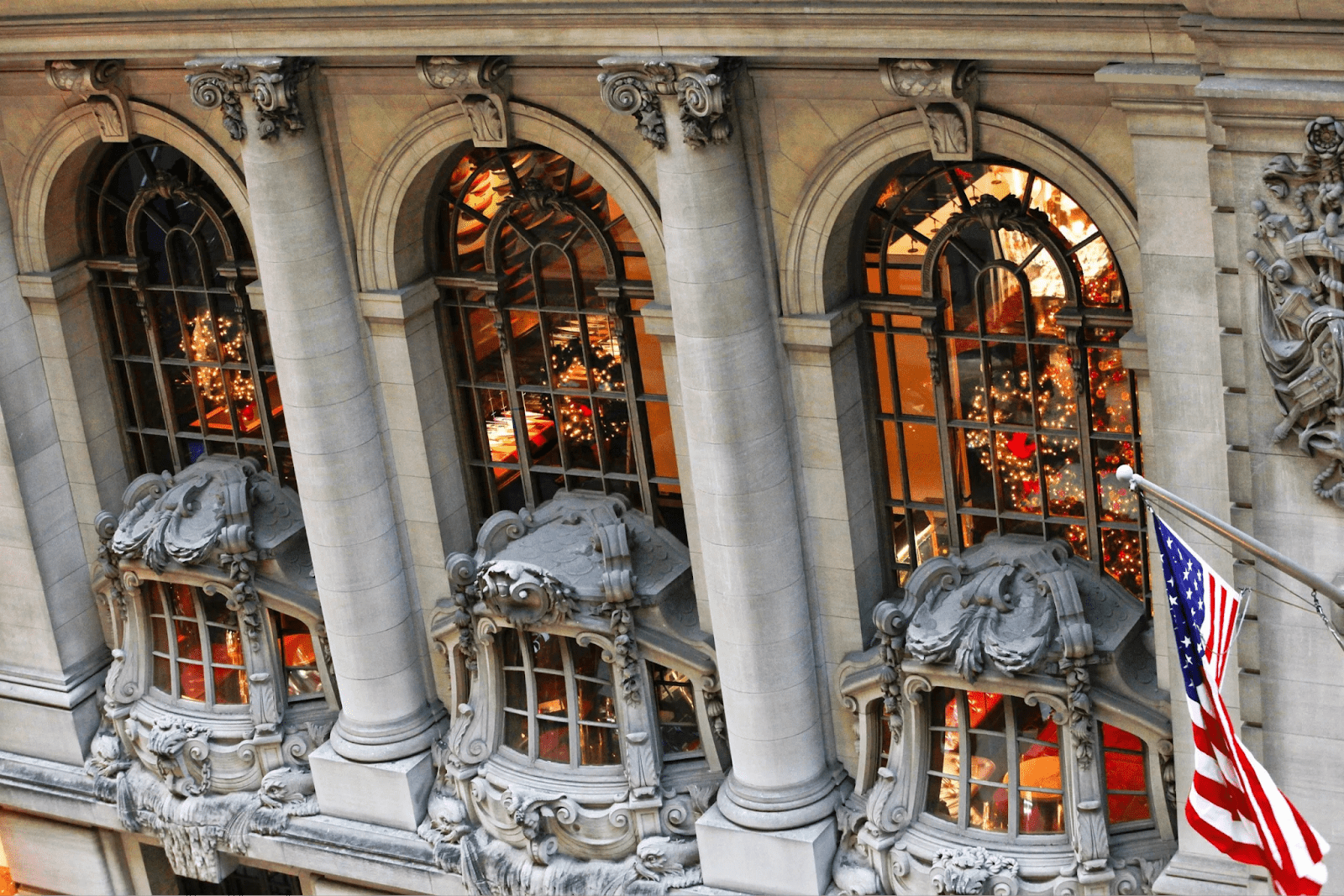
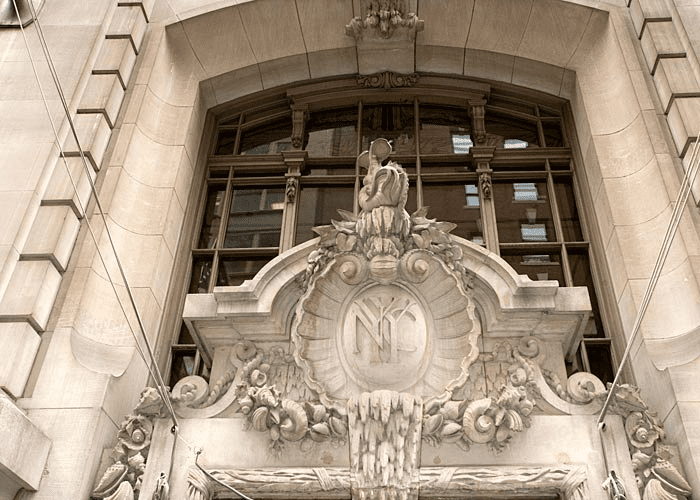
The first floor is slightly raised above ground level and features windows with grilles. The building’s entrance is intricately carved with a seashell motif and an octopus with curving tentacles. The second and third floors boast bay windows and a colonnade consisting of a Doric-style pier and two Ionic-style columns. The three westernmost bay windows are adorned with double vaulted windows. Their frames are crafted in the style of 18th-century warships’ sterns, further embellished with carvings of seaweed, waves, and dolphins. On the second floor, an arched window is magnificently decorated with the head of the ancient Greek sea god Poseidon.
The eastern bay window protrudes from the facade and is flanked by pilasters (projections) featuring carved yacht club symbols. These pilasters also serve as attachment points for flagpoles that extend over the sidewalk. While the original plan called for torches to be installed along the facade, this idea was eventually abandoned.
The upper floors are also divided into four bays with wide pilasters in between. The windows on the fourth floor are small, recessed, and rectangular. Above the fourth floor, wide pilasters support the fifth floor. The mansard roof also incorporates windows. Initially, there were plans to create a garden on the building’s roof, but this idea was also not realized.
Interior Design and Renovations
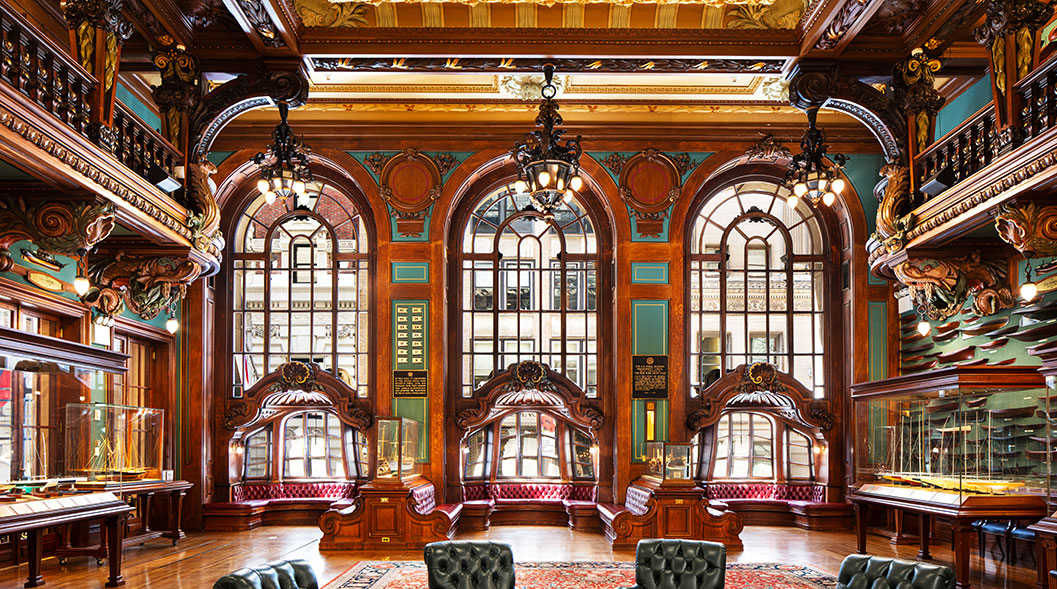
Warren & Wetmore not only designed the yacht club building but also crafted the oak furniture and decorative light fixtures for its interior. The furniture was upholstered in dark green leather, and the decorations were all chosen with a nautical theme in mind. For instance, the walls are adorned with works by artists like James E. Buttersworth.
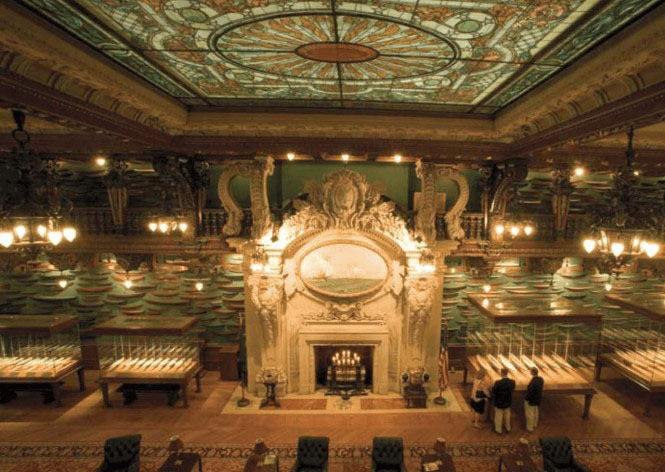
Upon entering, visitors are greeted by a two-story lobby before proceeding to other rooms. The lobby walls are finished with Caen stone. A central marble staircase leads to the model room on the second floor. This expansive room, measuring 45 by 100 feet, is decorated in gold, green, and burgundy tones. It houses a remarkable collection of ship models, numbering 150 complete models and approximately 1,200 half-models in 2001. The model room also proudly displays awards and trophies earned by yacht club members. The library, chart room, dining rooms, and offices are located on the fourth floor, while the fifth floor is equipped with bedrooms for guests.
The new yacht club remained largely unchanged from its opening throughout the 20th century, with only individual rooms being reconfigured as needed. The New York Yacht Club initiated a major interior renovation in the 1980s. The building’s facade was fully restored in 1992, and the interior was refreshed for the club’s centenary in 2001. Since then, the organization continues to thrive in the city, its luxurious and distinctive building remaining an architectural masterpiece and a true jewel of New York.

