

Alexander Prokofiev-Seversky dreamed of the sky from a young age. He became a pilot and was immediately sent to war. A severe injury and the loss of his leg did not stop the brave man. Prokofiev-Seversky not only returned to flying but also emigrated to the United States, where he became a renowned aircraft designer and influenced the development of the American Air Force. Learn more at new-york-future.
Early Life and Passion for Aviation
Alexander Nikolayevich Prokofiev-Seversky was born on June 7, 1894, in Tiflis (now Tbilisi, Georgia). The boy was of Russian descent. His father was a singer, director, and theater owner who also owned a personal airplane. As a result, Alexander became interested in aviation from childhood, and his father taught him to fly.
Following the military careers of his grandfathers, he entered the Marine Cadet Corps in St. Petersburg, graduating with the rank of michman (ensign). Afterward, Alexander was assigned to the 1st Baltic Fleet Crew. However, he dreamed of becoming a naval aviator and eventually received a transfer to study at the Military School of Aeronautics in Sevastopol.
After passing his exams in the summer of 1915, Alexander secured a position as a pilot in an aviation unit of the Baltic Fleet. By then, World War I was already underway.
Participation in World War I
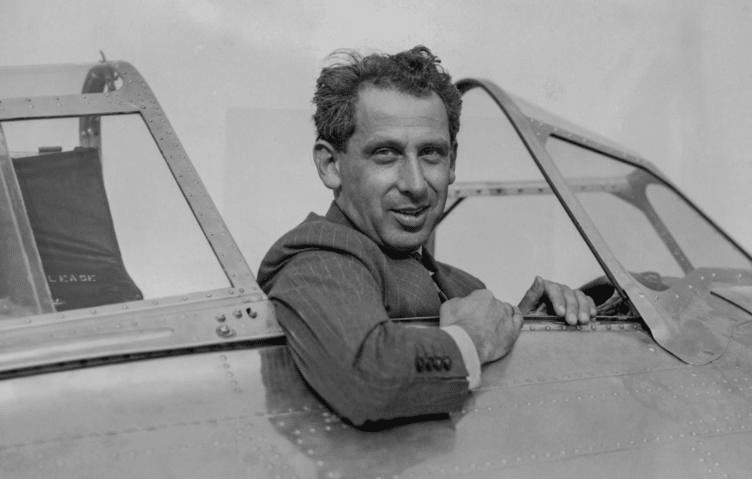
Combat missions were not what Alexander had in mind when he dreamed of the sky. However, his piloting career began with them and lasted only a week. During an attack on a German destroyer, he was shot down by enemy anti-aircraft fire. Alexander was severely wounded, and his right leg had to be amputated below the knee. He quickly adapted to a prosthesis and wanted to fly again, but his superiors refused permission.
Prokofiev-Seversky then returned to St. Petersburg and began designing aircraft. This did not last long. In 1916, he participated in an airshow without permission and handled the controls perfectly. Despite his success in the sky, Alexander faced punishment, but Tsar Nicholas II intervened and granted the daring pilot permission to return to combat service. Three days later, he shot down his first enemy aircraft.
In the winter of 1917, Prokofiev-Seversky commanded the 2nd Naval Fighter Detachment. He flew many successful combat missions and was considered a naval ace. He was decorated with honorary orders multiple times. Although his achievements later became a subject of debate, the most important thing was that he had returned to aviation—his life’s work.
Emigration to the U.S. and Path in American Aviation
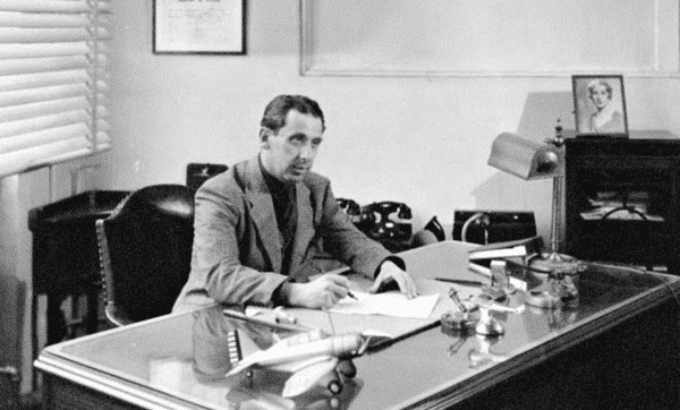
After the revolutionary events of 1917, Alexander Prokofiev-Seversky was in St. Petersburg and was appointed commander-in-chief of the Baltic Fleet. The following spring, he traveled to the United States via Siberia, serving as an assistant naval attaché.
The work trip soon turned into emigration. Prokofiev-Seversky settled in New York and began looking for work. He managed a restaurant for a time, but civilian life was not to his liking. An acquaintance with General Billy Mitchell helped change his path. The general was an advocate for the development of bomber aviation, and Prokofiev-Seversky shared his ideas for the technical improvement of aircraft with him.
Soon, the U.S. War Department hired the former ace as a consulting engineer and test pilot, and he enthusiastically returned to his beloved field. As early as 1921, he received his first patent for in-flight refueling. Over the following years, he filed 364 patent applications, developed the first gyroscopically stabilized bombsight, and contributed significantly to the development of the U.S. Navy.
In 1927, Alexander Prokofiev-Seversky obtained American citizenship, and the following year, he became a major in the U.S. Army Air Corps Reserve.
His Own Aircraft Company and Other Activities
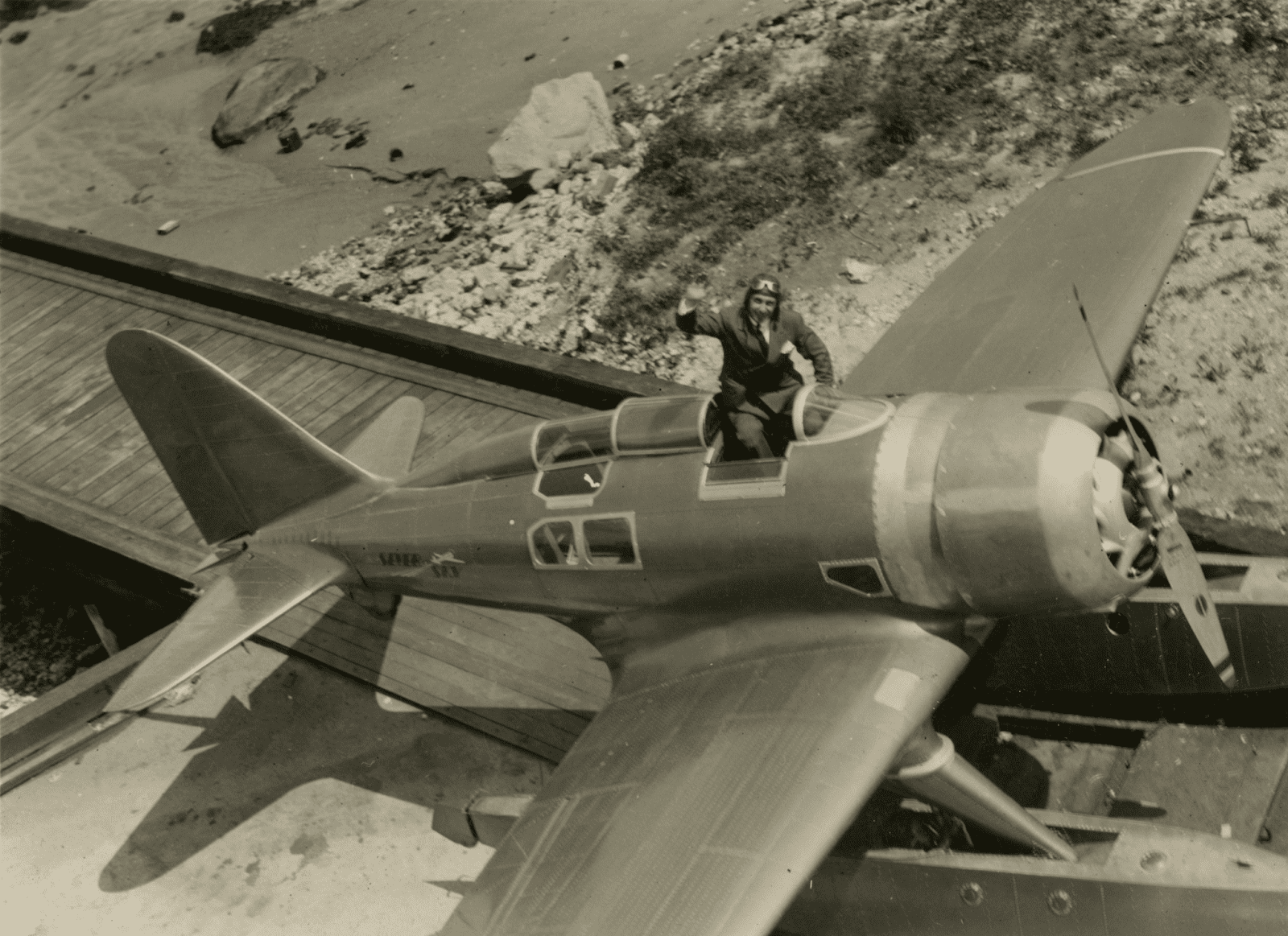
In 1923, after selling his bombsight to the U.S. government for $50,000, Alexander Prokofiev-Seversky founded the “Seversky Aero Corporation.” The company manufactured aircraft parts and tools, but it went bankrupt in 1929 after the stock market crash.
However, the aircraft designer did not give up. He found investors and resurrected the company as the “Seversky Aircraft Corporation.” Its main assets were his patents, so Prokofiev-Seversky decided to invest in aircraft research and development alongside other Russian and Georgian engineers. The “SEV-3,” an all-metal, multi-seat amphibious monoplane, became a groundbreaking design that set many speed records at the National Air Races in the 1930s. Prokofiev-Seversky himself was most often the pilot.
This aircraft later served as the basis for the “SEV-3XLR” fighter, the two-seat “2-XP,” the single-seat “SEV-1P,” and the “BT-8” trainer, as well as the “P-35A” series. The design bureau developed over two dozen innovative projects. Not all of them were successful, but the aviators did not stop.
In 1936, the company acquired three factories, an airfield, a hangar, and a seaplane assembly base on Long Island. Funds were tight, and they had to seek investor support again. Furthermore, the company head’s personal budget was quite large, and he had also secretly signed a contract for 20 fighters with the Japanese. Consequently, when Prokofiev-Seversky traveled to Europe in 1939, he was removed from his position as president.
The company continued operations under the name “Republic Aviation Corporation” and became an industrial giant during World War II. In 1965, it was acquired by the “Fairchild” corporation.
As for its founder, he initially filed a lawsuit. Eventually, realizing the futility of his case, he focused on formulating his theory of air warfare. In 1942, his book “Victory Through Air Power” was published. It became a “New York Times” bestseller. Five million copies were sold, and Walt Disney adapted it into an animated film of the same name.
As a proponent of strategic air power, Alexander Prokofiev-Seversky advocated for the creation of the Strategic Air Command in 1946 and for the development of the “Convair B-36” and “Boeing B-47 Stratojet” aircraft. In the post-war years, he lectured and wrote about aviation. He published two more books: “Air Power: Key to Survival” and “America: Too Young to Die!”.
Recognition and Personal Life of Alexander Prokofiev-Seversky
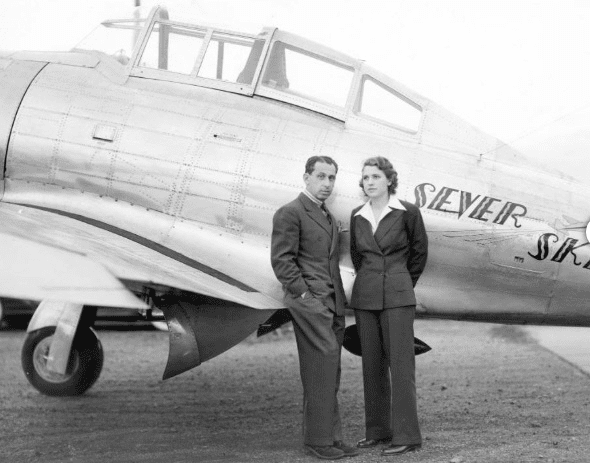
In New York, Alexander Prokofiev-Seversky was a well-known figure. Charismatic and cheerful, he captured public attention. Newspapers frequently wrote about him. Additionally, the designer founded the New York Institute of Technology and received many awards:
- The Harmon Trophy for achievements in aviation (1939),
- The Medal for Merit from President Harry Truman (1945),
- The Exceptional Service Medal from the U.S. Air Force (1969),
- Induction into the National Aviation Hall of Fame (1970),
- An award from the American Academy of Achievement (1972).
In 1923, the pilot married Evelyn Oliphant. The family lived in New York. His wife shared her husband’s passion for aviation and even knew how to fly a plane. The two of them often went on air trips together. The couple had no children. They got a dog named Vodka, which they took with them on the plane.
Evelyn passed away in 1967 at the age of 60. Alexander Prokofiev-Seversky outlived her by 7 years and died on August 24, 1974, at Memorial Hospital in New York. He was buried at Woodlawn Cemetery in the Bronx.