

Almost everyone in the world knows where the Brooklyn Bridge is. Every year, millions of tourists come to New York to take photos with this iconic landmark. The Brooklyn Bridge is just as popular with locals, and for good reason: it was the first suspension bridge in the world and the first bridge to be built in New York City. At the time, it connected two separate cities—Brooklyn and New York. Read more at new-york-future.
The Prehistory of the Brooklyn Bridge
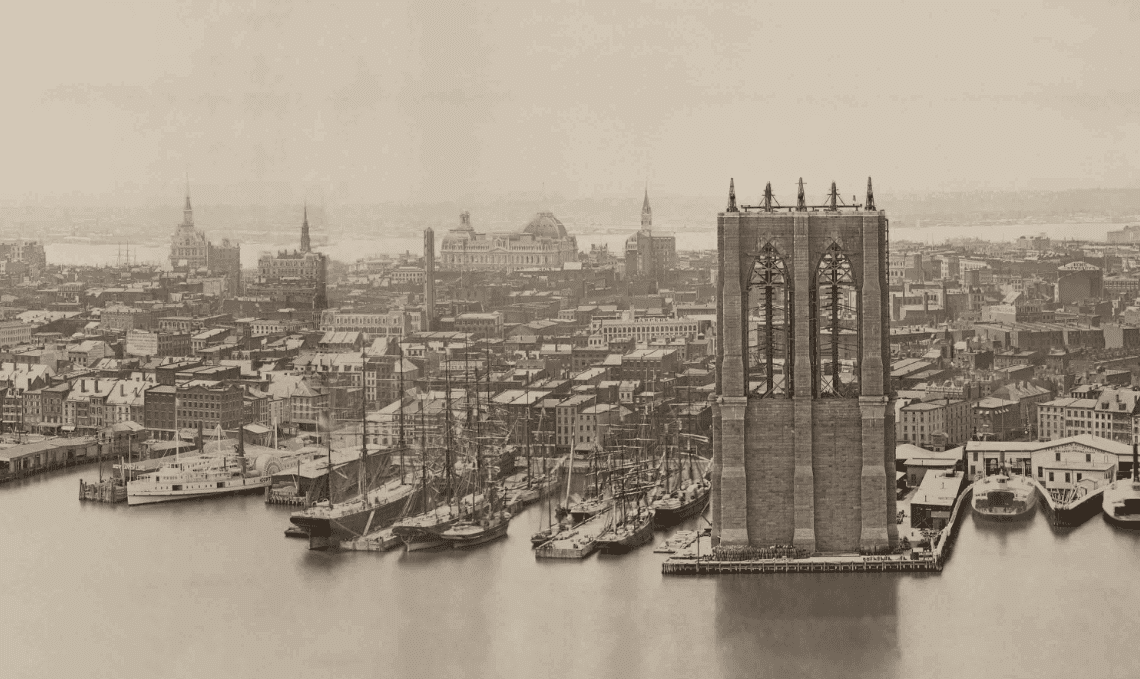
The idea of a connecting structure between the two cities of New York and Brooklyn first came up in the early 19th century. The first plan for a bridge dates back to 1800, but it was never realized. Engineers repeatedly proposed various designs, including a chain bridge, a link bridge, and others. These ideas were never implemented because the bridge had to be quite tall to cross the navigable shipping channel of the East River, and any of the proposed designs would have completely stopped shipping traffic.
For many decades, the government considered a multitude of ideas and designs for a bridge between the two cities, but none were ideal. Finally, in the 1850s, a talented German architect with vast experience building suspension bridges, John Roebling, moved to the U.S. In the mid-19th century, he created the design for what would become the world-famous Brooklyn Bridge. Although the plan to build a suspension bridge from New York to Brooklyn was approved in 1852, it was not realized until 15 years later. In 1867, the New York government issued a permit to build the suspension bridge and an act to provide $5 million in capital to finance the construction of the innovative bridge.
The Brooklyn Bridge Construction Plan
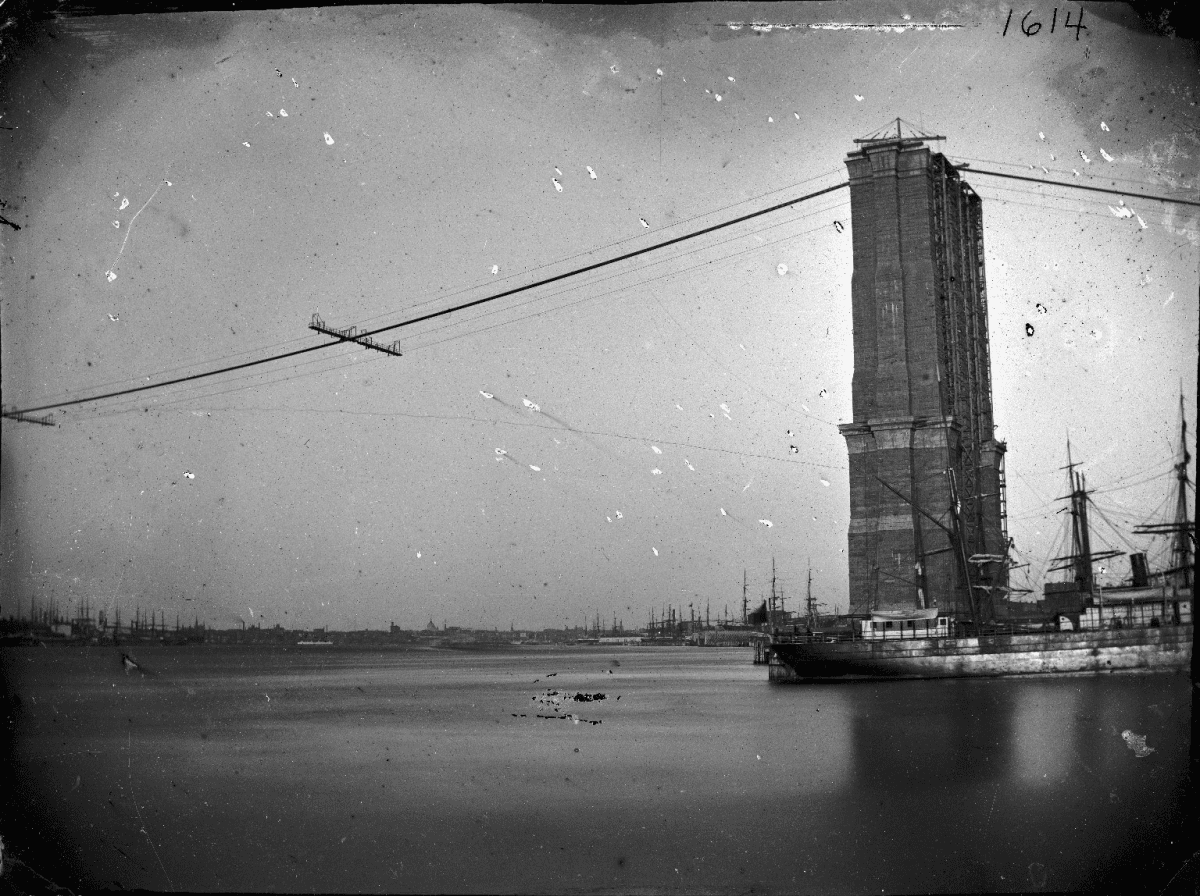
After the New York authorities signed all the permits, the master plan for the suspension bridge was presented to the public. According to the plan, the Brooklyn Bridge was to be much longer and taller than any other suspension bridge in the world. This was necessary to allow freight and other vessels to pass through the channel without issue. The plan was for the bridge connecting New York and Brooklyn to have: a roadway for vehicles; a railroad section; and pedestrian walkways.
Of course, it was also planned that there would be a toll to cross the new bridge, which would help cover the construction costs. In the mid-19th century, this project was considered incredibly innovative worldwide. It earned immense praise and was of great importance to Americans. But there was also a flip side. In the early stages of its construction, the Brooklyn Bridge was repeatedly criticized. People believed the project was impossible to build due to its incredibly complex design, its cost was too high, and all the money spent on construction would be for nothing.
The Start of the Suspension Bridge Construction
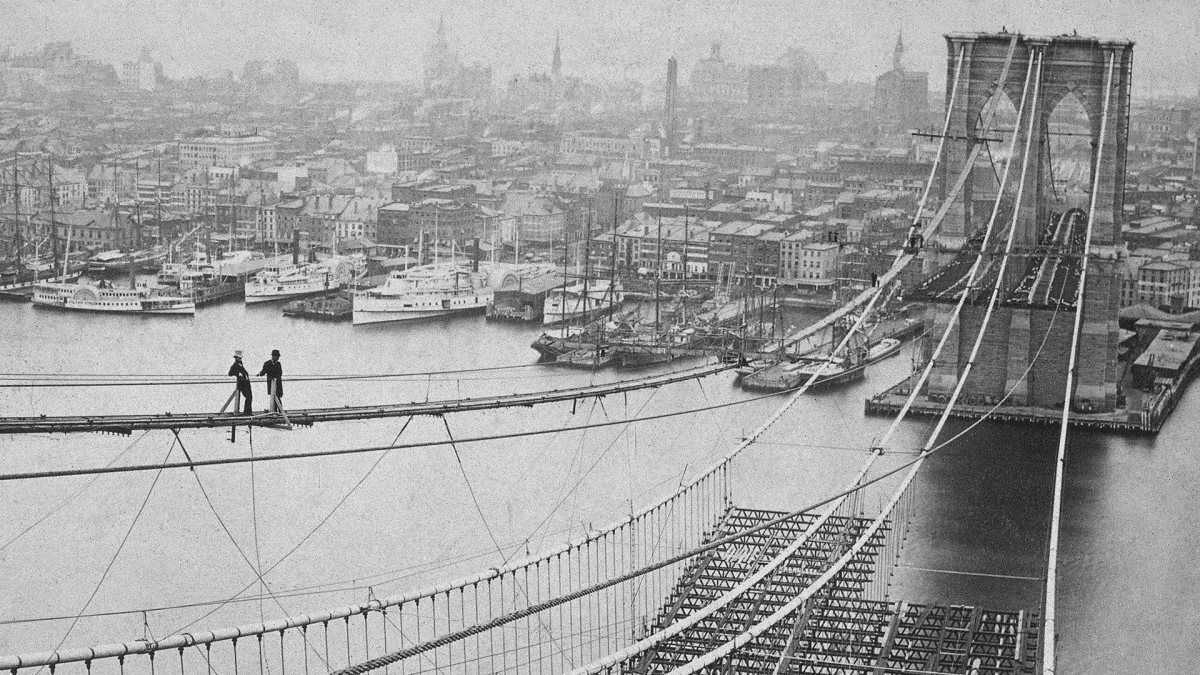
Despite the fears and a storm of criticism, construction of the suspension bridge from New York to Brooklyn began in 1870. But when construction started, sailors began to protest. They claimed the bridge would interfere with shipping and that its span would be too small for barges to pass through. A group of sailors even filed a lawsuit. But despite all the sailors’ attempts to stop construction, the court ruled that the building of the suspension bridge was legal and that its plan took all the proper span calculations into account.
The construction stages of the Brooklyn Bridge in the 1870s were as follows: first, caissons were built—special structures for creating a chamber underwater that was completely free of water; then, supports were made, and construction of the stone towers began; after that, cables were stretched between the towers; and in the final stage, workers built the steel beams that would support the roadway. The official opening of the Brooklyn Bridge took place in 1882. It was a huge success, with thousands of people showing up for the opening ceremony.