

It’s hard to imagine that the magnificent, powerful, and monumental New York was once a small town with big ambitions, not the “capital of the world.” Years ago, there were no towering buildings or cars, tourists didn’t flock here, and no one dreamed of a career in New York. The history of this city and its people is truly inspiring; the dedication with which native New Yorkers developed their hometown is something to admire. The one thing that hasn’t changed about New York after so many centuries is its hardworking and devoted citizens. More on new-york-future.
The Birth of a Metropolis: Who Built New York?
When Christopher Columbus discovered America, the people of the Old World learned about the existence of a new part of the world, consisting of two continents. America expanded from East to West, gradually moving toward California. New York was an important logistics center at the time, and all trade routes led to the New York boroughs of Brooklyn and Manhattan.
The history of the metropolis began in the Downtown area, where all trade agreements were made. The construction of the first industrial enterprises and skyscrapers was carried out by both local and foreign architects and city planners. The peak of construction occurred in the 18th century, but it also depended on the success of trade in the city. According to the most famous lithographs, a truly important event for New York was how the city’s infrastructure “took shape” in 1664. Every year, the city’s architecture became even more unique and refined, and in the 19th century, the Brooklyn Bridge appeared in New York, which looked majestic and noble over the East River.
Up until the mid-19th century, New York didn’t have buildings taller than four stories. It was only later that steel-frame buildings began to appear. Interestingly, architects from Chicago came to New York to conduct various architectural experiments—and that’s how the first skyscrapers were born, which would eventually form the metropolis we know today. Unfortunately, New York’s very first skyscraper, the New York World Building, no longer stands, but it’s known to have been a 104-meter-tall building on Park Row. This project was handled by architect George Post and was created for the world-renowned journalist Joseph Pulitzer.
The second skyscraper in New York was located on Broadway, and its creation was overseen by Charles Sois Smith. Amazingly, the building has survived all these years and is the oldest high-rise building in New York. The construction of the third skyscraper made it legendary—this is the famous Flatiron Building, or as New Yorkers also call it, the “Flatiron.”
New York in the 20th Century
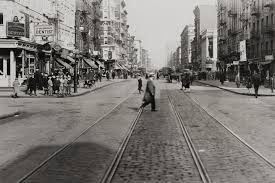
In the late 19th and early 20th centuries, New York experienced a migration boom that was directly linked to the construction of skyscrapers. The city quickly surpassed global metropolises in population and, by 1925, became the most densely populated city on Earth.
In the 20th century, the “capital of the world” gained a reputation as the city with the tallest and most beautiful skyscrapers. Most people settled in the Midtown and Downtown areas, and most of the city’s buildings at the time were designed in the luxurious Beaux-Arts style. Even office buildings and hotels were created in this style. In the 1910s, buildings began to “shoot up” in height. Architects managed to create a unified color scheme for the developments and achieve symmetry in the skyscrapers. Many of the skyscrapers from that era have become landmarks that tell the story of architectural history. At that time, architects held an unofficial competition among themselves, and every year a new building would appear in the metropolis that surpassed its neighbor in height (of course, professionals stayed within the permitted norms). New York architects began to build structures higher than 70-80 stories after 1913.