

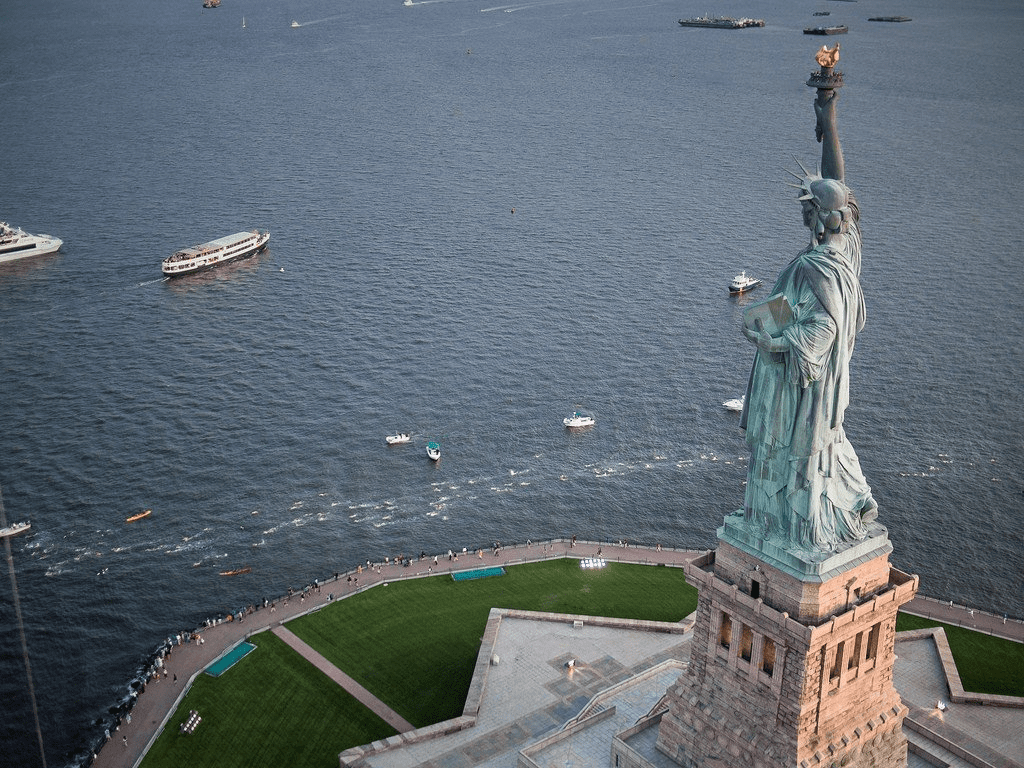
How can you recognize New York at first glance? It’s easy, because it’s home to one of the most famous landmarks in the world: the Statue of Liberty. Although she’s over 100 years old, she looks magnificent and attracts five million tourists every year. This legendary monument has been featured in countless movies, and its image is everywhere on souvenir stands. So how did she get here, and what secrets and facts are hidden in her history? Read on to find out at new-york-future.
The History of New York’s Main Landmark
The Idea and the First Sketch
The Statue of Liberty is an American monument that was conceived in France. The idea came from French writer, politician, and scholar Édouard René Lefebvre de Laboulaye. According to sculptor Frédéric Auguste Bartholdi, in 1865, Laboulaye spoke of his idea after being inspired by the victory of the anti-slavery forces in the American Civil War. The statue was meant to be a symbol of American independence. However, some in France were against the idea, seeing it as an act of treason. The French government initially refused to support the project. But Bartholdi, on the other hand, was determined to make it happen.
After the Franco-Prussian War, he created three romantic-style sculptures. At that point, the French sculptor hadn’t finalized the statue’s exact form, but he was certain it would become a symbol of American freedom. He was then sent to the U.S. to organize the funding and construction.
In June 1871, the sculptor arrived in New York. As his ship sailed into Upper New York Bay, he spotted a nearby island. He decided it would be the perfect location for the statue and made his first sketch. While in New York, he also met many people who supported the new project, including American politician and military leader Will Grant, journalist Horace Greeley, writer George Curtis, and poet Henry Longfellow.
Project Development and Construction
After analyzing various sketches, the ideal design for the monument was chosen: a woman with symbolic elements. Bartholdi experimented with them several times to find the most harmonious combination. He finally settled on a sketch of an Egyptian statue holding a torch in her right hand and a broken vase in her left, symbolizing the triumph over slavery. Later, the sculptor decided it would be better to place a tablet in her left hand with the date of the U.S. Declaration of Independence, which was typically represented in Roman numerals at the time.
After studying sculptures from around the world, Bartholdi concluded that the monument should be built using repoussé, a metalworking technique. He chose copper as the main material because it protects the statue from environmental factors while also making it visually appealing. After that, he worked on the mathematical calculations.
To carry out the project, Bartholdi reserved the largest workshop in Paris. That’s where the statue’s internal structure was designed. In 1879, French engineer Gustave Eiffel took over the work. For the statue’s construction, he proposed using concrete pylons. The project often faced difficulties during development; for example, during assembly, the raised arm would shift away from the body. Because of this, a second supporting frame had to be built.
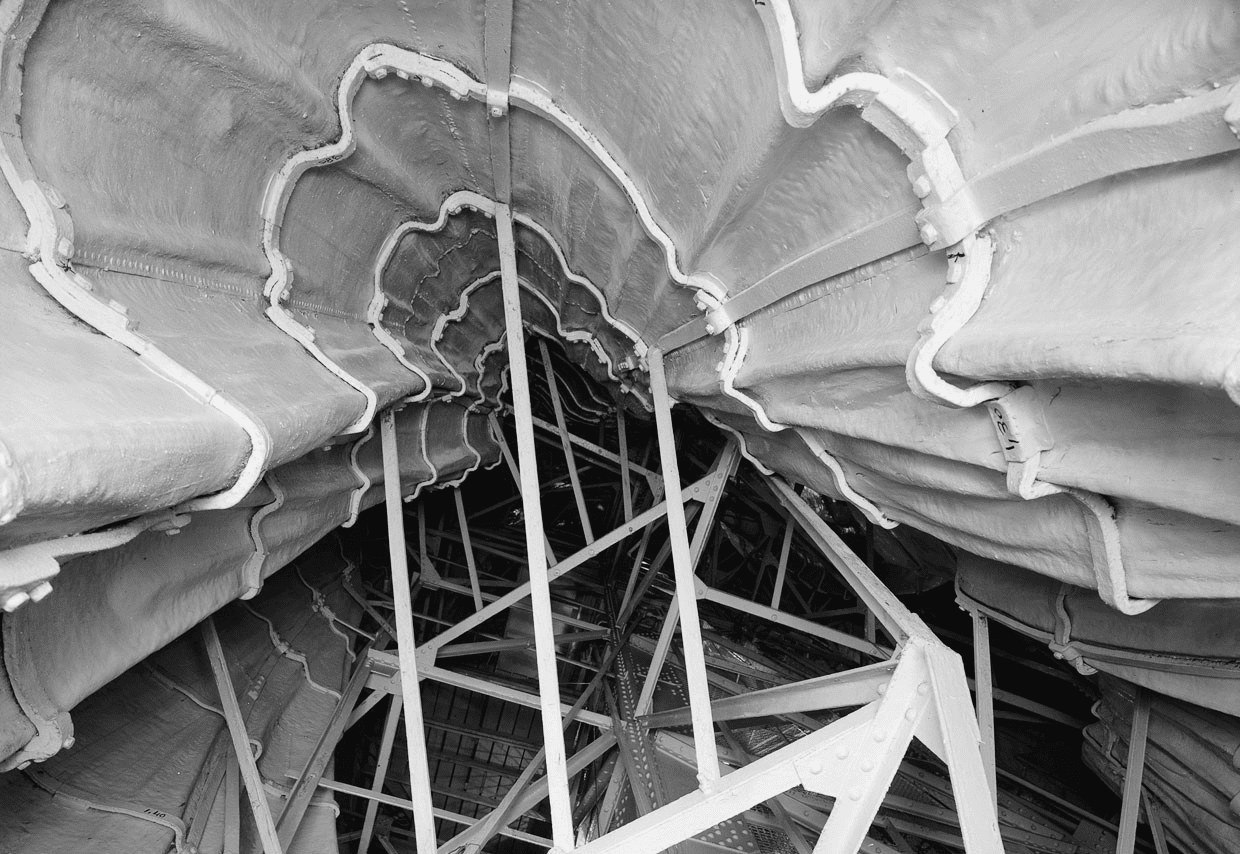
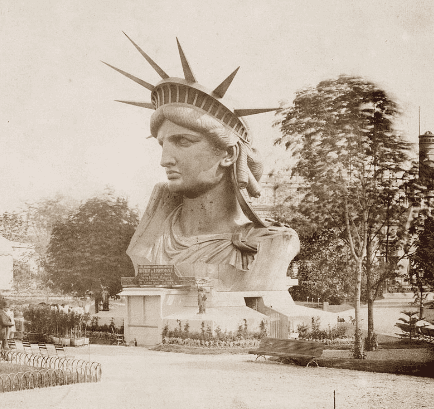
In 1875, construction of the Statue of Liberty began. A four-foot clay model served as the guide. The model was divided into 210 segments, and each one was mounted separately.
Construction was completed in 1884, and on January 1, 1885, Bartholdi announced the monument was ready to be sent to America. It was disassembled into 350 parts and packed into 214 crates. In New York, they were reassembled in just four months. The Statue of Liberty was then officially unveiled at a ceremony attended by about 20,000 people, including U.S. President Grover Cleveland, politicians, tourists, and New York residents. At the initiative of U.S. Ambassador Levi Morton, a banquet was also held in France, and Bartholdi was given a new task: to popularize the statue in the United States.
What’s the Statue of Liberty Like Inside and Out?
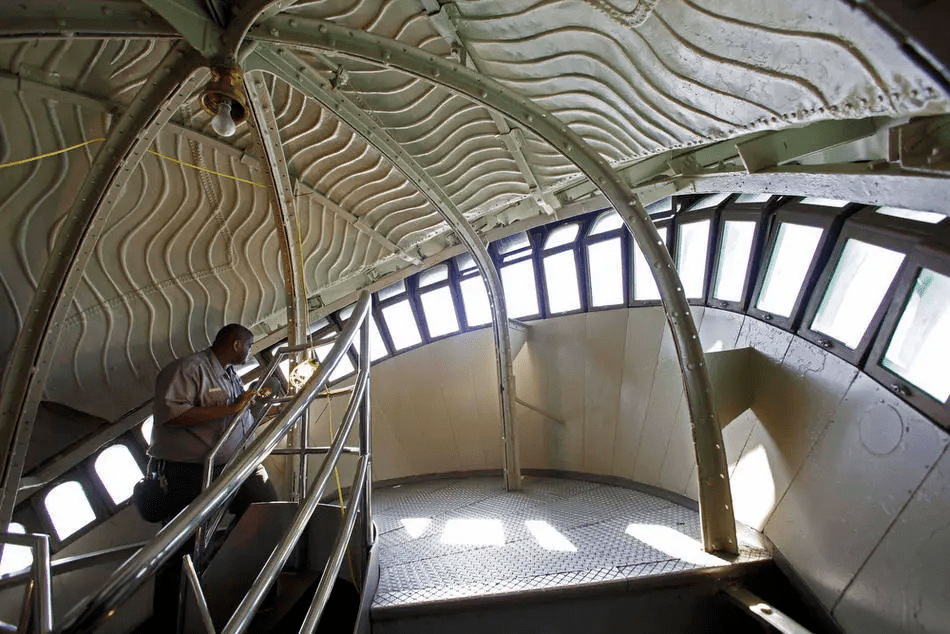
The monument to U.S. independence is majestic and one-of-a-kind. It impresses visitors not only with its silhouette but also with its size. The Statue of Liberty’s core is a 125-ton steel frame designed by sculptor Frédéric Auguste Bartholdi and later continued by Gustave Eiffel and Maurice Koechlin. For hundreds of years, the frame has remained stable under heavy loads. It was built so that visitors can safely climb the spiral staircase inside.
About 354 steps lead visitors to the top of the crown, where an observation deck is located. From there, you can see all of New York City from one of the 25 crown windows. These windows symbolize precious stones and heavenly rays lighting up the world. The Statue of Liberty is also known for being made of thin copper sheets installed on a steel frame.
Who is “Lady Liberty”?
For many, the inspiration for the Statue of Liberty remains a mystery. Was she a real person, or was her face an invention of the sculptor? According to historical accounts, the idea of a woman symbolizing America’s independence came to sculptor Bartholdi by chance during the street battles in Paris in 1851. He noticed a young woman near a barricade. She was wearing a dress and holding a burning torch in her raised hand.
According to art historians, this woman was the model Isabella Boyer. It was she who inspired Bartholdi to create the statue’s image that would become a symbol of America.
Interesting Facts About the Statue of Liberty That Will Surprise You
- The copper statue used to be a reddish-brown color, but over the centuries, due to natural processes, the copper oxidized, and the monument’s surface took on its familiar greenish-blue patina.
- The Statue of Liberty isn’t actually of American origin. It was a gift from the French to commemorate the 100th anniversary of America’s independence.
- There wasn’t enough money to build the statue, so large-scale fundraisers were organized in both France and America. Initially, many Americans were hesitant to donate, but after a sharp criticism from journalist Joseph Pulitzer in his newspaper, donations began to pour in.
- Since its arrival in New York, the Statue of Liberty’s name has changed several times. It was called “The Symbol of Freedom and Democracy” and “Lady Liberty,” but its original name was “Liberty Enlightening the World.”
- In her right hand, the statue holds a raised torch, and in her left, she holds a tablet inscribed with “JULY IV MDCCLXXVI,” which translates to “July 4, 1776″—the date the U.S. Declaration of Independence was signed.
- The statue’s crown has seven rays, symbolizing the seven continents and seven seas.
- The height from the ground to the tip of the torch is 305 feet (93 meters). The statue itself, from the top of the pedestal to the torch, is 151 feet (46 meters). There is a museum and an observation deck inside the statue.
- A 60 mph (100 km/h) wind will cause the monument to sway up to 3 inches (7.62 cm), and the torch can sway up to 5 inches (12.7 cm).
- In 1984, the American monument was added to the UNESCO World Heritage List.
- From 1886 to 1906, the statue served as a lighthouse. But its light was eventually deemed not powerful enough to guide the increasing number of ships arriving in the port. Since then, the statue has remained solely a symbol of American independence and a New York landmark.
How to Get to the Statue of Liberty
Every year, millions of people from all over the world visit New York. Many of them dream of seeing the Statue of Liberty and visiting the observation deck. It’s located in an unusual place: on an island that is part of a National Park. You can get there by ferry for a fee.
You can start your journey to the monument from either the Battery Park ferry terminal in Manhattan or the Liberty State Park in Jersey City.