

When you hear the phrase “the lights of the big city,” the magnificent and bustling New York City probably comes to mind, where every night thousands of streetlights, neon signs, and glowing windows begin to shine. New York’s roads are impossible to imagine without traffic lights, as the traffic there never stops for a minute. It seems this level of congestion has always been a part of the metropolis, and that’s why the first traffic signals began to appear in the early 20th century. Of course, they weren’t like the ones we’re used to seeing today, but the progress in traffic light development was quite rapid even back then. Read more at new-york-future.
The Beginning of New York City’s Traffic Lights
In 1917, engineer and designer Foster Milliken designed a device that resembled a traffic signal and was installed at Fifth Avenue and 57th Street. It was one of the first electric “traffic lights,” although it was just a rotating lantern that showed green on one side and red on the other. It’s interesting to note that at the time, there were no universal standards for what each color meant. On some New York streets, a red or orange light might mean it was okay to go, while a green light meant you had to stop.
According to statistics, in the early 1920s, about 2,000 cars passed through the intersection of Fifth Avenue and 42nd Street every hour, and that number likely only increased over time. The biggest problems were caused by pedestrians who crossed the streets chaotically, which, of course, led to numerous accidents. Four police officers were stationed on Fifth Avenue every day to manage the flow of people.
John Harris’s Important Development
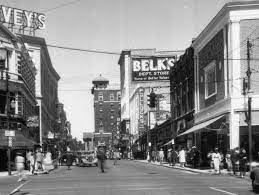
In 1920, Traffic Police Commissioner John Harris used his own money to install and equip the first traffic control towers along Fifth Avenue. These were simple wooden structures with a roof, where a police officer sat and controlled the streetlights with signal buttons. A separate officer was needed for each signal, as the towers couldn’t work automatically back then. At neighboring intersections, traffic cops directed cars and pedestrians, taking their cues from the officers in the towers. This proved to be a successful experiment, so the City Council decided to install seven more of these permanent towers. They were located on Fifth Avenue and several other neighboring streets. This crucial project was not funded by the city’s budget but by the Fifth Avenue Association, a special fund dedicated to urban improvement. The association’s members were wealthy citizens, entrepreneurs, and businessmen who cared about the cleanliness of the street, proper urban development, architectural decisions, and safety. You could say that Fifth Avenue was built and turned into the iconic landmark it is today by the citizens themselves, who took on tasks in the 20th century that were later handled by the local government. The city’s only responsibility was to staff the towers and maintain the structures.
Later, the towers were improved, and their final design was approved after a major competition won by American architect Joseph Friedlander, who also designed the Bronx County Courthouse and the Museum of the City of New York. According to Friedlander’s design, each tower was made of glass and housed a telephone, a control panel, and a clock. The Central Tower, located on 42nd Street, managed all the other structures.
It’s hard to believe, but until 1952, traffic lights around the world were only for cars. But on February 5 of that year, this kind of discrimination ended in New York City. The first traffic light for pedestrians was installed in the city, and the innovation was so successful that it quickly spread throughout the world.