
Broadway has come a long way from a muddy path to New York City’s main cultural artery. Despite the test of time, it has kept its magic, remaining the ultimate symbol of live theater and urban glamor. How did Broadway transform over the centuries, why is it called the “Great White Way,” and what other secrets does this legendary street hide? We break it down in this article on new-york-future.com.
The Road That Became the Heart of New York
Once, it was just a narrow trail carved by the indigenous people of Manhattan through the island’s swamps and rocky terrain. They called it Wickquasgeck—a route Native Americans used daily to traverse the wild landscape from south to north. Today, the entire world knows this thoroughfare as Broadway, one of the most iconic streets in the metropolis.
The first major shifts began in the 17th century with the arrival of the Dutch. They widened the trail, turning it into the main transport artery of the New Amsterdam colony. They named it Heeren Wegh, or the “Gentlemen’s Way.” Even then, it served as a crucial route connecting the southern settlements to newly explored territories.
When the British took control of the city, the road got a new name: Broadway. And it wasn’t an exaggeration—compared to the cramped colonial streets, it genuinely felt incredibly spacious.
By the 19th century, Broadway had become the place to feel the true pulse of the city. The elite strolled along its sidewalks, trendy shops opened their doors, and the first theaters emerged. Around Union Square, entirely different social worlds collided, bringing together wealthy socialites, bohemian artists, and savvy entrepreneurs.
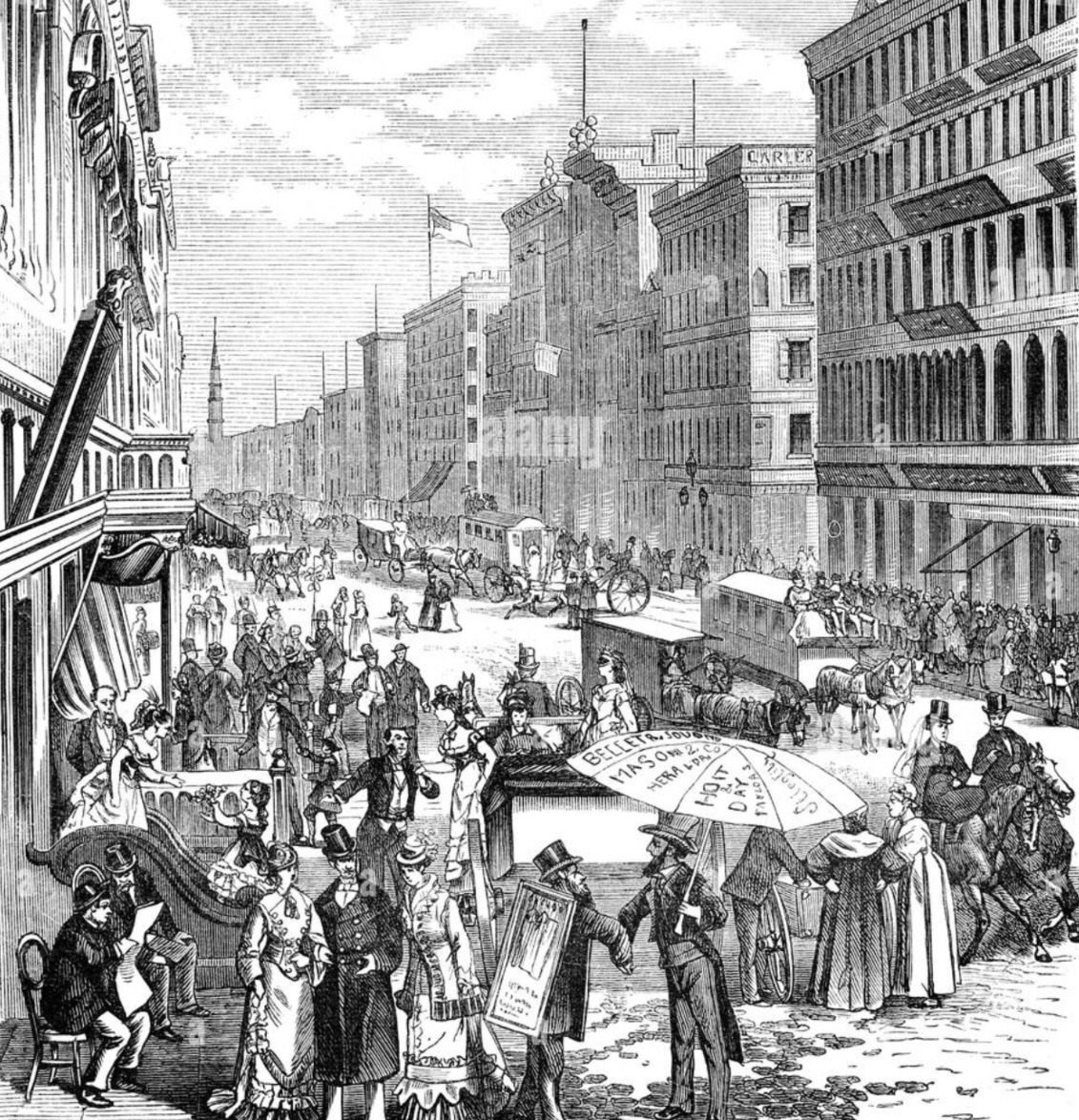
A massive turning point came in the late 19th century. In the 1880s, a section of the street was illuminated by electric lights for the first time—a cutting-edge invention of the era. This didn’t just make evening strolls safer; it created a completely unique atmosphere. The glow of storefronts, billboards, and theater marquees turned Broadway at night into a dazzling spectacle. That’s how, in the 1890s, the famous nickname was born: the “Great White Way.” Against the dark backdrop of nighttime Manhattan, the street looked like a river of light cutting right through the city. The sight became legendary, and the name echoed far beyond America’s borders.
Electricity forever changed the theatrical world, too. Previously, stages were lit by gas lamps, which frequently caused fires. The new tech made venues safer while unlocking massive potential for flashy outdoor advertising. In the area now known as the Theater District, dozens of new venues began popping up. That was when Broadway firmly cemented its status as the heart of American theater.
20th-Century Broadway: From Cars to the Big Stage
In the early 20th century, Broadway underwent another rebirth—this time industrial rather than cultural. The stretch between Times Square and Sherman Square gradually morphed into Automobile Row. While this area seemed quiet and almost neglected in the early 1900s, everything changed just a few years later. Storefronts filled up with shiny new cars, and building facades were plastered with vibrant billboards. By 1907, an almost continuous line of car dealerships, garages, and auto shops stretched along the avenue.
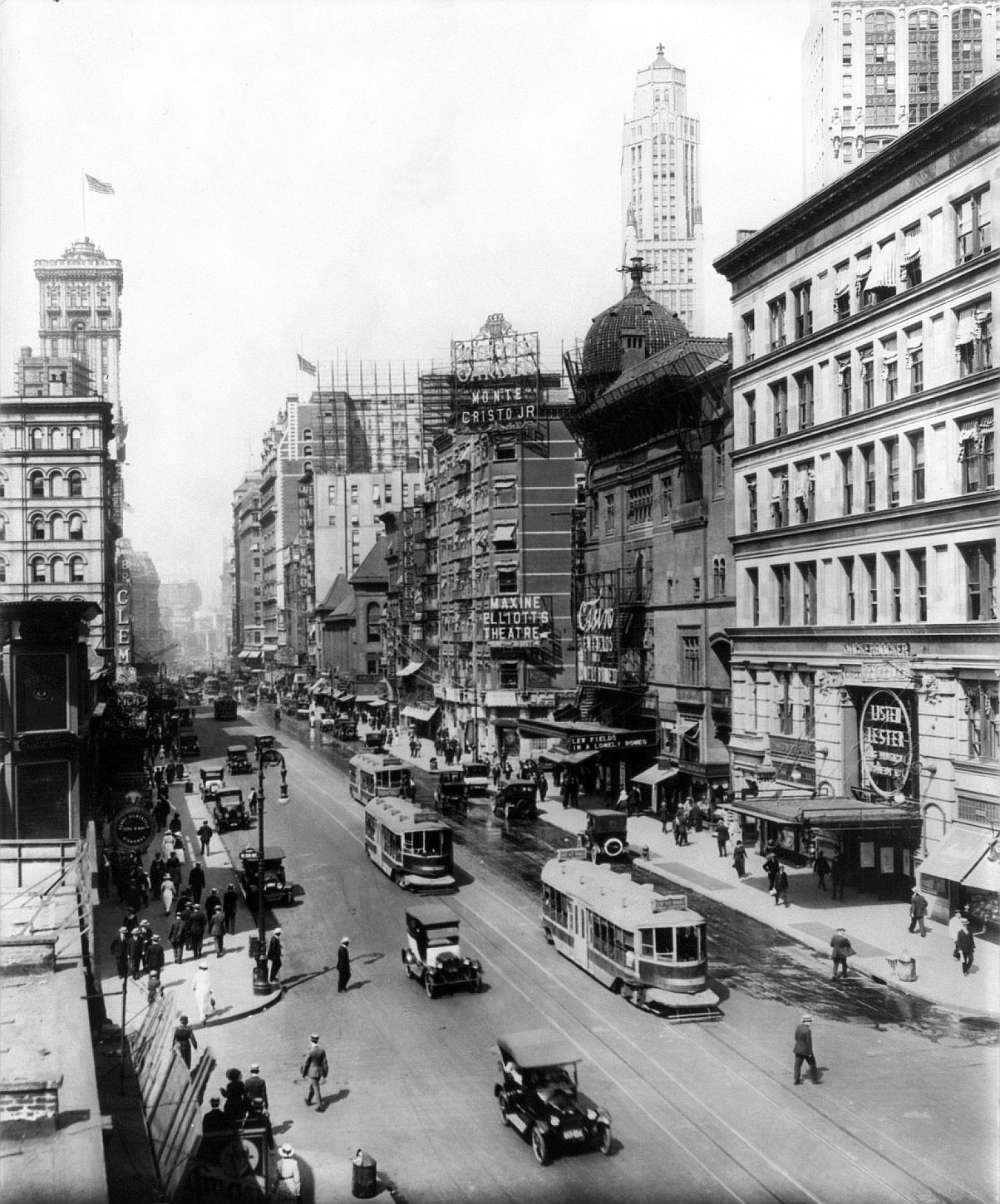
At the exact same time, the street was establishing another, much louder identity. Theaters steadily migrated closer to Times Square, shaping the neighborhood destined to become the epicenter of global performing arts. This was the birthplace of a new entertainment industry—vibrant, dynamic, and accessible to the masses.
The first decades of the 20th century are widely considered the Golden Age of Broadway. During this era, stages hosted works by playwrights who defined the look of American theater, while musicals grew increasingly massive and mainstream. It was a melting pot for talents across the board, from brilliant composers to stellar actors. Together, they sparked a cultural explosion whose echoes are still felt today.
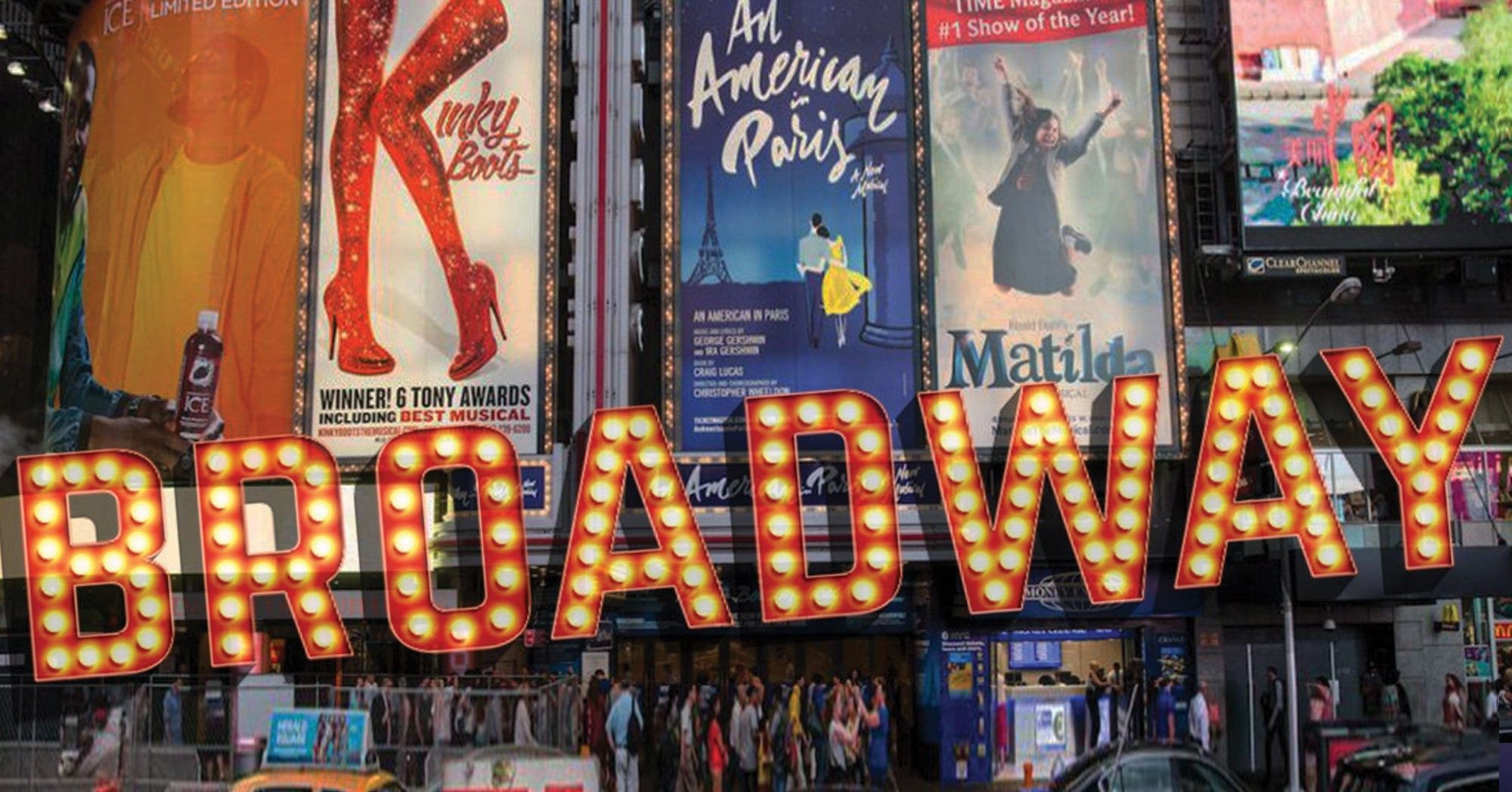
However, the street’s history wasn’t just a series of triumphs. In the mid-20th century, Broadway hit a noticeable slump. The rise of television and movies hijacked audience attention, and economic struggles shifted how people spent their leisure time. To many, it seemed the theatrical magic was slowly fading away.
But by the 1970s, a new revival was underway. Shows hit the marquees that didn’t just bring audiences back to the auditoriums—they set an entirely new standard of quality. Broadway once again became a hit factory, and its very name became synonymous with the blockbuster musical.
Broadway for the People: How the Street Became a Pedestrian Artery
At the dawn of the 21st century, Broadway began to transform once more. This time, it wasn’t driven by business or traffic, but by the needs of the locals. New York City started giving the street back to the people, turning a noisy thoroughfare into a livable, breathable space.
In 2001, a small section near Verdi Square was cleared of cars to create a public plaza paired with a modern subway entrance. But the real breakthrough happened in 2008 and 2009. Parts of the street around Times Square and Herald Square were completely closed off to traffic. In their place, the city built spacious pedestrian plazas complete with seating, bike lanes, and open-air cafes. From then on, Broadway was systematically redesigned around a new urban philosophy: a city where pedestrians take priority over cars.
Through the 2010s, these changes only accelerated. Near Madison Square and Union Square, traffic lanes were narrowed to make way for wider sidewalks. Around Worth Square, the city introduced “shared streets” with rock-bottom speed limits, where drivers are required to yield to people on foot.
The latest phase kicked off in the 2020s. During the pandemic, the city heavily experimented with temporary pedestrian zones. Many proved so wildly popular and essential that they were made permanent. The culmination of this shift is the ambitious Broadway Vision project. This initiative radically redesigned massive stretches between 21st and 32nd Streets, adding two-way bike lanes, creating new public plazas, and shutting down certain blocks to vehicle traffic for good.
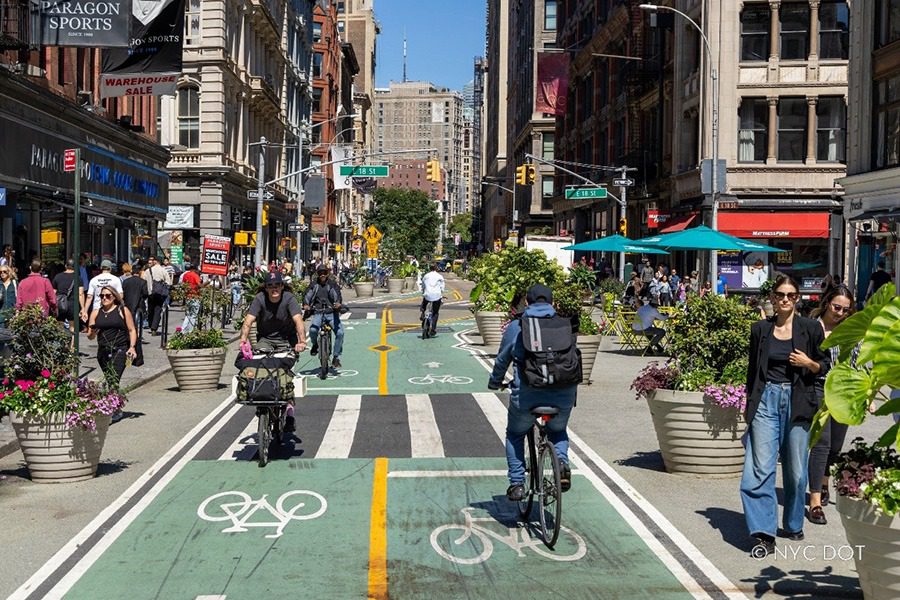
Naturally, parts of the street still walk a fine line between a busy traffic artery and a public lounge. But the overarching trend is undeniable: Broadway is steadily transforming into a space for people—complete with green pathways, cozy squares, and a safer environment.
Facts, Stories, and Legends of the Street
Broadway is an entire universe where history, art, theater, and the rhythm of the metropolis tightly intertwine. And even today, it continues to surprise with facts that challenge what we think we know about it.
- The Theater Paradox.
Even though the word “Broadway” is the ultimate synonym for theater, physically, there are only a handful of venues actually located on the street itself. Among them are the Minskoff Theatre, Marquis Theatre, Palace Theatre, Winter Garden Theatre, and the Broadway Theatre. Everything else is more of a symbolic brand. Today, “Broadway” refers to the entire theatrical industrybustling around Times Square.
- The Street That Crosses Everything.
Broadway slices all the way through Manhattan, runs up through the Bronx, and even spills beyond New York City limits, stretching for miles further north.
- Breaking the Grid.
Unlike most of New York, which is laid out on a strict rectangular grid, Broadway cuts through the city diagonally. It’s exactly because of this geometry that the legendary intersections exist: Times Square, Herald Square, and Madison Square. These diagonal crossings aren’t just transit hubs; they are the city’s ultimate gathering spots.
- History-Making Architecture.
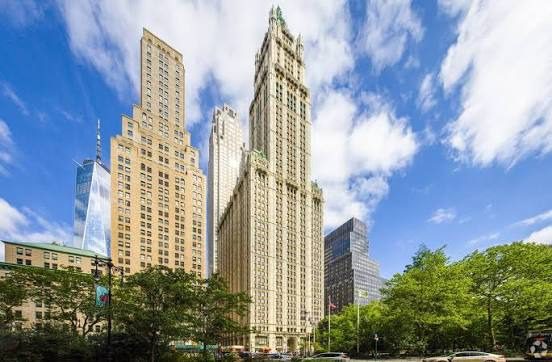
It was on Broadway that record-breaking buildings were raised. It’s home to the Woolworth Building (once one of the tallest skyscrapers in the world), the Flatiron Building (a global architectural icon), and Trinity Church, whose spire was long the dominant peak of the city skyline.
- Spanish: The Voice of Uptown Broadway.
The street is changing not just architecturally, but linguistically. While a Babel-like mix of languages rules Midtown, Spanish confidently dominates the north. According to census data, nearly 2 million New Yorkers speak it at home. This is especially vibrant in neighborhoods like Inwood and Washington Heights, where Spanish is heard everywhere—from food cart menus to lively sidewalk chatter.
- The “Seinfeld” Spot.
At the corner of Broadway and West 112th Street, right near Columbia University, sits the cult-favorite Tom’s Restaurant. Its exterior famously “played” the fictional Monk’s Café in the hit sitcom. And even though the interior scenes were shot on a soundstage, that hasn’t stopped the diner from becoming a massive tourist magnet, with fans from all over the world still stopping by for a selfie.
- Decade-Spanning Shows.
Broadway is a stage that never hits pause. Some productions run for years, evolving into living legends:
Chicago — the longest-running currently active musical, playing since 1996;
The Lion King — a spectacular showcase featuring music by Elton John;
Wicked — a fresh, alternative take on the story of the Wizard of Oz;
Hamilton — the revolutionary hip-hop history lesson from Lin-Manuel Miranda;
Harry Potter and the Cursed Child — a massive modern theatrical sensation.
Broadway is the story of a city in constant motion: from a wild forest trail to a symbol of modern urbanism, from a muddy colonial route to the greatest theatrical stage on the planet. This street perfectly proves how a metropolis can adapt to the needs of its people. And who knows? Maybe the next chapter in its history won’t be a neon-lit “Great White Way,” but a new symbol of New York: a massive green oasis right in the heart of the concrete jungle.

