
NBC News is an organization that stood at the dawn of modern television and continues to shape the media landscape. As one of the traditional “Big Three” American broadcast networks, it broadcasts from its headquarters at Rockefeller Center in New York City. The history of NBC News officially kicked off on February 21, 1940, when the first-ever regularly scheduled American televised newscast, anchored by Lowell Thomas, hit the airwaves. In this article on new-york-future.com, we’ll dive into the company’s structure, its legendary programs, and its biggest scandals.
Three Notes the Whole World Knows
Sometimes a brand is remembered not by its logo, but by its sound. For NBC, that recognizable signature became the famous “chimes” — a short three-note sequence of G–E–C. At first, it was a purely technical tool: a signal for network engineers and announcers to help synchronize broadcasts across stations. Over time, however, this simple audio code escaped the confines of the studio. It became NBC’s calling card, every bit as recognizable as any visual logo.
A lesser-known chapter in this story is the so-called “fourth chime”, a G–E–C–C variation. If the three notes were the network’s public face, the four notes served as its internal panic button. This signal was used to urgently assemble journalists and commentators when breaking news demanded an immediate response.
That’s exactly how the system worked on one of the most critical nights of the 20th century: the D-Day invasion of Normandy. NBC News staffers recalled:
“At 2:30 a.m., the network was put on emergency alert; the four-chime NBC signal summoned all reporters and commentators to their microphones.”
This distress signal was first broadcast back in 1937 when the Hindenburg disaster shocked the world. Since then, the four notes became a special code for moments when history was being made live on the air.
Thus, a few notes—seemingly random at first glance—evolved into a system that built a brand while helping journalists stay ahead of the news.
Meet the Press: The Longest-Running Show on Television
To talk about the NBC news empire without mentioning Meet the Press would be a crime. It’s not just a program; it’s an American political ritual that has endured for nearly eight decades.
The show was born in 1945, back in the radio era. Journalists Martha Rountree and Lawrence Spivak conceived it as a hard-hitting press conference format where politicians were forced to give straight answers, free of their usual evasions. Rountree served as the first host and remained the only woman in the moderator’s chair for decades—until Kristen Welker took the baton in 2023.
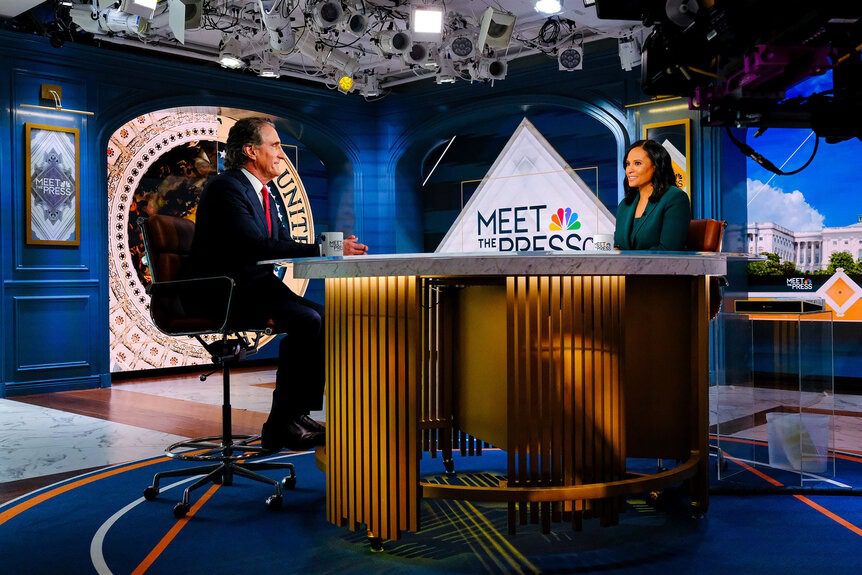
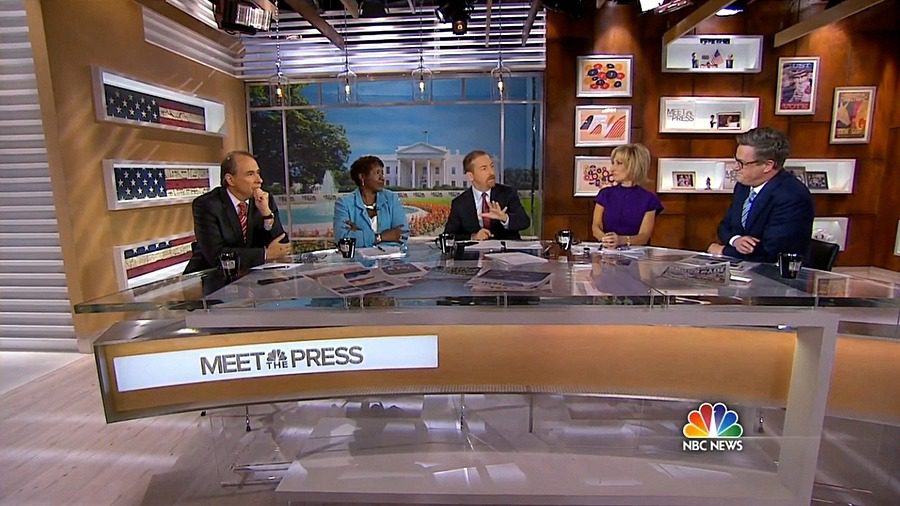
The show’s formula has proven remarkably resilient: a deep, one-on-one interview that often evolves into a roundtable discussion with politicians and analysts. The golden rule: minimum set design, maximum substance.
Sometimes the broadcast itself became part of history. In November 1975, sitting U.S. President Gerald Ford appeared live in the studio of a network news program for the first time. For television, it was a watershed moment where the distance between the government and the viewer suddenly shrank.
The show gained fresh momentum in the 1990s when Tim Russert took over as moderator. From 1991 to 2008, he transformed Meet the Press into Sunday morning’s premier political stage—a place where messaging was shaped, stances were tested, and the tone for the upcoming political week was often set.
The secret to the program’s longevity is simple: it doesn’t try to be louder than the news; it makes the news speak for itself.
The Empire Behind the Screen
Today, NBC is just one cog in a massive media machine. It is part of NBCUniversal, which is wholly owned by the telecommunications giant Comcast Corporation. While Comcast held just over half the shares in 2011, it eventually consolidated 100% ownership, gaining total control over NBC’s strategy, content, and future direction.
Behind the scenes lies a complex network of divisions, each responsible for a distinct slice of the media landscape.
The news operations are centralized within the NBC News division. This is the hub where flagship informational programs are produced, spanning from NBC Nightly News to Today and Meet the Press.
The sports world of NBC is united under the NBC Sports Group, the entity that manages broadcasts of massive events, including the Olympic Games and NFL matchups. This remains one of the most profitable and fiercely competitive segments of the business.
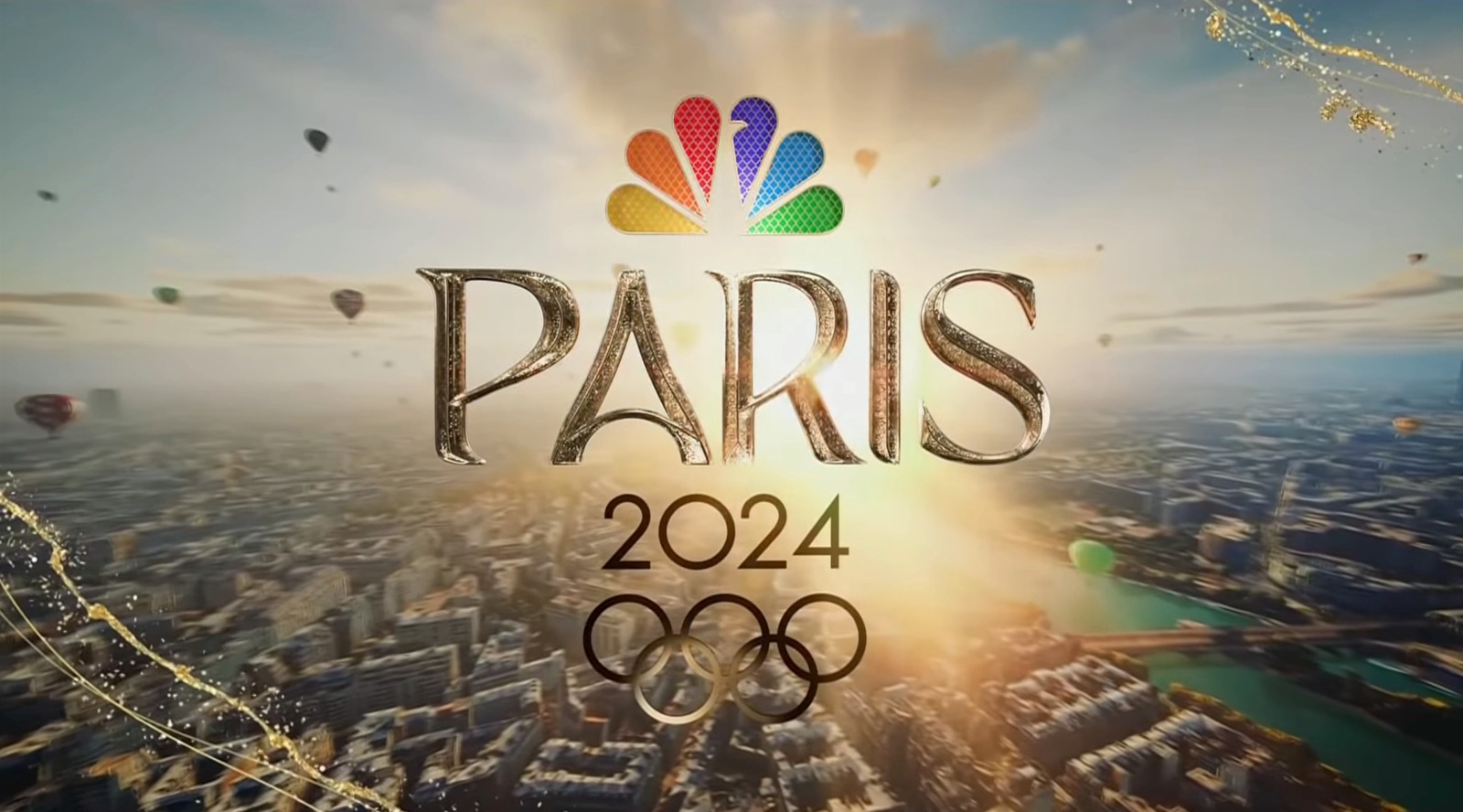
For decades, the company has held the status of the premier broadcaster of the Games in the U.S., and it has no intention of letting go. The stakes are incredibly high, involving not just ratings, but the monopoly on how America experiences the Olympics. NBC isn’t afraid to experiment. During the 2024 Olympic Games, the company leaned heavily into technology and pop culture. Daily recaps utilized artificial intelligence to recreate the voice of legendary commentator Al Michaels—a decision that sparked as much fierce debate as it did excitement.
Meanwhile, in primetime, Snoop Dogg appeared alongside the athletes. This was yet another clear signal: the Olympics, as interpreted by NBC, have long since morphed into a colorful hybrid of elite sports and entertainment.
This balancing act between spectacle and substance has been going on for years. And it seems the answer to the ultimate question—whether viewers want sports or captivating stories more—remains elusive.
The digital front is a separate battlefield altogether. The Digital Media Division handles online presence and streaming, most notably the Peacock platform. This is where NBC scrambles to keep pace with the shifting habits of audiences who are increasingly cutting the cord on traditional TV.
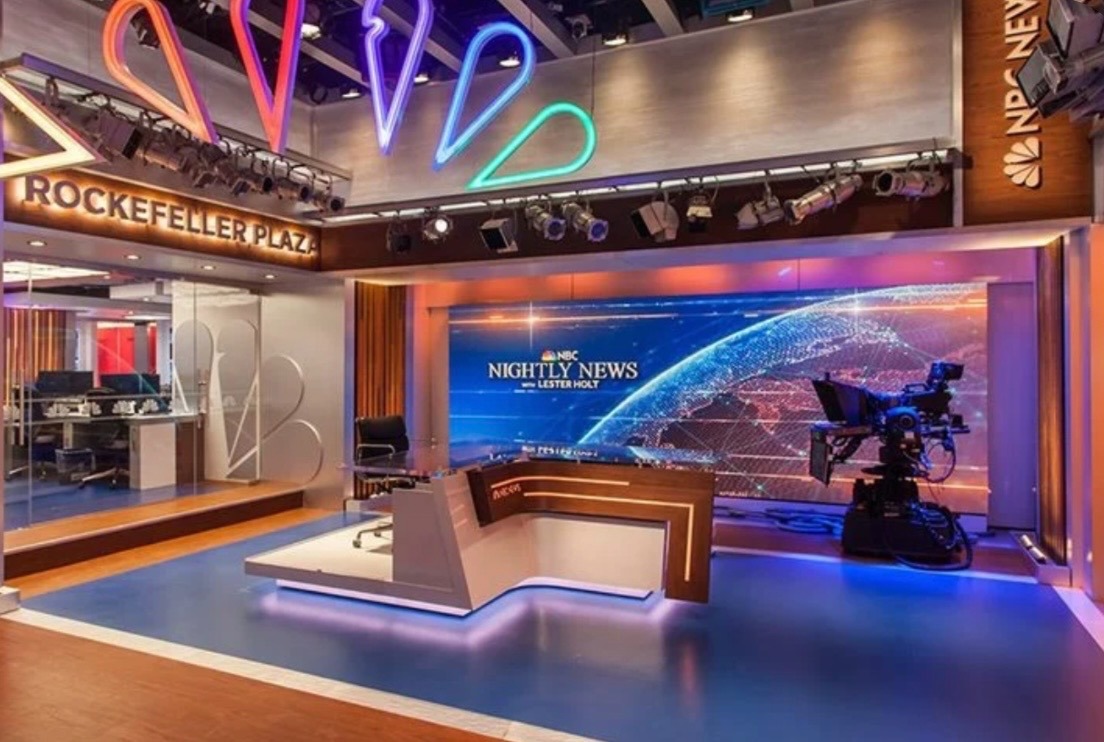
Catering to the Spanish-speaking audience is Noticias Telemundo, a dedicated news division with its own original content, focusing heavily on news and sports tailored specifically for the Latino community.
The media world is moving faster than ever, and even giants like NBC are forced to rebuild the plane while flying it. The question is no longer whether to adapt, but how to keep up with the breakneck speed of change.
Journalistic Challenges and Reputational Crises
The history of NBC News isn’t strictly about blockbuster broadcasts and journalistic triumphs. Every now and then, the newsroom itself becomes the center of a story that erodes public trust and forces leadership to act swiftly and decisively.
One of the biggest blows came in 2015. Star NBC Nightly News anchor Brian Williams was suspended for six months after it came to light that his accounts of being in Iraq during the 2003 invasion contained exaggerations and outright inaccuracies. For a journalist of his stature, it was a devastating hit to both his credibility and his stellar career.
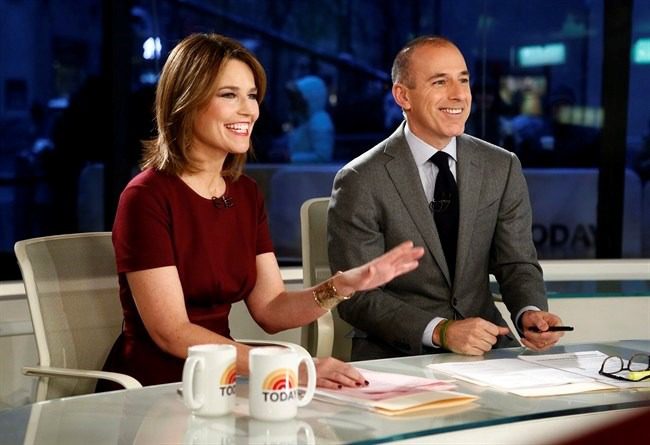
An even more painful scandal erupted in 2017. Matt Lauer, the longtime face of the Today show, was fired following allegations of sexual misconduct. But the story didn’t end there. In his investigative reporting, journalist Ronan Farrow alleged that NBC executives may have known about Lauer’s behavior long before it went public. Furthermore, Farrow claimed the newsroom faced pressure from Hollywood producer Harvey Weinstein to kill a story exposing his own crimes.
A fresh wave of reputational turbulence hit in March 2024. NBC News announced the hiring of Ronna McDaniel, the former chairwoman of the Republican National Committee and a public ally of Donald Trump. Her controversial stance on the 2020 election sparked massive backlash from within the company. The situation was unprecedented: top network journalists, including Chuck Todd and Rachel Maddow, openly protested the decision live on the air. Within days, management was forced to backtrack and cancel the controversial appointment.
These stories vary in scale and context, but they are bound by one undeniable truth: in the media business, trust is the ultimate currency. And even a single misstep can cost far more than any exclusive scoop.
For over eighty years, NBC News has remained a pivotal player in shaping the American information space. From its early days in radio broadcasting and the launch of innovative news programs to building streaming giants and broadcasting global sporting events, the company consistently demonstrates a remarkable capacity for transformation. Despite sweeping structural changes, the relentless challenges of the digital age, and painful reputational crises, NBC News continues to set the standard for modern journalism, masterfully blending vibrant storytelling with hard-hitting analysis.

