
It’s a true New York City icon, seamlessly connecting Chinatown in Lower Manhattan to Downtown Brooklyn. Officially opened on December 31, 1909, by then-Mayor George McClellan, the bridge became the third suspension span across the East River. It is one of the busiest bridges in the metropolis, carrying a daily average of over 75,000 vehicles, 3,400 pedestrians, and nearly 6,400 cyclists. The bridge accommodates traffic with seven car lanes, four transit train tracks, and separate paths for walking and biking. In this article on new-york-future.com, we’ll dive into the history, architecture, and current state of the Manhattan Bridge. We’ll explore its innovative deflection theory, its massive reconstruction, the ongoing battle against transit noise, and the iconic photo spots in Brooklyn’s DUMBO neighborhood.
The Bridge That Learned to Bend
When engineer Leon Moisseiff was tasked with designing the Manhattan Bridge, few suspected this would be more than just another East River crossing—it was going to be a full-blown engineering revolution. A Riga native who immigrated to the U.S. at nineteen, Moisseiff thought outside the box of his contemporaries. His bold ideas forever changed how the world built bridges.
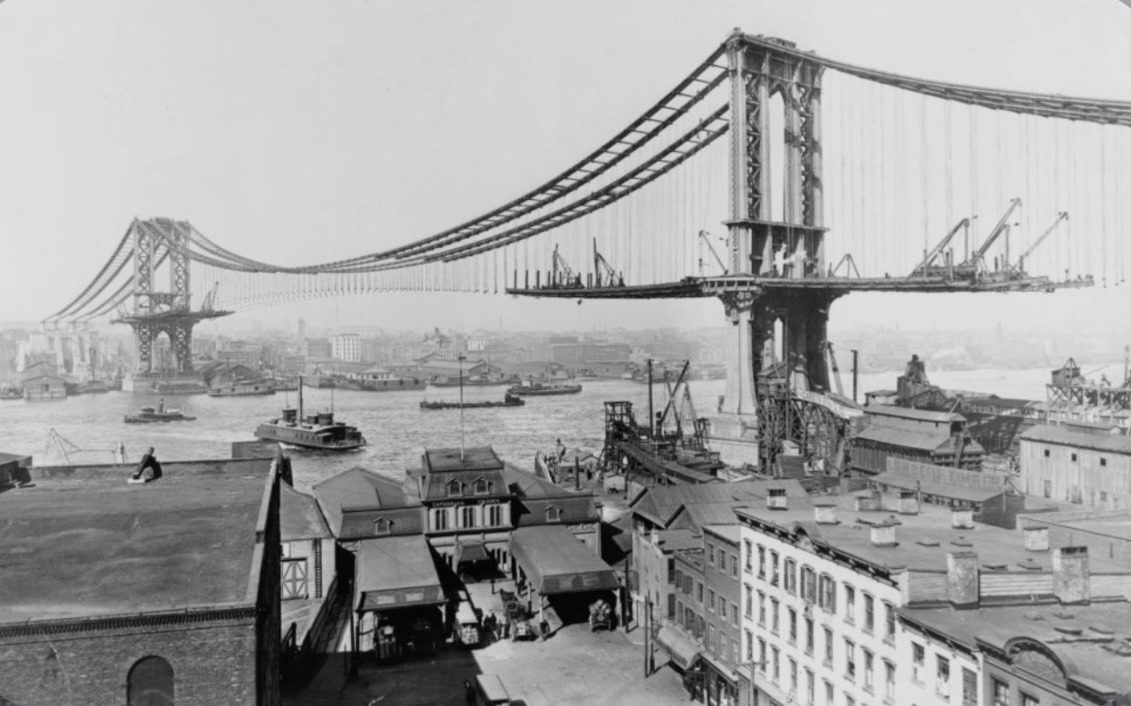
At the core of his vision was the so-called “deflection theory,” a concept that shattered traditional beliefs about structural rigidity. Instead of making bridges as stiff and heavy as possible, he proved that flexibility could actually be an advantage. It turned out that suspension structures could handle significantly heavier loads than previously thought, distributing the weight more efficiently through natural bending. This meant engineers no longer needed to weigh down the bridge with massive components. The structures became lighter, more cost-effective, and surprisingly more reliable. The Manhattan Bridge was the first in the world to successfully apply this approach, ushering in a new era of engineering.
Another major innovation was the use of the Warren truss—a design featuring a signature triangular pattern that ensures even load distribution. Combined with deflection theory, this made the bridge not only incredibly strong but technically elegant.
The sheer scale of the construction is mind-boggling even by today’s standards. Building the bridge required around 40,000 tons of steel, including nickel steel for the crucial truss elements. The main span stretched out to roughly 1,470 feet (448 meters), while each of the four main suspension cables measured over 3,200 feet (980 meters) long.
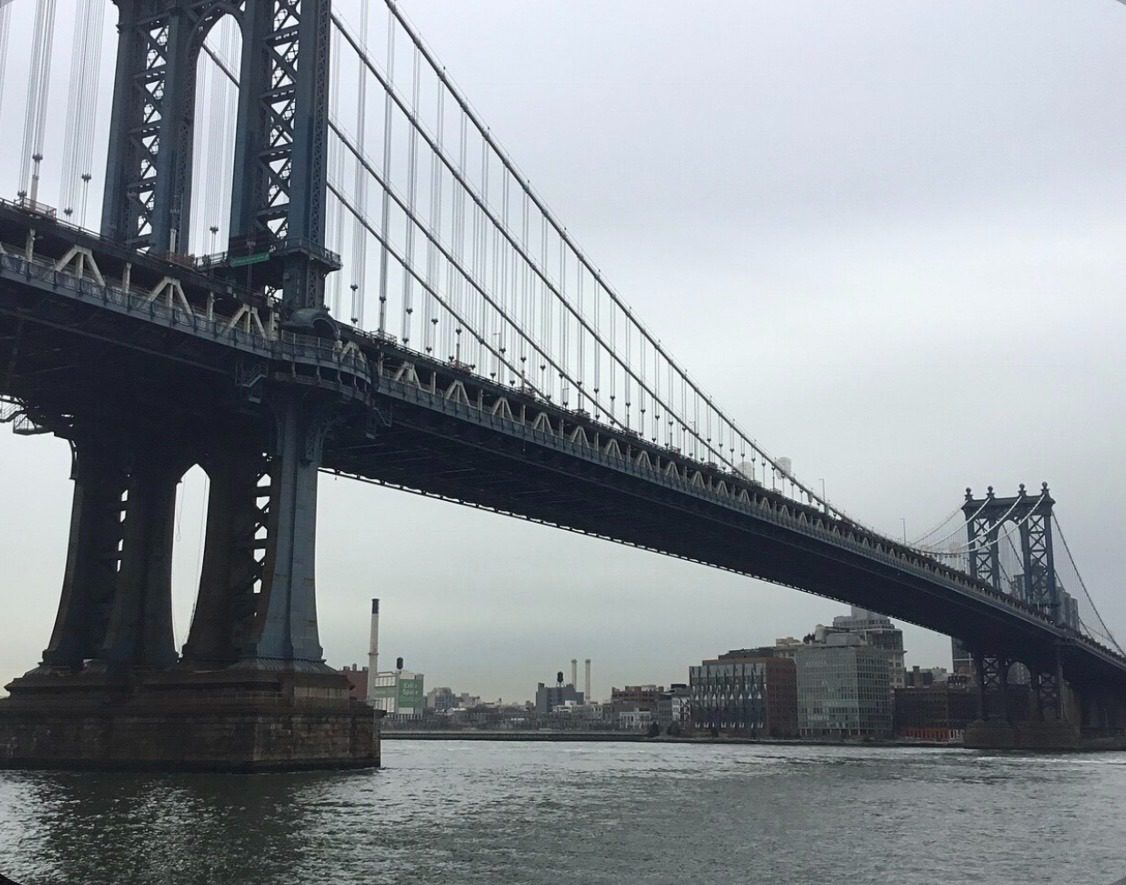
The Manhattan Bridge became a monument to engineering audacity—a moment when the idea of giving a structure the freedom to move triumphed over the traditional reliance on sheer, unyielding stiffness.
The Arch That Welcomes the City
The bridge’s engineering brilliance was only part of the grand vision. New York City didn’t just want a functional crossing; it wanted a space that would leave a lasting impression before anyone even set foot on the deck. That’s why the renowned architectural firm Carrère and Hastings—the same masterminds behind the New York Public Library—was brought in to design the Manhattan approach.
Their solution was daring yet deeply rooted in European tradition. They proposed a monumental Beaux-Arts entrance that would transform a standard transit hub into a grand civic gesture. Thus, the triumphal arch was born on the Manhattan side—not just an architectural flourish, but a majestic symbol of transition between two spaces.
The design didn’t come out of nowhere. The architects drew inspiration from the 17th-century Porte Saint-Denis in Paris, a gateway historically symbolizing a triumphant entry into the city. Built from rusticated white granite, the arch refuses to get lost in the urban sprawl. Instead, it dominates the roadway, setting the tone for the entire architectural ensemble. Its central archway, measuring roughly 36 by 40 feet (11 by 12 meters), looks almost like a theatrical stage where the endless flow of city life plays out every single day.
Engineering vs. Reality: Modernizing the Manhattan Bridge
The very ideas that once seemed groundbreaking eventually revealed an unexpected downside. The flexibility that made the bridge an engineering sensation turned into a serious headache during everyday use. The biggest issue stemmed from the subway lines running along the outer edges of the span. As heavy trains rumbled across, they caused severe vibrations. The structure literally “came alive”—swaying and twisting—and over time, this movement began tearing it apart from the inside.
By the 1980s, the situation had reached a boiling point, and the bridge was teetering on the edge of structural failure. In 1982, the New York City Department of Transportation launched a massive reconstruction projectthat ranks as one of the most ambitious in the history of urban infrastructure.
The overhaul dragged on for years and cost nearly a billion dollars. Engineers reinforced the four main stiffening trusses, completely replaced the roadway deck and bearings, and re-anchored the main cables, using thousands of tons of fresh steel. Essentially, the bridge was completely rebuilt, but this time with decades of real-world wear and tear taken into account.
Yet, even after this massive technical “reboot,” one stubborn problem remained: the noise. The deafening roar of trains rocketing over the East River has become a constant soundtrack for nearby neighborhoods. The Metropolitan Transportation Authority (MTA) routinely conducts acoustic tests to monitor the infrastructure’s impact on public health.
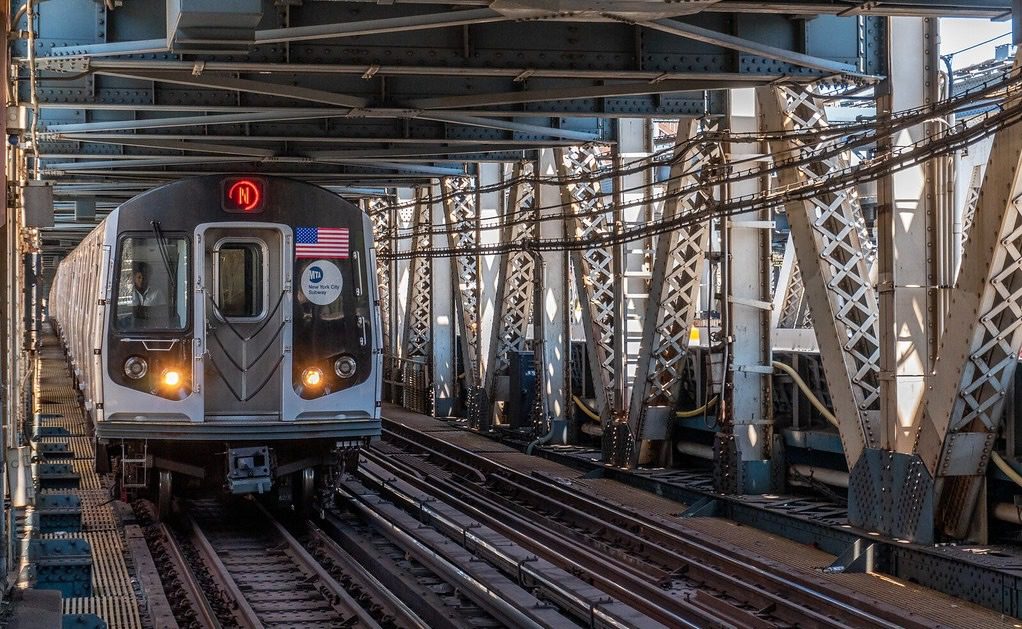
In 2022, residents of DUMBO (Down Under the Manhattan Bridge Overpass) became particularly vocal about the issue. Measurements showed that peak noise levels during train crossings hit around 90–95 decibels. Naturally, locals started pushing for solutions. One resident even suggested modifying the rail joints to muffle the signature metallic “clack” that echoes between the buildings beneath the overpass.
This story is a perfect reminder that even the boldest engineering feats are tested not just by time, but by the relentless grind of the metropolis. Sometimes a bridge doesn’t just stand there—it vibrates, it roars, and it forces a city to constantly search for the sweet spot between technical progress and everyday livability.
The Bridge That Became a Picture-Perfect Frame
The Manhattan Bridge has long transcended the realm of civil engineering, firmly cementing itself in the culture, art, and imagination of the city. Its signature steel hue, known affectionately as Manhattan Bridge Blue, is as instantly recognizable as any corporate logo: one glance is all it takes to know exactly where you are.
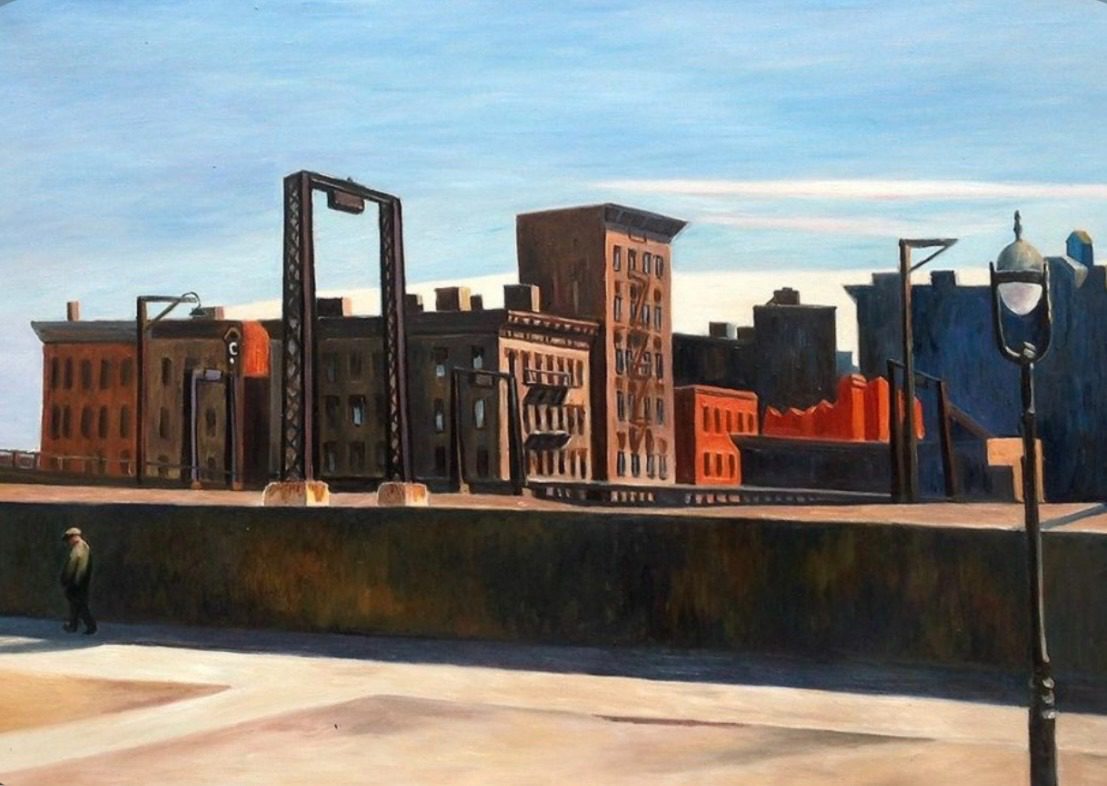
As early as 1928, legendary American painter Edward Hopper saw the structure as more than just a transit artery, capturing it in his famous painting Manhattan Bridge Loop. His work immortalized not just the physical shape of the bridge, but the very essence of New York—a little aloof, slightly melancholic, but undeniably alive.
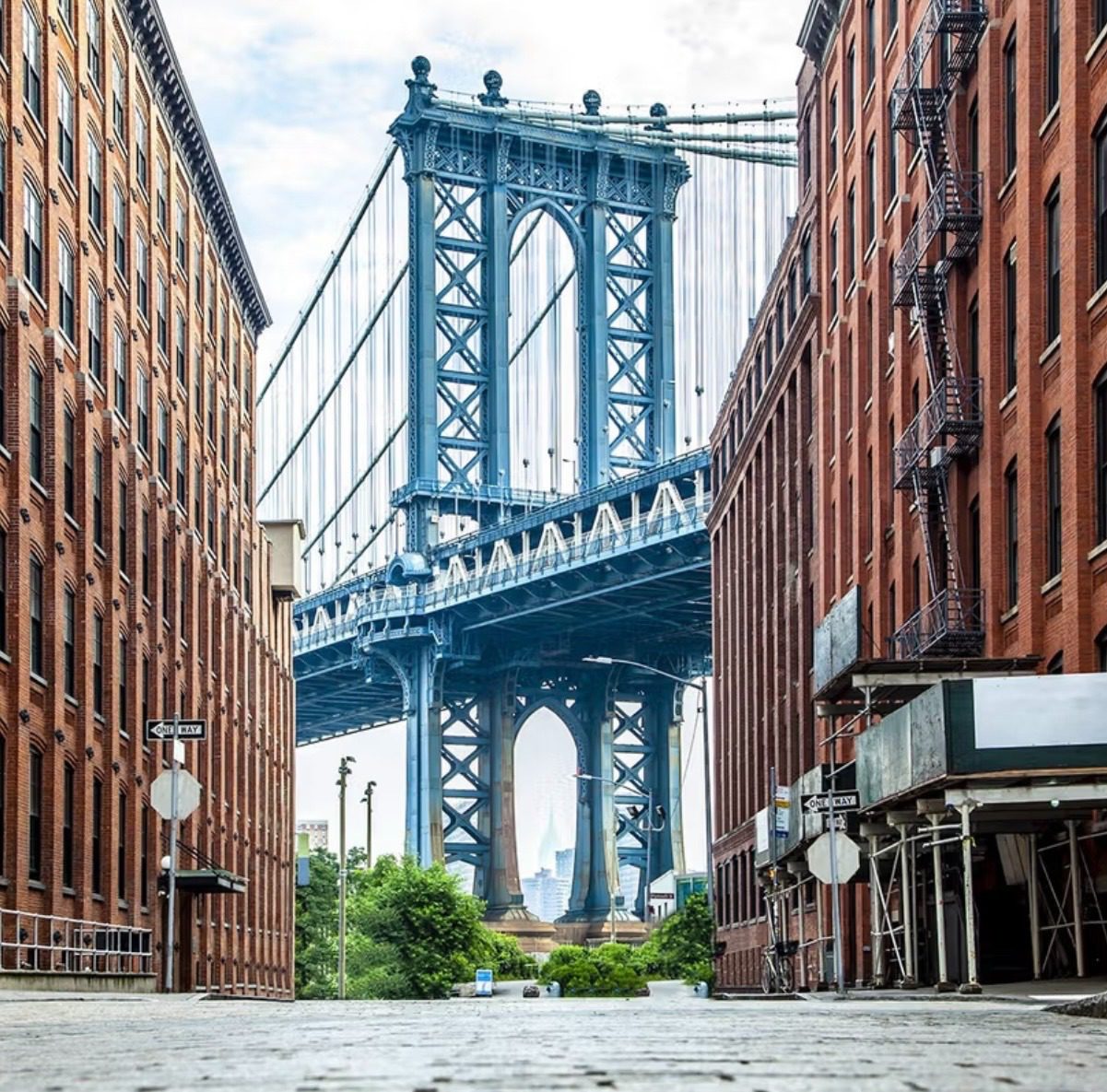
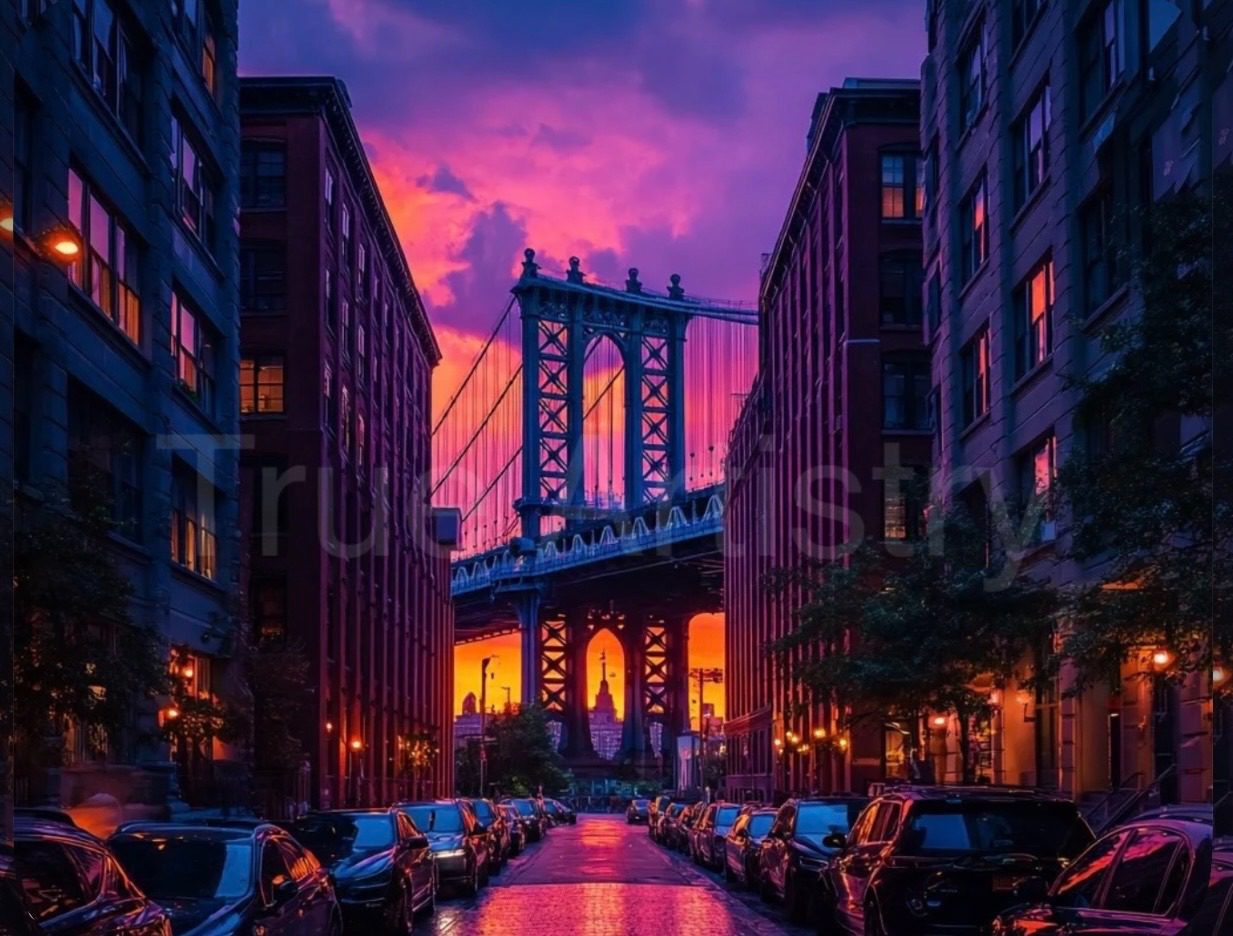
Across the river, the bridge takes on an entirely different context. In DUMBO, it is quite literally woven into the urban fabric. The old industrial buildings, red brick facades, and heavy steel beams merge into a cinematic scene recognized globally. This is especially true at the iconic intersection of Washington Street and Water Street, a magnetic draw for photographers and tourists flocking there to capture that one perfect shot.
From this exact vantage point, the Manhattan Bridge towers majestically between two rows of brick tenements. The composition is so flawlessly symmetrical it looks like a freeze-frame from a classic Hollywood movie.
And truly, everything here is working together for maximum visual impact: the narrow street guides the eye, the buildings act as a natural frame, and the bridge itself provides the ultimate payoff. Pro photographers recommend getting low—shooting almost from ground level—to emphasize the monumental scale of the structure and highlight its striking vertical lines. And to really pop against the cold steel and terracotta brick, models are often advised to wear vibrant solids or soft pastel colors.
Today, the Manhattan Bridge is much more than just a piece of infrastructure. It has weathered the test of time, crushing traffic, and endless renovations without losing an ounce of its gritty character. It is at once a daring 20th-century engineering experiment, a sweeping architectural gesture, and a living, breathing slice of the New York experience. It’s a place where the daily commute becomes an epic scene—and for many, it provides the very frame that makes a trip to New York City entirely worth it.

